


The quickest way to get dried mud out of a dog's coat is to leave it alone until it is completely dry, break the crust gently with your fingers, then lift the loose dirt out with a slicker brush before any water goes near the coat. Washing mud out while it is still wet pushes it deeper and turns it into a mat.
That single change in order is what separates a ten minute job from an hour of scrubbing. Mud that has dried is brittle and wants to fall out. Mud that is wet is glue, and every rub of a towel works it further down the hair shaft toward the skin.
This guide covers the routine: when to wait, how to break the crust safely, which parts of the body hide the worst of it, and when mud is a reason to call a vet rather than reach for a brush.
If your dog comes home filthy most weeks through autumn and winter, a slicker brush and a decent shampoo kept by the back door will save you more time than any other pair of tools you own.
Why Dried Mud Is Harder on a Coat Than Wet Mud
Mud is fine clay and silt suspended in water, and when the water evaporates those particles lock together around individual hairs. The coat stops behaving like hair and starts behaving like felt.
On a short coat this is cosmetic and brushes out in minutes. On a long, curly or double coat it is structural. Each dried clump acts as an anchor that neighbouring hairs wrap around, and the mat forms from the inside out where you cannot see it.
The reason timing matters is friction. Wet clay slides along the hair and works downward. Dry clay fractures, so breaking it while it is dry means most of it leaves as dust and flakes, taking almost no coat with it. That is the same principle behind How to Brush a Dog After a Walk to Prevent Mats, and it applies to mud even more strongly than to grass and dust.
- Dry mud fractures and falls away, so the coat keeps its length
- Wet mud spreads sideways into clean hair and doubles the affected area
- Rubbing wet mud with a towel is the single fastest way to create a mat
- Clay left against the skin holds moisture and keeps the skin damp for hours
How Mud Turns Into Mats and Skin Trouble
The places that collect mud are not the places that look dirtiest. The belly, the chest, the backs of the legs and the feathering behind the elbows take the worst of it, because those are the parts that drag through wet ground while the back stays comparatively clean.
Those same areas have thinner skin and softer hair, so they mat faster and they hurt more when a mat is pulled. A dog that has started flinching when you touch its armpits or the inside of its back legs is usually telling you there is a mud mat there, not that it has become touchy.
There is a second problem that gets overlooked. Mud holds water, and skin that stays damp under a clay crust for a whole evening softens and becomes easier to irritate. On a dog that already has sensitive skin this is enough to start a patch of redness that has nothing to do with allergies.
Paws deserve their own mention. Mud packs between the toes and around the pads, dries into a hard plug, and sits there pressing on the webbing. Grit, road salt and small stones come along with it. Check every foot after a muddy walk, not just the ones that look bad.
- Belly and chest: the first area soaked, the last area checked
- Backs of the legs: long feathering that acts like a mop
- Between the toes: packs hard and traps grit against the webbing
- Under the collar and harness: mud plus pressure plus movement
- Tail underside: often missed entirely until it has already matted
What a Realistic Mud Removal Routine Looks Like
Nobody is going to run a full grooming session after every wet walk, and you do not need to. The routine that actually holds up over a winter is short, happens in a set place, and separates drying from brushing.
Give the dog somewhere to dry off that you do not mind getting dusty. A utility room, a porch, or simply a mat by the door. Twenty to forty minutes is usually enough for surface mud to go from sticky to crumbly, depending on coat thickness.
While you wait, dry the feet and the belly by blotting with a towel rather than rubbing. Blotting lifts water without dragging the hair sideways, which is what causes the tangle.
Then brush. The whole point of waiting is that this stage becomes short, and only what is left after it ever needs a bath. Bathing is the last step and it is optional: if the coat brushes clean and does not smell, skip it.
Recommended Tools for Getting Mud Out of a Dog's Coat
Three tools cover almost every muddy dog: a slicker brush to break and lift the dried dirt, a gentle shampoo for the wash that sometimes follows, and a long tooth comb to prove the coat is genuinely clear rather than just looking it.

Flying Pawfect Large Flat Slicker Brush
A flat slicker is the right shape for mud because the pin field sits level against the body and clears a wide band of coat in one pass. Mud is a volume problem more than a precision problem, so covering ground quickly matters.
The pins on the large flat slicker brush are fine bent stainless steel, densely set, and 25 mm long on this size. That length is what lets them pass through the outer coat and reach the layer where dried clay is actually sitting, rather than skimming the top and polishing the dirt in.
The head measures 8.5 by 4 inches and the whole brush weighs 121.6 g, which sounds like a small detail until you are twenty minutes into a Labrador. A light head means your wrist sets the pressure instead of gravity doing it for you, and light pressure is the whole game on a muddy belly.
Work in short strokes rather than long sweeps. A stroke of three or four inches lets you feel resistance the moment you meet it, and resistance means a mat rather than a clump. Stop, work the clump apart with your fingers, and come back to it.
Clean the pin field as you go. Mud loads a slicker fast, and a pad packed with dry clay stops gripping and starts sliding, which is when people push harder and make the dog sore.
- Best for: Breaking and lifting dried mud from medium and large coats
- Why it works: Fine bent pins reach under the outer coat without scraping the skin
- Context: Use a smaller head for faces, feet and small dogs
Once the dry work is done, whatever is left is usually a stain rather than a solid, and that is the point at which water helps instead of hurting. Autumn Coat Care: Burrs, Leaves and Damp covers the other seasonal debris that arrives on the same walks.

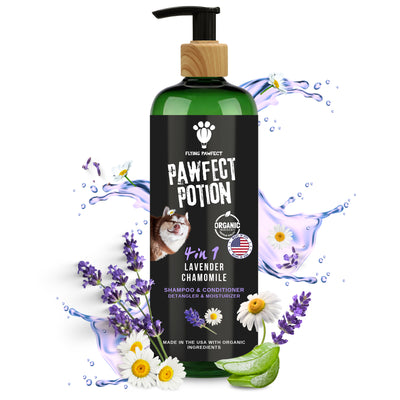
Flying Pawfect Pawfect Potion 4-in-1 Shampoo
When a wash is genuinely needed, what the coat wants is something that cleans without stripping it, because a stripped coat picks up the next week's mud faster than a conditioned one does.
The Pawfect Potion 4-in-1 uses plant-derived cleansers and is pH balanced, with no dyes, SLS, parabens, phthalates or alcohol. It cleans, conditions, detangles and moisturises in one step, which matters after a mud wash because the comb-through afterwards is where most of the pulling would otherwise happen.
Dilute it before it touches the coat. A capful in a jug of warm water spreads far better through a thick coat than neat product does, and it rinses out in a fraction of the time. Mud washes go wrong most often at the rinse stage, not the lather stage.
Work from the shoulders back and save the legs and belly for last, since that is where the dirt is.
Rinse until the water runs completely clear, then rinse once more. Residue left in a dense coat attracts dirt and leaves the coat feeling tacky.
Never substitute human shampoo, washing up liquid or any household detergent. Dog skin has a different pH and a thinner outer layer, and degreasers designed for plates are far harsher than anything a coat needs.
- Best for: The wash that follows a heavy mud day
- Why it works: Cleans and conditions in one pass, so the post-bath comb-through is easier
- Context: Dilute in warm water and rinse twice

Flying Pawfect Long Tooth Comb
A slicker brush tells you the surface is clear. A comb tells you the truth. Long steel teeth pass all the way to the skin, so anything still holding on shows up as resistance you can feel through the handle.
Run it through the belly, the armpits, the backs of the legs and the tail underside once the brushing is done. If the comb travels freely from root to tip, the mud is out. If it stops, there is still a clump sitting where you cannot see it.
The dual density teeth help here. The wider spacing takes the first pass through a thick or still slightly damp coat, and the closer spacing checks the same area afterwards for anything the first pass rode over.
Never force it. A comb that meets resistance is finding a mat, and driving it through pulls hair out at the root. Back it out, separate the clump with your fingers, and go again.
- Best for: Confirming a coat is genuinely clear after brushing
- Why it works: Long teeth reach the layer a slicker can skim over
- Context: Also the right tool for a final check after a bath
Step by Step: Removing Dried Mud From a Muddy Dog
Adjust the timings below for coat thickness, but do not reorder the steps.
- 1. Contain, do not clean. Put the dog somewhere easy to sweep and let it settle. Resist the urge to start wiping.
- 2. Blot the wettest areas. Press a towel against the belly, chest and feet. Press and lift, never rub in circles.
- 3. Wait for the crust. Twenty to forty minutes. The mud should crumble between your fingers rather than smear.
- 4. Break the crust by hand. Crumble the larger plates with your fingertips before any tool touches the coat.
- 5. Brush in short strokes. Start at the back and work forward. Three or four inch strokes, light pressure, clearing the pins often.
- 6. Do the feet properly. Spread each foot open in a flat palm, never gripping, and work the dried plugs out from between the toes.
- 7. Comb to check. Belly, armpits, backs of legs, under the tail. Resistance means you are not finished.
- 8. Wash only if needed. Diluted shampoo, warm water, dirtiest areas last, rinse twice.
- 9. Dry thoroughly. A damp double coat that is left to dry on its own mats overnight.
Drying is the step people cut short, and it undoes the rest. How to Dry a Dog After a Bath covers how to get a thick coat dry all the way to the skin without heat damage.
Prevention Tips for Muddy Walk Season
You cannot stop a dog finding mud, but you can change how much of it ends up locked into the coat. Most of this is about reducing surface area and keeping the coat in a state where dirt falls off rather than sticking.
- Brush before the walk as well as after. A tangle-free coat sheds mud far better than a coat with knots already forming
- Keep the hair between the pads trimmed by a groomer, so there is less for mud to pack into
- Take the harness off before the coat dries, so mud is not pressed into the same spot for an hour
- Keep a towel and the brush by the door, because a routine that needs fetching things does not survive December
- Deal with mud the same day, because overnight is what turns a clump into a mat
- Avoid standing or stagnant water where you can, particularly in warm weather
That last point is worth expanding, because it is the one place in this routine where waiting is dangerous. Standing water can carry blue-green algae, which is toxic to dogs and can act within hours. If you think your dog has been in or has drunk from scummy, discoloured, foamy or foul smelling still water, rinse the coat properly, stop the dog licking itself dry, and contact a vet straight away. Do not wait to see whether the dog becomes unwell first. By the time a dog is wobbly, sick or unusually tired the window for treatment has already narrowed, so suspected exposure alone is reason enough to ring.
Common Mistakes When Cleaning a Muddy Dog
Almost every mud mat has one of these behind it, and none of them look like mistakes at the time.
- Hosing the dog down on arrival. It drives clay straight into the undercoat
- Rubbing with a towel. Circular rubbing on a wet coat is how mats are made. Blot instead
- Brushing a soaking coat. Wet hair stretches and snaps
- Pushing a brush or comb through a clump. It pulls at the root and teaches the dog that grooming hurts
- Using hot water. Warm is right. Hot is uncomfortable and dries the skin
- Reaching for household detergent. Washing up liquid is a degreaser, not a coat product
- Skipping the feet. The area most likely to hide grit, salt and small cuts
- Leaving the dog damp. A damp undercoat overnight is worse than the mud was
One more that is less about technique. If you find broken skin, a cut, a thorn, persistent licking at one spot, swelling, or skin that is red and hot under where the mud was, stop grooming that area and speak to a vet. Mud can hide an injury picked up on the same walk, and a brush over a wound is painful and makes it worse.
FAQs
Should I wash mud off my dog straight away or let it dry?
Let it dry in almost every case. Dried mud fractures and brushes out with very little coat loss, while wet mud spreads into clean hair and works down toward the skin. The exception is if the mud came from stagnant water, road salt, or anything that might be chemically contaminated, in which case rinse it off promptly and ring a vet if standing water may have been involved.
How long does dog mud take to dry enough to brush?
Usually twenty to forty minutes on a short or medium coat, and longer on a thick double coat. The test is texture, not the clock. If the mud crumbles between your fingers it is ready, and if it smears it needs more time.
Can I brush mud out without bathing my dog at all?
Very often yes. A slicker brush and a comb will clear most dried mud from a healthy coat, and if the dog does not smell and the comb runs freely there is no reason to bath. Washing every muddy walk strips the coat and creates a drying job on top of a brushing job.
What is the best brush for a muddy dog?
A slicker brush with fine bent pins, in a size that suits the dog. Flat heads cover more ground on medium and large coats, and a smaller head is easier around faces and feet. Clear the pin field frequently, because a slicker packed with dry clay stops working and starts dragging.
How do I get dried mud out from between my dog's toes?
Rest the foot in an open palm rather than gripping it, and let the dog pull away if it wants to. Crumble the dried plug with your fingertips, then use a small brush or the fine end of a comb to lift what is left. If your dog flinches sharply, or you see redness, swelling or persistent licking, have a vet look at it before you continue.
Does mud damage a dog's coat or skin?
Mud on its own is not harmful, but leaving it in place is. Clay holds moisture against the skin for hours, which softens it and makes it easier to irritate, and dried clumps pull neighbouring hairs into mats. Grit and road salt carried in with the mud are more abrasive than the mud itself.
Is it safe to use a hairdryer on a muddy dog?
Only on a cool or low setting, held moving and well back from the skin, and only once the loose mud is already out. Hot air on a dirty coat bakes clay into the hair and can burn skin you cannot see under the coat. A towel and time are safer than heat.
My dog hates being cleaned after walks, what can I do?
Shorten the sessions rather than fighting through them. Two minutes on the legs, a break, two minutes on the belly, and something good at the end builds a dog that tolerates the routine. If the dislike started suddenly, check for a mat or a sore spot, because pain is the usual explanation for a dog that used to be fine.
Final Thoughts
Mud is a timing problem more than a cleaning problem. Wait for it to dry, break it by hand, lift it with a slicker brush, check with a comb, and wash only what is left. Done in that order it is a short job, and the coat comes through the winter in better shape than it would with weekly baths.
The parts worth being careful about are the belly, the backs of the legs and the feet, because that is where the mud collects and where it does the most damage if it is left.
And if something under the mud does not look right, stop and ask a vet. A clean coat matters, but not as much as a sore spot that has been brushed over three evenings running.
![[CL] Flying Pawfect coral large flat slicker brush for dogs](http://flyingpawfect.com/cdn/shop/files/CoralLarge2026.jpg?v=1783693245&width=400)
![[BL] Flying Pawfect baby blue large curved slicker brush for doodles and long haired dogs](http://flyingpawfect.com/cdn/shop/files/CBL_HERO_26_05_819be2a4-36dd-43dc-bda3-1730fa9e5818.jpg?v=1784475444&width=400)