

Brush a dog's paws with a small slicker on the top of the foot and the feathering behind the ankle, then use a comb for the hair between the toes, working from the skin outwards with the foot resting in your palm rather than lifted. Never put scissors between the pads, and never pull a comb through a mat you can feel against the webbing.
Feet are the part of the dog most owners skip. They are awkward to reach, most dogs dislike having them held, and the hair down there looks short enough not to matter. Then the dog starts licking one foot, or limping on a walk, and the cause turns out to be a pea-sized mat wedged between two toes that has been getting tighter for a fortnight.
The good news is that paws take about ninety seconds a week once the dog accepts the handling. The hard part is the handling, not the grooming, and it is teachable.
This guide covers what collects down there, how to brush and comb it out safely, and when a paw problem is a job for the vet. If you are already working on the legs, the technique in How to Brush a Dog’s Legs Without Missing Mats continues straight down into the foot.
Why Paw Hair and Toe Tufts Get Missed in Most Grooming Routines
A dog's foot is not one surface. It has a furred top, a hairless pad underneath, webbing between the toes that is among the thinnest skin on the body, and on many breeds a tuft of hair growing out of the gap between the pads. Each part behaves differently, which is why a quick pass with the brush you use on the back does nothing useful.
The webbing is the part to respect. It is soft, thin, stretches when the toes spread, and has almost no coat over it. A comb tooth that catches there hurts far more than the same pull on a thick flank, and a dog that gets hurt once on a foot remembers it for months.
There is also a visibility problem. Hair between the pads sits under the foot, so you never see it unless you turn the foot over.
- Feathered breeds such as Spaniels, Setters and Retrievers grow long hair down the back of the pastern that drags through everything
- Curly and wavy coats including Poodles and doodles grow hair straight out from between the pads
- Double coated breeds grow a dense wedge of undercoat between the toes that packs with snow and grit
- Short coated breeds have the least hair and the most exposure, so their problem is debris and cuts rather than mats
Whatever the coat, the foot touches everything. Mud, salt, grass seeds, road grit, sand and ice all arrive there first, and the hair holds on to all of it.
How Mats and Debris Build Up Between the Toes and Pads
Toe mats form differently from body mats and that changes how you treat them.
On the body, a mat usually starts as shed hair caught in the coat that then felts under friction. Between the toes there is far less hair, so a mat there is almost always built around something: a grain of grit, a burr, a seed head, or dried mud that set like cement. The hair wraps around it and tightens every time the dog puts weight on the foot.
That is why they get painful so quickly. A body mat sits against skin that does not move much. A toe mat sits in a joint that flexes with every step, so it works against the webbing hundreds of times an hour.
The usual sequence:
- Something gets caught. A seed, a burr or a lump of wet mud lodges between two toes
- The dog licks at it. Wet hair that dries under pressure sets hard
- The mat tightens. Weight bearing compresses it and pulls the two toes together
- The skin reacts. The webbing gets sore and the licking increases, which wets it again
- The gait changes. The dog shifts weight off that toe, which is usually when the owner notices
Winter adds ice balls to the list. Snow packs into the hair between the pads, melts from body heat, refreezes into a solid marble and then the dog walks on it. This is the same wet-then-dry mechanism described in Why Dogs Get Mats on the Legs After Brushing, concentrated into a much smaller space.
What a Weekly Paw Check and Brush Involves
The routine is short and mostly looking. Once a week for most dogs, and after every walk in long grass, snow or sand.
Sit with the dog rather than standing over it, and rest the foot in your open palm instead of gripping it. This is the biggest single difference between a dog that tolerates paw handling and a dog that pulls away. A held foot feels trapped. A supported foot does not.
Work through the four parts of the foot in the same order every time:
- The top of the foot. Brush in the direction the hair grows. This is the easy part and it is where you start to keep the dog relaxed
- The feathering behind the pastern. On feathered breeds this is the longest hair on the leg and it tangles first
- Between the toes on top. Separate each pair of toes with your fingers and look into the gap
- The underside. Turn the foot gently so you can see the pads, and check the hair growing between them
While you are there, look at the things that are not grooming problems. Cracked or peeling pads, a cut, a thorn, a tick in the webbing, a nail long enough to push the toe sideways, or a swollen red lump between two toes. Persistent licking of one foot, swelling, a bad smell, limping or skin that is red and angry rather than just pink all need a vet rather than a brush. Sore feet have a long list of medical causes and grooming is not the treatment for any of them.
Nails matter here too. Overgrown nails change how a foot lands, which changes where the hair rubs, so a dog with long nails tends to get more toe mats. If you are not confident cutting them, a vet nurse or groomer will do it quickly.
Recommended Tools for Paw Hair and Toe Tufts
Feet want small tools. A large brush cannot get into a gap the width of your finger, and the temptation to press harder to compensate is exactly what frightens the dog.

Flying Pawfect Slicker Brush
The small flat slicker is the right size for a foot. The head is narrow enough to work the top of a paw and the feathering behind the ankle without the edge of the brush catching a dew claw or a nail, which is the usual reason a dog snatches its foot back.
The pins are fine bent stainless steel and densely set, so the brush lifts loose hair and opens the feathering on contact rather than needing to be dragged. That matters more on a foot than anywhere else, because there is very little coat depth between the pins and skin that is far thinner than the skin on the back.
Hold the brush like a pen rather than gripping the handle in your fist. It changes the angle, keeps the pressure light and stops your knuckles bumping the leg. Brush down the back of the pastern in the direction the hair grows, in short strokes, with the foot still resting in your other palm. On the top of the foot, two or three light passes is plenty.
The small head also helps a dog that is learning to accept this. A brush covering most of the paw looks alarming to a dog that has just offered you its foot.
What this brush is not for is the gap between the pads on the underside. That is comb work. A slicker has no business being pressed into the webbing.
- Best for: the top of the foot and the feathering behind the pastern on Spaniels, Setters, Retrievers and doodles
- Why it works: a narrow head reaches a small area without catching nails or dew claws
- Context: fine bent steel pins lift loose hair on contact, so no pressure is needed on thin paw skin
This is the flat version, which suits straight coats, double coats and feathering. For a curly coat the curved head in the same range sits better against the leg. Both are on the Flying Pawfect brush range.

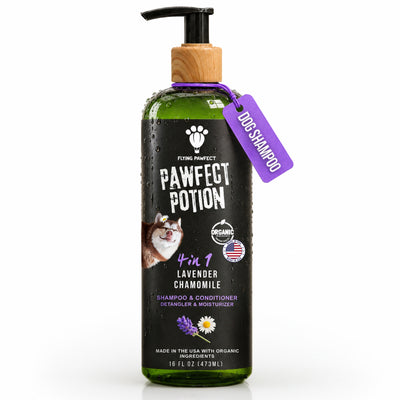
Flying Pawfect Pawfect Potion 4-in-1 Shampoo
Feet get washed more often than the rest of the dog, and usually washed badly. A rinse under the outside tap shifts the visible mud and leaves the fine grit sitting in the hair between the pads, where it goes on working against the skin.
A proper wash of the feet alone is a reasonable weekly job for a dog that walks on treated pavements or through stubble. A small amount of the Pawfect Potion in a bowl of warm water, each foot in for a few seconds, a gentle work through with your fingers, then a thorough rinse with clean water. It cleans, conditions, detangles and moisturises in one pass, so a single product covers the job.
The conditioning side makes the difference for the next brush. Feathering that has been washed and conditioned separates far more easily than feathering rinsed with plain water and left to dry stiff.
It is pH balanced, built on plant derived cleansers with organic ingredients, and free of dyes, SLS, parabens, phthalates and alcohol. It is made in the USA and suits all animals, so it is the same bottle for the cat and for the muddy dog.
The part owners skip is drying. A foot that goes back on the floor damp is a foot that mats between the toes, so towel each one properly and get right in between the pads. And no shampoo goes on a cut, a crack or an area that is already red and sore. Broken skin on a paw is a vet question, not a washing one.
- Best for: washing grit, salt and mud out of the hair between the pads after walks
- Why it works: cleans, conditions, detangles and moisturises in one pass, so feathering brushes out easily afterwards
- Context: pH balanced, plant derived cleansers, no dyes, SLS, parabens, phthalates or alcohol

Flying Pawfect Long Tooth Comb
The comb is the tool that actually does the toes. Nothing else gets into a gap that narrow with any control, and the steel teeth let you feel what is in there through your fingers when you cannot see the underside of the foot properly.
Use the wider spaced side between the toes, coming from the skin outwards: start at the base of the gap and draw the teeth toward the tips of the hair rather than driving down into the webbing. A few short strokes, then look at what came out. Grit, a seed head or a wad of packed undercoat is usually sitting in the teeth.
If the comb meets resistance, stop. Do not lever it, twist it or pull. Support the hair between the tangle and the skin with your finger and thumb, work at the outer edge of the mat with the tips of the teeth, and take a few passes over a few days. A toe mat that will not open in a couple of gentle attempts is a groomer job.
The finer side is for checking the feathering after brushing. If it travels from the skin out, that section is clear. If it snags, there is a compressed layer the slicker passed over. The teeth are long enough to reach through the feathering on a Setter or a Golden, which is where most owners find they have been brushing only the top half.
- Best for: the hair between the toes and between the pads, and checking feathering after brushing
- Why it works: dual density steel teeth reach into a narrow gap and let you feel debris you cannot see
- Context: worked from the skin outwards and never forced, so no tension reaches the webbing
Step by Step: Brushing a Dog's Feet Without a Fight
Do one foot per session at first if that is all the dog will give you. Four feet in one go can wait until the handling is easy.
- 1. Sit beside the dog, not over it. On the floor, with the dog lying or standing as it prefers.
- 2. Rest the foot in your open palm. Do not close your hand around it. If the dog lifts the foot away, let it go and offer again in a moment.
- 3. Brush the top of the foot. Two or three light passes in the direction the hair grows, stopping at the nails.
- 4. Brush the feathering, then comb it through. Down the back of the pastern in short strokes, then comb from the skin outwards. Anything that snags goes back to the brush.
- 5. Separate the toes on top. Spread each pair gently with finger and thumb and comb the gap with a few short outward strokes.
- 6. Turn the foot over. Bend the leg the way it naturally folds, never against the joint, and look at the pads.
- 7. Comb the hair between the pads. Outward only, no force. Remove anything lodged in there if it lifts freely.
- 8. Check and finish. Look for cuts, cracks, ticks and redness, then put the foot down and stop while the dog is still happy.
A dog that hates having its feet touched is not being difficult. Feet are vulnerable and many dogs have had a bad experience with nail clipping. Build it up in seconds rather than minutes, hold a foot briefly and let go before the dog asks, and pair it with something the dog likes.
Prevention Tips for Grass Seeds, Ice Balls and Toe Mats
Most toe mats are preventable, and prevention is mostly about the ten minutes after a walk.
- Check feet after every walk in long grass. Grass seeds and foxtails have barbs that travel one way only and can work through skin. Late spring through summer is the risk period.
- Dry the feet properly. A towel between every pair of pads, every time the dog comes in wet. This alone prevents most toe mats.
- Rinse after treated pavements. Road salt and grit irritate paw skin and encourage licking, which wets the hair.
- Keep the pad hair short. Hair level with the pad collects far less. Have a groomer clipper it rather than cutting it yourself.
- Keep the nails short. Long nails splay the toes and change how the hair rubs between them.
- Watch for a favourite foot. A dog licking one paw repeatedly is telling you something. Look at it properly rather than discouraging the licking.
The same logic that keeps hair open under a collar applies to the gap between two toes, and Preventing Mats Under Collar and Harness Areas covers how to build those checks into a routine you actually keep up.
Common Mistakes When Trimming and Brushing Paw Hair
- Using scissors between the pads. The webbing tents up into the blades and it happens faster than you can react. Groomers use a clipper there for exactly this reason.
- Gripping the foot. A held foot triggers the pull-away reflex. Support it instead and the dog leaves it with you.
- Bending the leg the wrong way. Fold the joint the way it naturally goes. Twisting a carpus or a hock for a better view is how a session ends badly.
- Forcing a comb through a toe mat. There is nowhere for the skin to go. Take several gentle attempts across several days, or hand it to a groomer.
- Ignoring persistent licking. Constant licking of one foot, swelling between the toes, a smell or redness that does not settle are veterinary problems. Brushing is not the answer to any of them.
FAQs
How often should I brush my dog's paws?
Once a week is enough for most dogs, and after any walk through long grass, snow, sand or treated pavement. Feathered and curly coated breeds benefit from a quick comb through the feathering twice a week because that hair tangles fastest.
Can I cut the hair between my dog's pads?
Not with scissors. The webbing lifts into the blades very easily and paw cuts are the most common injury from home grooming. A groomer or vet nurse will clipper the pad hair flush in under a minute, and it is worth having done every few months on a hairy footed breed.
Why does my dog keep licking one paw?
Something in that foot is bothering it. It might be a mat, a grass seed, a splinter, a cut or a cracked pad, but it can also be an allergy, an infection or a sore joint. Look at the foot properly, and if you cannot find an obvious cause or the licking continues, have your vet check it.
What is the best brush for a dog's feet?
A small slicker for the top of the foot and the feathering, and a steel comb for the gaps between the toes and pads. A large brush cannot reach the places that actually matter and encourages you to press harder than paw skin should ever be pressed.
How do I get a grass seed out of my dog's paw?
If it is sitting loose in the hair, comb it out gently with an outward stroke. If it has already worked into the skin, into the gap between the pads or you cannot see the end of it, do not dig for it. Seeds travel inward and need a vet to remove properly.
My dog pulls its foot away every time. What can I do?
Hold the foot for one second and let go before the dog asks. Repeat that a few times a day for a fortnight, adding a second at a time, and pair it with something the dog enjoys. Most foot refusal is learned from nail clipping and it unlearns the same way.
Final Thoughts
Paws reward a small habit rather than a big effort. A weekly ninety seconds with the foot resting in your palm, a small slicker on the top and the feathering, and a comb worked outwards between the toes will catch almost everything before it becomes painful.
Keep scissors out of it entirely, never force a comb into the webbing, and treat a dog that is licking one foot as a dog telling you something rather than a dog with a bad habit. Get the handling right first and the grooming takes care of itself.