
The best brush for a Coton de Tulear is a small curved slicker brush with long soft pins, used with a long tooth comb to check down to the skin. A Coton carries a single cottony coat that hardly sheds, so every loose hair stays in there until you take it out, and that one fact decides the whole routine.
There is no harsh outer layer on this breed and no real undercoat to lift away. It is one long soft coat the whole way through, closer in behaviour to human hair than to a double coated dog, and it felts rather than simply tangles if it is left alone.
Where it goes first is the same on every Coton: behind the ears, under the collar, in the armpits, and along the back legs and rear. All four are places that a quick pass over the top of the coat misses completely.
The three tools below handle a Coton between professional grooms, and the ten minutes a day after them is what keeps the groomer from having to clip the coat off.
Why the Right Brush Matters for a Coton de Tulear Coat
A low shedding coat sounds like less work and is in fact more. A shedding dog drops its loose hair on your floor, where it is your problem for five minutes. A Coton holds that hair inside the coat, where it becomes the material a mat is built from.
That changes what a brush has to do. It is not lifting a dead undercoat out of a dense layer, it is separating long fine hair that is already starting to bind to itself, and it has to reach the skin to do it.
A short pinned or stiff bristled brush cannot. It moves the top of the coat around, leaves it looking brushed, and leaves a rope forming against the body. The Bichon is the nearest relative with the same trap, and Best Brush for Bichon Frises works through it on the parent breed.
- The coat holds its own shed hair, so brushing is removal rather than tidying.
- Mats form at the skin and grow outward, so surface brushing misses them entirely.
- Long soft pins on a flexible head reach the base of the coat without digging in.
- A cottony coat clogs a pin bed fast, so clearing the pad is part of the session.
How a Cottony Coat Traps Its Own Shed Hair
Every hair a Coton loses has to get out through the rest of the coat, and a long soft coat is very good at holding onto it. The loose hair wraps around the hairs still growing, and the first stage is a soft cloudy patch rather than a knot you can feel.
Friction then does the rest. Anywhere the coat is rubbed or pressed, that soft patch is worked tighter until it becomes a firm pad sitting flat against the skin. That is felting, and it happens in days rather than weeks.
The four places it happens are the four places something moves against the coat all day: the ear leather, the collar, the front legs and the rear.
- Behind the ears, where heavy ear leather swings on every step.
- Under the collar or harness, where steady pressure felts the hair.
- In the armpits and behind the elbows, from the front legs moving.
- On the back legs and around the rear, which also pick up debris.
If you find a pad that is already solid against the skin, do not work at it. A felted mat cannot be combed free without hurting the dog, and if the skin underneath looks red, broken or sore, that needs a vet before it needs a groomer.
What a Realistic Coton de Tulear Brushing Routine Looks Like
Ten minutes a day holds a full length Coton coat, with a longer whole body session once a week. The window between a tangle and a felted mat on this coat is about two days, so how often you get in there matters far more than how long you spend.
The puppy coat change is the exception and it catches most owners out. Somewhere between eight and twelve months the soft puppy hair and the incoming adult coat tangle into each other, and a puppy that never matted can mat every two days for a few months.
- Ten minutes daily on a full length coat, brush and then comb.
- A longer session once a week that covers every section to the skin.
- Daily without exceptions through the puppy coat change.
- A shorter pet trim if the daily routine is not realistic, which is a fair choice.
Keeping the coat shorter is not a failure. A clipped Coton is still a Coton, and a short coat that is comfortable beats a long one that gets shaved off twice a year. Best Brush for Havanese Dogs covers the same decision on a breed with an almost identical coat.
Recommended Tools for a Cottony White Coat That Mats
Three tools cover a Coton de Tulear properly. Flying Pawfect does not make scissors, clippers or a detangling spray, so there is nothing to sell you there, and near a small dog face that is just as well.

Flying Pawfect Curved Slicker Brush
The Curved Slicker Brush in the small size is the right tool for a Coton, and the argument is about shape rather than coat length. A Coton is a small dog made of curves: a round skull, a short neck, a compact ribcage and legs you can close a hand around.
A curved head follows those shapes and meets the coat at an even depth all the way across. A flat head bridges over them and presses its corners into the skin at either side, which is how a small dog learns to dislike the brush rather than the mats.
The pins are long and set on a flexible bed, which is what reaches the base of a deep soft coat instead of skimming the top of it. On a coat that mats from the skin outward, that reach is the entire point.
Take the small on an adult Coton and on a puppy. There is not enough dog here to need a bigger head, and the small is far easier to work around the ears, the face and the legs.
- Best for: the body, legs, ears and the whole daily pass, in short light strokes.
- Why it works: long pins on a curved flexible head reach the skin without digging into it.
- Keep it clear: a cottony coat fills a pin bed quickly, so clean the pad as you go.

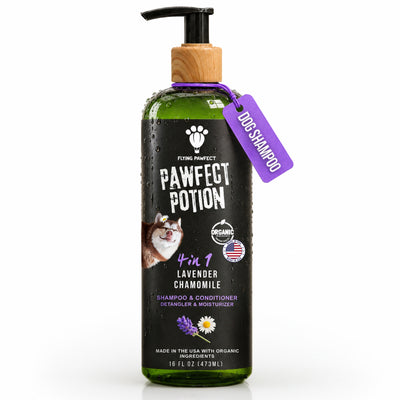
Flying Pawfect Pawfect Potion 4-in-1 Shampoo
A white coat gets washed more often than most, so the 4-in-1 Dog Shampoo and Conditioner does real work on this breed. It cleans and conditions in one step, which reduces brushing friction afterwards on a coat where friction is the whole problem.
It is pH balanced for dogs, uses plant-derived cleansers and organic ingredients, and is free of dyes, SLS, parabens, phthalates and alcohol. It is made in the USA with organic ingredients.
The order matters more than the product here. Brush and comb the whole coat out before the water goes anywhere near it, because a tangle plus water is a mat, and dry the coat fully afterwards. A damp cottony coat felts as it dries.
- Best for: the regular baths a white long coat genuinely needs.
- Why it works: cleaning and conditioning in one step, which reduces brushing friction.
- Order of work: comb out first, wash second, dry right down to the skin third.

Flying Pawfect Long Tooth Comb
The Long Tooth Comb is the only tool in the kit that cannot be fooled by a tidy surface. On a Coton it is the difference between a coat you think is clear and a coat that is clear.
The teeth are long enough to reach skin through a full length Coton coat. Run it through a section after you have brushed it, and if it travels freely from skin to tip you are done with that section.
Comb the four trouble spots every single day, even on a day you do not brush the whole dog. Behind the ears, under the collar, the armpits and the rear take about two minutes between them.
- Best for: proving a section is clear to the skin after brushing it.
- Why it works: long teeth reach the base of the coat, where mats actually start.
- Daily job: the ears, collar line, armpits and rear, which is two minutes of work.
Step by Step: Line Brushing a Coton de Tulear
Line brushing is the technique that makes this coat manageable, and it is the only one that reliably reaches the skin. You part the hair in a line, brush only the band below the parting, then move the line up and repeat.
On a dog this size the whole body takes about ten minutes once the habit is in place. It is the difference between a coat that holds its length and a coat that comes off short at the next appointment.
- Sit the dog in your lap or on a non-slip surface at a comfortable height for your hands.
- Start at a back leg, part the coat low down, and hold the hair above the parting back.
- Brush the exposed band gently outward from the skin until it releases with no resistance.
- Move the parting up a little, repeat to the spine, then do the other side.
- Finish with the ears, the collar line, the armpits and the rear, then comb all four.
Do the face last and do it with the comb rather than the brush. A tangle right beside an eye is a groomer job rather than a home one. The same method works on any fine long coat, and Best Brush for Maltese Dogs covers it on a silkier version of the same problem.
Prevention Tips for Mats Behind the Ears and Under a Coton Harness
Almost all of this coat is a prevention job. Once a mat is felted there is no brush that takes it out kindly, so everything useful happens before that point.
- Take the collar off indoors where it is safe to, and comb underneath it daily.
- Keep the hair under the ear flaps short, which removes the worst spot entirely.
- Dry the coat fully after a bath or a wet walk, because a damp cottony coat felts as it dries.
- Book the groomer on a fixed cycle rather than when the coat looks bad, so you never fall behind.
Tear staining is the other thing most Coton owners deal with, and a white coat shows it plainly. Keep the hair around the eyes short and the area clean and dry. If the discharge changes, or the eye looks sore or is being rubbed, that is a vet visit rather than a grooming fix.
Common Mistakes Coton de Tulear Owners Make
Four mistakes account for most of the coats that arrive at a groomer needing to come off, and not one of them is about how much the owner cares.
- Brushing the surface and never parting the coat, so the brush never reaches the skin.
- Assuming a low shedding dog needs less brushing than a shedding one.
- Skipping the ears because the dog objects, which is exactly why they mat first.
- Bathing a coat that has not been combed out, which turns every tangle into a mat.
FAQs
What is the best brush for a Coton de Tulear?
A small curved slicker brush with long soft pins, used with a long tooth comb to check to the skin. The curved head suits a small round bodied dog, and the long pins reach the base of a deep cottony coat. The small size is right for an adult as well as a puppy.
Do Coton de Tulears shed?
Barely, and that is the problem rather than the benefit. The loose hair stays in the coat instead of falling out, and it becomes the material that mats are made from. A low shedding dog needs more brushing than a shedding one, not less.
How often should a Coton de Tulear be brushed?
Daily for about ten minutes on a full length coat, with a longer whole body session weekly. The gap between a tangle and a felted mat is roughly two days on this coat. Daily is not optional during the puppy coat change.
Why does my Coton keep getting mats behind the ears?
The ear leather is heavy and it moves on every step, and the hair underneath it is fine and long. That combination ropes within a few days if nothing gets in there. Comb behind both ears daily and keep the hair under the flaps short.
How often does a Coton de Tulear need professional grooming?
Every six to eight weeks for most of them, because the hair keeps growing rather than shedding out. Brushing at home does not replace the appointment, but it decides what happens at it. A well brushed dog gets a trim and a matted one gets clipped short.
What should I do if my Coton de Tulear is already badly matted?
Do not try to brush it out. A coat that has felted against the skin cannot be combed free without hurting the dog, and pulling at it can tear the skin underneath. Book a groomer and expect a short clip, and if the skin underneath looks red, broken or sore, see a vet first.
Should I brush a Coton de Tulear before or after a bath?
Before, always, and it is the single most useful habit on this coat. Water tightens anything that is already tangled, so a coat that goes into the bath knotted comes out matted. Comb the whole dog through first, then wash, then dry right down to the skin.
Final Thoughts
A Coton de Tulear is a straightforward coat to keep and a very easy one to lose. Nothing about it is difficult, but it is unforgiving about gaps, because the hair it sheds has nowhere to go and starts binding within days.
Ten minutes a day with a small curved slicker, a two minute comb through the ears, collar line, armpits and rear, and a full brush out before every bath. Do that and the coat holds its length between grooms, which is the whole aim.