A grooming glove and a slicker brush are not competing versions of the same tool. A glove strokes loose hair off the surface of a short coat and is excellent at making a nervous dog comfortable with being handled. A slicker brush reaches under the outer coat, clears the undercoat and opens tangles. If your dog has any length or density to its coat, the glove will not do the job.
That is the short answer, and it is worth saying plainly because gloves are marketed as a gentler replacement for a brush. They are gentler, but gentleness is not the same as effectiveness, and a coat that needs a slicker does not stop needing one because a glove feels nicer.
Where gloves genuinely earn their place is on smooth-coated dogs, on dogs that are frightened of tools, and as the first ten seconds of a grooming session before the real work starts. All three of those are real uses and this guide covers them honestly.
Below is what each tool physically does to a coat, which dogs suit which, and how to use both together so the glove does the job it is actually good at.
Why the Slicker Brush and Grooming Glove Do Different Jobs
The difference comes down to how far into the coat each tool reaches. A grooming glove has short rubber or silicone nubs, usually three to six millimetres long, mounted on a flexible palm. A slicker brush has fine bent steel pins, commonly fifteen to twenty five millimetres depending on size, set in a dense field on a sprung pad.
Nubs that short can only work on what is already at the surface. They catch hair that has shed but not yet fallen, and they drag it clear. That is genuinely useful on a Labrador, a Staffie or a Beagle, where the shed coat sits loose on top and there is no undercoat layer to get through.
Steel pins go past the outer coat and comb the layer underneath. On a double coat, a doodle or any long coat, that layer is where the shedding and the matting actually happen, and a tool that never reaches it is polishing the roof while the attic fills up. The same reasoning drives the comparison in Slicker Brush vs Pin Brush | Which One Your Dog Needs.
- Glove: short flexible nubs, surface only, follows the shape of the body
- Slicker: fine bent steel pins, reaches the undercoat, opens tangles
- Glove: almost no feedback through the hand about what is under the coat
- Slicker: you feel a mat the moment you meet one
How a Grooming Glove Actually Moves Hair
A glove works by friction, not by combing. The nubs grip loose hair as the hand passes over, and the hair collects into a sheet on the palm that peels off in one piece. On the right coat it is quick, tidy and pleasant for the dog.
Because your hand is inside it, the pressure is naturally even and the tool cannot dig. That is the glove's best structural feature and it is why it suits dogs that have had a bad experience with grooming. There is no hard edge, no unfamiliar object approaching the face, and the dog reads it as stroking rather than being groomed.
The limitation is the same feature. A glove cannot apply the localised pressure needed to work through a tangle, and it cannot separate hairs, only pull at them collectively. Run a glove over a mat and it either slides over the top or tugs the whole mat as a unit, which the dog feels at the root.
There is also a quiet problem with the way gloves are used. Because they feel like stroking, people cover a dog in thirty seconds and believe the coat has been groomed. On a smooth coat that may be true. On anything longer it produces a dog that looks tidy and is quietly matting underneath.
What Each Tool Can and Cannot Reach in a Coat
It helps to think in layers. A typical double coat has guard hairs on top and a dense woolly undercoat beneath. A long single coat has one layer, but it is long enough that the bottom third sits against the skin where you cannot see it. A smooth coat is effectively surface only.
Match the tool to where the problem lives, and the choice becomes obvious.
- Smooth coats, for example Boxers, Staffies, Beagles, Whippets: glove works well, slicker optional and best in a soft version
- Short double coats, for example Labradors, Corgis: glove helps with surface shed hair, slicker still needed through moult
- Thick double coats, for example Huskies, German Shepherds, Samoyeds: slicker essential, glove is a finisher at most
- Curly and wavy coats, for example Poodles, Doodles, Bichons: slicker essential, glove does almost nothing useful
- Long silky coats, for example Yorkies, Shih Tzus, Setters: slicker plus a comb, glove is not a substitute
- Cats: a soft slicker in a small size, used lightly, and a glove for the ones that will not tolerate a tool at all
Notice that the glove is never the only tool on anything but a smooth coat, and it is never wrong on a smooth coat. That is the honest shape of the answer.
Recommended Tools for Coats That Need More Than a Glove
If your dog sits in any of the middle four rows above, the glove is a supporting act. These three cover the work it cannot do.

Flying Pawfect Large Flat Slicker Brush
The large flat slicker brush is the tool a glove is usually bought instead of, and the one most owners end up needing anyway once the first moult arrives.
Its pins are fine bent stainless steel, densely set, and 25 mm long on this size. The bend is the part that matters and the part gloves have no equivalent of. A bent pin slides along the hair shaft rather than scraping down the skin, so it can be long enough to reach the undercoat without being sharp against the body.
The head measures 8.5 by 4 inches and the brush weighs 121.6 g. A light head is not a luxury on a big coat, because the weight of the tool sets the baseline pressure and anything heavy pushes the pins in harder than you intended over a twenty minute session.
Used properly it is no less gentle than a glove. The technique is short strokes, light pressure, and letting the pins do the work rather than pressing. Owners who find a slicker harsh are almost always using long sweeping strokes with weight behind them, which is a habit carried over from brushing human hair.
It also gives you information a glove cannot. When the pins meet a mat you feel it instantly through the handle, which means you find problems while they are still small enough to tease apart with your fingers.
On a smooth-coated dog, or a cat, choose a smaller head with a softer pad rather than this one. Size and stiffness should follow the animal, not the other way round.
- Best for: Undercoat, tangles and anything a glove slides over
- Why it works: Bent pins reach depth without scraping skin
- Context: Short strokes and light pressure, never long sweeps
The same depth argument separates a slicker from the other tool it gets compared with, and that comparison is worth reading if shedding is your main concern: Slicker Brush vs Deshedding Tool | Which Is Better for Shedding Dogs?

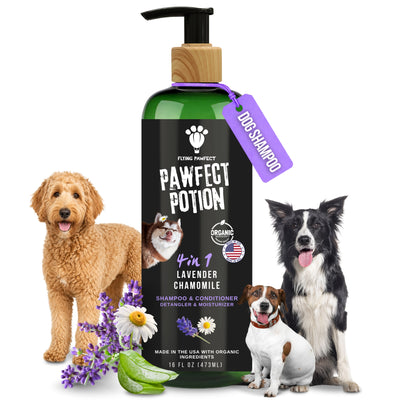
Flying Pawfect Pawfect Potion 4-in-1 Shampoo
Tool choice is half the picture. The other half is how much friction the coat puts up, and that is what a wash changes.
The Pawfect Potion 4-in-1 cleans, conditions, detangles and moisturises in a single step. A coat that has been washed and dried properly lets both a glove and a slicker move through it with noticeably less drag, which means less pulling at the root.
It is pH balanced and built on plant-derived cleansers, with no dyes, SLS, parabens, phthalates or alcohol, and it is made in the USA. For owners who are choosing a glove because they worry about their dog finding grooming uncomfortable, reducing friction is a more effective fix than switching to a weaker tool.
Use it diluted in warm water rather than neat, and rinse until the water runs clear. Residue left in a dense coat makes it feel tacky, which is the opposite of what you are trying to achieve before a brushing session.
Always brush the coat out before a bath, never after mats have been wetted. Water tightens an existing mat and makes it considerably harder to open.
- Best for: Reducing brushing friction as part of a bath routine
- Why it works: Cleans and conditions in one pass, so tools glide instead of dragging
- Context: Dilute in warm water, rinse twice, brush before bathing

Flying Pawfect Long Tooth Comb
If you want to settle the glove question for your own dog in ten seconds, this is how. Groom with the glove as you normally would, then run a long tooth comb through the coat behind the elbow.
If the comb travels cleanly from root to tip, the glove is doing enough for that coat. If it stops, catches or brings out a wad of undercoat, the glove has been working on the surface while the layer underneath went untouched.
That test is worth repeating every few weeks, because coats change. A puppy coat that a glove handled perfectly well turns into an adult coat that does not, and the change happens gradually enough to miss.
The dual density teeth give you two checks in one tool. Wider spacing for the first pass through a thick coat, closer spacing to catch what the first pass rode over.
- Best for: Proving whether a coat is genuinely clear to the skin
- Why it works: Long teeth reach the layer a glove never touches
- Context: Never force it through resistance, back out and separate by hand
Step by Step: Using a Glove and a Slicker Brush Together
The best use of a glove is not as an alternative. It is as the opening and closing of a session the slicker does the middle of.
- 1. Start with the glove. Thirty seconds of long strokes over the whole body. It settles the dog and tells you where it does not want to be touched.
- 2. Note the flinches. Anywhere the dog pulls away is checked by hand before a tool goes near it.
- 3. Slicker the body. Short strokes, light pressure, following the direction the coat grows. Back and sides first.
- 4. Do the hidden areas. Behind the ears, armpits, groin, backs of the legs, under the tail. This is where mats form.
- 5. Clear the pins regularly. A loaded slicker stops gripping and starts sliding.
- 6. Comb to verify. Root to tip, in the four hidden areas above.
- 7. Finish with the glove. A last pass smooths the coat down and ends the session on something the dog enjoys.
That last step matters more than it sounds. Ending on the pleasant tool is how you keep a dog willing to be groomed next week, and a willing dog gets groomed more often than a reluctant one.
Prevention Tips for Owners Relying on a Glove Alone
If a glove is currently your only tool, these are the checks that catch the problem before a groomer has to.
- Run your fingers, not the glove, through the armpits and behind the ears once a week
- Watch the hair collecting on the glove. If it suddenly drops off during a moult, the shed coat is staying in rather than coming out
- Recheck the coat type after every seasonal change and after a puppy coat turns over
- Do not let a glove be the reason a coat goes eight weeks without a proper brush-through
- Add a slicker before the first heavy moult rather than during it
Common Mistakes When Choosing Between a Glove and a Slicker
- Buying a glove because a slicker seemed harsh. Usually the technique was wrong, not the tool. Shorter strokes and less weight fix it
- Judging the job by the hair on the glove. A full glove proves hair came off the surface, not that the undercoat moved
- Using a glove on a matted coat. It pulls the mat as a lump and the dog feels every bit of it
- Pressing a slicker hard to speed things up. Pressure is what makes a slicker uncomfortable. Let the pins work
- Using a large stiff slicker on a smooth coat or a cat. Size and softness should follow the animal
- Assuming gentler means safer. A coat that mats because it was never properly brushed ends in a shave down, which is the least gentle outcome of all
Technique is where most of the discomfort comes from, and it is worth reading properly rather than guessing. Do Slicker Brushes Hurt Dogs? (Truth & Safe Use Guide) covers what actually causes brush burn and how to avoid it.
One welfare note to finish on. If your dog has recently started objecting to being brushed or stroked when it did not before, do not solve it by switching to a softer tool. Sudden sensitivity, flinching in one spot, hair loss, broken hair, redness or persistent licking are worth a vet appointment, because tool choice does not fix pain.
FAQs
Is a grooming glove better than a slicker brush?
Not better, different. A glove removes loose surface hair and is very well tolerated, which makes it the right first choice for smooth-coated dogs and nervous dogs. A slicker brush reaches the undercoat and opens tangles, which a glove physically cannot do because its nubs are only a few millimetres long.
Can a grooming glove replace a brush completely?
Only on a genuinely smooth coat, such as a Boxer, Whippet or Staffie. On any double, curly or long coat a glove leaves the layer underneath untouched, and that is exactly where shedding and matting happen. The comb test behind the elbow will tell you which category your dog is in.
Do grooming gloves actually remove undercoat?
Not meaningfully. They lift shed hair that has already worked its way to the surface, which can look like a large amount of fur on a heavy shedder. Undercoat still sitting down near the skin needs a tool with pins long enough to reach it.
Are grooming gloves good for dogs that hate being brushed?
Yes, and this is their strongest use. Because the dog reads it as stroking, a glove is an excellent way to rebuild tolerance before reintroducing a brush. Use it as a bridge rather than a permanent replacement, especially if the coat needs more than surface work.
Can I use a grooming glove on a cat?
Many cats accept a glove well, particularly ones that dislike tools near them. On a short-coated cat it may be all that is needed. A long-haired cat still needs a soft slicker in a small size and a comb, since its undercoat mats in exactly the places a glove cannot reach.
Will a slicker brush hurt my dog?
Not when it is used correctly. Discomfort comes from pressing hard, using long sweeping strokes, or working over a mat rather than opening it first. Short strokes with light pressure, letting the bent pins do the work, is comfortable for the great majority of dogs.
Which comes first in a grooming session, the glove or the brush?
Glove first as a settling pass, slicker for the real work, comb to check, then a final glove pass to smooth the coat. Ending on the tool the dog enjoys makes the next session easier, which matters more over a year than any single grooming.
How do I know if my glove is missing undercoat?
Groom as usual, then run a long tooth comb through the coat behind the elbow, right down to the skin. If it travels freely the glove is enough for that coat. If it catches or pulls out a wad of woolly undercoat, the glove has been working on the surface only.
Final Thoughts
The glove versus slicker question usually comes from a good instinct, which is wanting grooming to be comfortable. The answer is that comfort comes from technique and from a coat kept in good condition, not from choosing the weaker tool.
On a smooth coat, a glove is genuinely enough and there is no need to buy anything else. On anything thicker, longer or curlier, the glove is a pleasant start and finish to a session that a slicker brush and a comb do the real work of.
If you are not sure which camp your dog is in, do the comb test behind the elbow after your next glove session. The coat will tell you in about ten seconds, and it is a more reliable answer than any breed chart.
![[CL] Flying Pawfect coral large flat slicker brush for dogs](http://flyingpawfect.com/cdn/shop/files/CoralLarge2026.jpg?v=1783693245&width=400)
![[BL] Flying Pawfect baby blue large curved slicker brush for doodles and long haired dogs](http://flyingpawfect.com/cdn/shop/files/CBL_HERO_26_05_819be2a4-36dd-43dc-bda3-1730fa9e5818.jpg?v=1784475444&width=400)