


The best shampoos and conditioners for long-haired dogs do more than make the coat smell nice. They help support a cleaner, softer, easier-to-manage coat when used as part of a proper brushing, bathing, drying, and comb-check routine.
Long-haired dogs can be tricky to bathe because the coat holds water, loose hair, shampoo, conditioner, dirt, and tangles more easily than short coats. A product that works well for a short-haired dog may not give enough slip, moisture support, or rinsing control for a longer coat.
The goal is not to choose the strongest-smelling shampoo or the heaviest conditioner. The goal is to choose coat-care products that clean gently, rinse well, support softness, reduce brushing friction, and fit the dog’s real grooming routine.
This guide explains what to look for in shampoos and conditioners for long-haired dogs, how bath problems happen, which products and tools help, how to use them correctly, and what mistakes to avoid so bath day does not create more tangles.
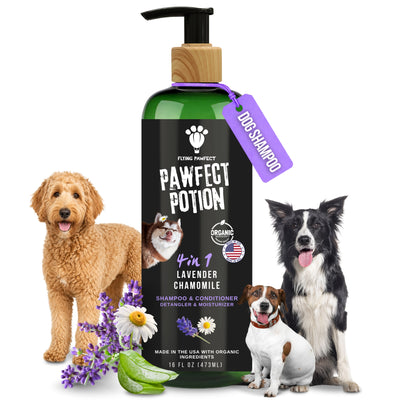
For a cleaner, softer bath routine, Flying Pawfect Pawfect Potion 4-in-1 Shampoo helps clean, condition, detangle, and moisturize the coat when used as part of a proper brush, wash, dry, and comb-check routine.
Why Shampoo and Conditioner Choice Matters for Long-Haired Dogs
Shampoo and conditioner choice matters because long coats are more likely to trap residue, loose hair, moisture, and hidden tangles. A poor bath routine can leave the coat feeling heavy, sticky, dry, clumpy, or harder to brush. If you also see white flakes settling in the coat, that is a separate skin issue, and it is covered in Dog Dandruff: What Causes White Flakes and How to Fix It.
The right products support the routine. They do not replace brushing, but they can make the coat feel cleaner, softer, and easier to separate after a proper bath.
- They help clean dirt, odor, and coat buildup without making the coat feel stripped.
- They help support softness and moisture so long hair feels easier to manage.
- They can help reduce brushing friction after the coat is fully rinsed and dried.
- They support a smoother bath routine for fluffy, wavy, curly, silky, cottony, and feathered coats.
- They help owners avoid using harsh or unsuitable products made for human hair.
For owners who care about gentler grooming routines and cleaner product choices, Organic Dog Grooming Products | Complete Guide is a helpful companion article.
The main rule is simple: shampoo and conditioner should support coat care, not complicate it. If the product leaves the coat difficult to rinse, sticky, oily, overly perfumed, or harder to brush, it may not be the best fit for a long-haired dog.
How Bath Problems Happen in Long-Haired Coats
Bath problems usually start before the water turns on. If the coat already has loose hair, tangles, hidden knots, or packed areas, shampoo and water can make those problems more obvious.
Long-haired dogs need bath preparation because the coat behaves differently when wet. Hair swells, clings, gets heavier, and rubs together more easily during washing, rinsing, towel drying, and air drying.
- Hidden tangles tighten: Small knots can become firmer once water and movement are added.
- Loose hair gets trapped: Long coats often hold shed hair inside the coat instead of releasing it easily.
- Heavy conditioners can build up: Thick products may make the coat feel coated if they are not rinsed thoroughly.
- Scrubbing creates friction: Rough circular scrubbing can twist long hair together.
- Incomplete drying causes clumps: Damp coat can dry into sections that feel packed or rough.
- Surface brushing misses the lower coat: The top layer may look neat while tangles remain closer to the skin.
This is why the best shampoo and conditioner will not fix a poor bath order. Long-haired dogs usually need brushing and comb checking before bathing, gentle washing during the bath, thorough rinsing, complete drying, and a final brush-through afterward.
What the Best Shampoo and Conditioner Solution Involves
The best shampoo and conditioner solution for long-haired dogs is not just one bottle. It is the full routine around the bottle.
For many owners, the best option is a gentle dog-safe shampoo with conditioning and detangling support. This gives the coat cleaning, softness, moisture support, and easier brushing support without turning bath day into a complicated multi-step process. To see how one bottle can cover cleaning, conditioning, detangling, and moisturizing in a single step, read 4-in-1 Dog Shampoo and Conditioner: What It Replaces and When to Use It.
- Choose a dog-safe formula made for canine coat and skin needs.
- Look for conditioning support so long hair does not feel dry or rough after washing.
- Look for detangling support to help reduce brushing friction after the coat is clean and dry.
- Avoid heavy buildup that makes the coat sticky, greasy, or difficult to rinse.
- Brush and comb-check before bathing so water does not tighten hidden tangles.
- Rinse longer than you think you need to, especially around thick coat areas.
- Dry fully before doing the final brush and comb check.
The best products help the routine feel easier. They should support softness and manageability without making the coat dependent on heavy product to look good.
Recommended Tools

Flying Pawfect Pawfect Potion 4-in-1 Shampoo, Conditioner, Detangler & Moisturizer
Flying Pawfect Pawfect Potion is the most directly relevant product for this topic because it combines shampoo, conditioner, detangler, and moisturizer support in one bath product. For long-haired dogs, that combination is helpful because cleaning, softness, moisture, and brushing comfort all affect the final coat result.
The Lavender Chamomile formula is designed for a cleaner, calmer bath routine. It includes Aloe Vera and Coconut Oil, two ingredients commonly used in coat-care formulas to support softness and moisture.
It also contains organic ingredients and plant-derived cleansers, making it a strong choice for owners who want a clean and gentle dog shampoo without dyes, SLS, parabens, phthalates, or alcohol. It is pH balanced for dogs and made in the USA with organic ingredients.
For long-haired dogs, the conditioner and detangler support are especially important. Long coats often become harder to brush when they are dry-looking, dirty, clumpy, or not rinsed and dried properly.
Pawfect Potion helps clean the coat while also supporting a softer, more manageable feel. This can help make post-bath brushing easier when the coat has been brushed before the bath, rinsed thoroughly, and dried fully.
It should not be used as a shortcut for mat removal. If the coat has tight mats, skin-close knots, or painful clumps, brushing and professional help may be needed before bath day.
The best way to use it is in the correct grooming order. Brush first, comb-check the coat, wet the coat thoroughly, apply shampoo gently, avoid rough scrubbing, rinse completely, dry fully, then finish with a slicker brush and comb check.
This matters because even a good shampoo can perform poorly if it is used over tangles or left in the coat. Long hair needs careful rinsing around the ears, underarms, chest, belly, legs, paws, tail base, and areas where the coat is thickest.
For owners who want fewer bottles in the bath area, the 4-in-1 format is practical. It gives shampoo, conditioner, detangler, and moisturizer support in one product while still fitting into a complete grooming routine.
The most important point is that Pawfect Potion supports the routine. Mats are prevented by brushing, comb checking, proper drying, and consistency. Shampoo and conditioner help the coat feel cleaner and easier to work with, but they do not replace the hands-on grooming steps.
- Best for: Long-haired dogs that need shampoo, conditioner, detangler, moisturizer support, softness, cleaner coat feel, and easier post-bath brushing.
- Why it works: The 4-in-1 formula helps clean, condition, detangle, and moisturize while supporting a soft, healthy-looking coat.
- Context: Use after brushing and comb checking first, then rinse well, dry fully, and finish with a brush and comb check.

Flying Pawfect Slicker Brush
The Flying Pawfect Slicker Brush is the main tool to use before bathing a long-haired dog. Shampoo and conditioner work better when the coat is already separated, loose, and free from hidden tangles.
A slicker brush helps loosen trapped coat before water touches the hair. This is important because long hair can tighten when wet if loose hair and small tangles are left in place.
Use the brush in small sections instead of brushing quickly over the surface. Focus on areas that collect friction, including behind the ears, underarms, chest, belly, legs, paws, tail base, collar line, and harness zones.
The brush also fits into the post-bath routine. Once the coat is fully dry, use it again to separate the hair and restore softness before doing a final comb check.
The Flying Pawfect Slicker Brush helps prevent the common mistake of relying on shampoo to solve tangles. Shampoo can help clean and condition, but brushing is what removes loose hair and starts the detangling process.
Tool quality matters because bath prep should be gentle. A brush that pulls, scratches, bends, skips, or forces you to press harder can make your dog resist grooming before bath day even begins.
Used correctly, the Flying Pawfect Slicker Brush supports a cleaner bath, easier rinsing, better drying, and a smoother final coat finish.
- Best for: Long-haired dogs, bath preparation, light tangles, loose coat removal, and post-bath brushing.
- Why it works: It helps separate the coat before shampooing so water does not tighten hidden tangles as easily.
- Context: Use before bathing, after drying, and before the final comb check. Stop if the coat is tight, painful, or skin-close.
High-Absorbency Dog Towel or Low-Heat Dog Dryer
A good drying tool is one of the most overlooked parts of shampoo and conditioner selection. Even the best bath product can leave a long coat looking clumpy if the coat is not dried properly.
Use a high-absorbency towel to blot the coat instead of rubbing roughly. Rubbing long hair in circles can twist strands together and create more friction.
For dense, fluffy, curly, wavy, or double coats, a dog-safe dryer on an appropriate setting can help dry the lower coat more completely. Always use safe handling, avoid heat that feels too warm, and keep the dog comfortable.
Drying should focus on hidden areas that stay damp longest. These include ears, underarms, chest, belly, legs, paws, tail base, and thick coat sections.
Once the coat is fully dry, finish with a slicker brush and comb check. This confirms that the shampoo, conditioner, and drying routine left the coat clean, loose, and manageable.
- Best for: Long-haired dogs after baths, rainy walks, swimming, wet grass, and muddy outdoor play.
- Why it works: Proper drying helps prevent damp coat from clumping, flattening, or tightening into tangles.
- Context: Blot first, dry fully, then brush and comb-check once the coat is ready.
Step-by-Step Guide: How to Use Shampoo and Conditioner on Long-Haired Dogs
Good shampoo and conditioner results depend on order. Long-haired dogs need preparation before the bath and careful drying after the bath.
The safest rule is to brush before water and brush again after the coat is fully dry. For a deeper explanation of bath order, read Should You Brush a Dog Before or After Bathing?.
- Feel the coat first: Check for clumps, packed areas, tight knots, burrs, debris, damp areas, or skin-close mats.
- Brush in small sections: Use a slicker brush to loosen trapped coat and light tangles before the bath.
- Comb-check before water: Use a stainless steel comb to confirm the coat is clear enough to bathe.
- Wet the coat thoroughly: Long hair needs time for water to reach the lower coat.
- Apply shampoo gently: Work with the direction of the coat instead of rough circular scrubbing.
- Let conditioning support do its job: Use a product that supports softness and detangling without leaving heavy buildup.
- Rinse completely: Rinse until the coat feels clean and free of product, especially in thick or hidden areas.
- Blot instead of rubbing: Use a towel to press and absorb water without twisting the hair.
- Dry fully: Do not let dense or long areas stay damp close to the skin.
- Finish with brush and comb: Once dry, brush lightly and comb-check to confirm the coat is clear.
This sequence is what turns shampoo and conditioner into a complete coat-care routine. Without the correct order, even a good product may not give the result you want.
Prevention Tips for Softer, Cleaner Long Coats
Long-haired dogs need prevention between baths. Shampoo and conditioner help during wash day, but the coat stays easier to manage when you maintain it consistently.
The goal is to avoid waiting until the coat is dirty, oily, tangled, and clumpy before grooming. Smaller steps throughout the week make bath day easier.
- Brush high-friction areas several times per week.
- Comb-check behind ears, underarms, belly, legs, paws, tail base, collar line, and harness zones.
- Brush before every bath, even if the coat looks mostly smooth.
- Use dog-safe shampoo and conditioner support instead of human hair products.
- Rinse thoroughly so the coat does not feel sticky or heavy afterward.
- Dry fully after baths, rain, swimming, wet grass, or muddy walks.
- Keep coat length realistic if your dog mats faster than you can maintain it.
- Book professional grooming before the coat becomes packed or painful.
Water is one of the biggest reasons bath day goes wrong for long-haired dogs. For more detail, read Why Water Makes Mats Worse in Dogs (Grooming Guide).
Prevention is not about using more product. It is about keeping the coat clean, loose, dry, and checked before tangles become harder to manage.
Common Mistakes
Most shampoo and conditioner mistakes happen because owners focus on the bottle instead of the routine. Product choice matters, but timing, brushing, rinsing, and drying matter just as much.
Long-haired dogs need a bath process that protects the coat from extra friction and trapped residue.
- Bathing before brushing: Water can tighten tangles that were already in the coat.
- Using human shampoo: Dogs need dog-safe products made for canine coat and skin needs.
- Using too much product: Long coats can hold shampoo and conditioner, making rinsing harder.
- Rinsing too quickly: Leftover product can make the coat feel sticky, dull, or harder to brush.
- Scrubbing in circles: Rough scrubbing can twist long hair together and create friction.
- Letting the coat air dry while tangled: Damp hair can clump and tighten as it dries.
- Skipping the final comb check: A coat can look fluffy while hidden tangles remain underneath.
- Expecting conditioner to remove mats: Conditioner can support manageability, but tight mats need brushing, careful assessment, or professional grooming.
A good bath should leave the coat cleaner and easier to maintain. If bath day consistently makes your dog more tangled, the order of your routine probably needs to change.
FAQs
What is the best shampoo for long-haired dogs?
The best shampoo for long-haired dogs is a dog-safe formula that cleans gently, rinses well, and supports softness without leaving heavy buildup. A 4-in-1 shampoo, conditioner, detangler, and moisturizer can be helpful when it is used as part of a brush, wash, dry, and comb-check routine.
Do long-haired dogs need conditioner?
Many long-haired dogs benefit from conditioning support because long hair can feel dry, rough, or harder to separate after washing. Conditioner support can help with softness and brushing comfort, but it does not replace brushing or comb checking.
Should I brush my long-haired dog before shampooing?
Yes. Brush and comb-check before shampooing so water does not tighten hidden tangles. After the coat is clean and fully dry, brush again and finish with a comb check.
Can shampoo or conditioner remove mats?
No. Shampoo and conditioner can support softness and manageability, but they should not be used to force through tight mats. Skin-close, painful, large, or packed mats should be handled carefully or by a professional groomer.
How often should I bathe a long-haired dog?
The right bath schedule depends on coat type, activity level, odor, dirt, skin comfort, and professional grooming routine. Some long-haired dogs need more frequent baths than others, but every bath should include brushing before, thorough rinsing, complete drying, and a final brush-through.
What should I avoid in long-haired dog shampoo?
Avoid products that are hard to rinse, overly heavy, harsh, or made for human hair. For long-haired dogs, choose dog-safe formulas that support cleanliness, softness, moisture, and easier brushing without making medical claims.
Final Thoughts
The best shampoos and conditioners for long-haired dogs are the ones that support the full grooming routine. They should help clean, condition, detangle, moisturize, rinse well, and leave the coat easier to brush after proper drying.
Product choice matters, but routine matters just as much. Brush before bathing, comb-check hidden areas, shampoo gently, rinse thoroughly, dry completely, and finish with a light brush-through and final comb check.
With Flying Pawfect Pawfect Potion 4-in-1 Shampoo, the Flying Pawfect Slicker Brush, and a careful bath-day routine, your long-haired dog’s coat can stay cleaner, softer, more comfortable, and easier to maintain between professional grooming appointments.