

The best brush for a Basset Hound is a medium flat slicker for the body and a long tooth comb for the underside and the folds. The coat is short, dense and sheds far more than it looks like it should. The real problem is not the coat though, it is reach.
A Basset stands about fourteen inches at the shoulder and carries fifty to sixty five pounds on top of that. The chest, the elbows, the belly and the tips of both ears travel through wet grass, mud and leaf litter on every walk, and they come home wearing all of it.
Those are also the parts of the dog you never look at. Most Basset owners brush the back, which is the one area that needs it least.
Ten minutes a week, with the dog standing for the first half and rolled onto one hip for the second, covers the whole animal. The medium flat slicker and the long tooth comb below do nearly all of it.
Why a Basset Hound Coat Needs More Brushing Than It Looks Like It Does
A Basset carries a short, hard, close lying coat with a surprisingly dense underlayer for its length. Each hair is under an inch, so there is no length for a tangle to form in and genuinely nothing on a Basset will ever mat.
What there is instead is volume. Sixty pounds of dense short coat releases more hair by weight than a small dog with three times the length, and because the coat lies flat the loose hair stays in it rather than dropping out. It comes out on your hands, your sofa and the car.
The coat is also slightly oilier than most short coats, which is part of what makes a Basset weatherproof and most of what gives the breed its reputation for smelling like a dog. Oil holds dirt, and a dense coat holds oil against the skin.
- A dense short coat sheds steadily all year rather than in two seasonal blows
- Loose hair is trapped in the coat until something lifts it out
- The coat is slightly oily, so it holds dirt and odour close to the skin
- Nothing needs detangling, so every pass can be quick and light
If you want the shedding side of a short coat covered properly, the Best Brush for a Beagle guide works through the same coat type on a dog you can actually see underneath.
How Ground Clearance Turns a Short Coat Into a Grooming Job
This is the part that makes a Basset different from every other short coated hound. The dog is built close to the ground, so the underside is not a hidden area, it is the leading edge. Everything the ground is wearing, the dog wears first.
On a taller dog the belly stays dry on a wet walk and the chest clears the long grass. On a Basset the brisket drags through it, the elbows push through it, and both ear tips sweep it. Mud, grass seed, grit, road salt and whatever has been put on a treated lawn all end up in the same three places.
Then the coat does what a dense flat coat does, which is hold the moisture against the skin and dry from the outside in. That is where the rashes, the hot spots and most of the smell come from, and none of it is visible from above.
Dried mud is its own problem on a coat this short, because the hair is too stiff to brush out cleanly once it has set. How to Get Dried Mud Out of a Dog's Coat covers the way to break it up without working the grit across the skin.
The Ears Are a Health Check Rather Than a Coat Job
Basset ears are long, low set and heavy, and they get mentioned in every breed guide. It is worth being clear about what they actually need, because it is not brushing.
The leather itself is covered in short smooth hair that does not tangle and does not mat. What the ear does is lie flat over the opening of the canal and hold warmth and moisture underneath it, which is a completely different problem from a coat problem.
So the ear routine is lift, look, and dry. Turn each ear back once a week, look at the skin on the underside and at the base, and dry it properly after any wet walk or bath. Never push a brush, a comb or anything else into the canal.
A smell, a discharge, head shaking or a dog that flinches when you touch the ear base is a veterinary matter and not something to clean harder at. On this breed it is common enough that it is worth having looked at early rather than late.
The one hound where the ear hair genuinely does mat is the Bloodhound, whose longer fringe at the edge of the leather behaves differently. Best Brush for a Bloodhound sets out why, and it is a useful contrast if you own both.
What a Realistic Basset Hound Routine Involves
Once a week, ten minutes, split into two positions. Standing for the back, sides, neck and shoulders. Rolled onto one hip, or lying along the sofa, for the brisket, the armpits, the belly and the inner thighs.
A bath belongs in the routine every six to eight weeks, or whenever the underside is genuinely dirty rather than on a schedule. Washing a slightly oily coat more often than the skin needs it tends to make the smell come back faster, not slower.
Add a towel habit on top of all of it. After any wet walk the underside and both ear bases get dried, not just the feet. That single change does more for a Basset skin than any brush.
- Weekly ten minute pass, standing then on one hip
- Bath every six to eight weeks or when the underside needs it
- Dry the brisket, belly and ear bases after every wet walk
- Part the coat with a comb once a week and look at the skin underneath
Recommended Tools for a Basset Hound Body and Underside
Three tools cover this breed completely, and two of them do almost all the work. Nothing here involves clippers or scissors, because a Basset coat is never cut and never trimmed.
One tool worth naming and then setting aside is the undercoat rake. Flying Pawfect makes a good one and it is the wrong tool for this dog. A rake is built to reach down through a soft insulating undercoat and pull packed hair out of it, and a Basset does not have one. On a coat under an inch long the blades reach skin rather than coat, which is uncomfortable at best.

Flying Pawfect Flat Slicker Brush
The Flat Slicker Brush is the right shape for a Basset. A flat head sits level against a short close lying coat, so every pin in the field carries the same share of the load and no corner of the head digs in.
Take the medium rather than the large. The reason is not the size of the dog, it is the position you have to work in. Half of a Basset is brushed with the dog lying on one hip and your hand coming in sideways between a front leg and the chest wall, and a large head simply will not fit in that gap.
The pins are fine bent stainless steel, densely set, which is what lifts loose hair out of a dense short coat without the brush needing to be pressed. Let the weight of the tool do the work and move with the lie of the coat.
Ten light minutes a week removes a genuinely surprising amount of hair, and it doubles as the fastest skin check you will do on a dog you cannot see the underneath of.
- A flat head spreads pressure evenly on a coat with no length to cushion it
- Medium fits between the elbow and the chest wall where the large will not
- Densely set fine pins lift trapped hair out of a dense short coat
- Finds ticks, grass seed, lumps and sore patches on the underside

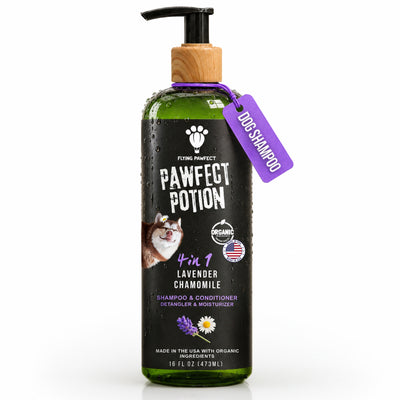
Flying Pawfect 4-in-1 Dog Shampoo and Conditioner
On a Basset the bath that matters is the underside. The back is rarely the dirty part, and washing a dog thoroughly on top while rushing the brisket and the belly is how an owner ends up bathing more often than they need to.
The 4-in-1 cleans and conditions in one step, which keeps the dog wet for less time. That is worth having on a low heavy dog that is awkward to lift and slower to dry than it looks.
It is pH balanced for dogs, uses plant derived cleansers and organic ingredients, and is free of dyes, SLS, parabens, phthalates and alcohol. It is made in the USA.
Rinse carefully in the lip folds, the front of the chest and behind the elbows, and then dry those same places properly. Trapped shampoo under a dense coat is its own skin problem.
- Cleaning and conditioning in one step, so the dog is wet for less time
- Plant derived cleansers and organic ingredients, no dyes, SLS, parabens, phthalates or alcohol
- Made in the USA and pH balanced for dogs
- Concentrate the wash and the rinse on the underside, which is the part that gets dirty

Flying Pawfect Long Tooth Comb
On most breeds the comb checks whether the brushing went deep enough. On a Basset it is an instrument for looking, and it is the only tool in the kit that can part a coat this short.
A short dense coat hides skin completely. A rash, a scab, a tick or an early hot spot on the belly of a Basset is invisible until the hair is lifted out of the way, and a comb held flat and drawn slowly through the coat does exactly that.
The second job is the folds. The lip folds, the loose skin at the throat and the fold at the base of the tail all want parting and looking into once a week, because they stay warmer and damper than the rest of the dog.
It is also the fastest way to find grass seed. On a dog built this low they collect between the toes, behind the elbows and along the brisket, and a comb finds them before they work into skin.
- Parts a sub one inch coat so the skin underneath can actually be seen
- Opens the lip, throat and tail folds for a weekly look
- Finds grass seed, grit and ticks on the parts of the dog that touch the ground
- Never used in or around the ear canal
Step by Step: Brushing a Dog You Cannot See Underneath
The order matters here more than the technique, because the aim is to get to the half of the dog that faces the ground without a wrestling match.
- Start with the dog standing and work the back, sides, neck and shoulders with the lie of the coat
- Roll the dog onto one hip, or let it lie along a sofa, and work the upper flank and the armpit
- Bring the brush in sideways between the front leg and the chest wall, lightly, then do the brisket
- Switch to the comb for the belly and the inner thighs, where the skin is thinnest and loosest
- Turn each ear back, look at the base and the underside, and dry if there is any damp
- Finish with a damp cloth along the lip folds and under the throat
Pressure is the thing to watch. A Basset has loose skin and almost no coat to cushion a brush, so the skin moves before the coat does if you lean on the tool. How to Brush a Dog Without Pulling the Skin is worth reading once if your dog has started objecting to being brushed at all.
Preventing Damp Skin and Hot Spots on a Low Dog
Almost every skin problem a Basset gets starts as moisture that stayed somewhere warm for too long. Prevention is therefore mostly about drying rather than about washing.
- Towel the brisket, belly and both ear bases after every wet or muddy walk
- Keep weight sensible, because a heavier Basset sits lower and loses the little clearance it has
- Check between the toes weekly, since the feet are in everything the belly is in
- Rinse the underside with plain water after a beach walk or a treated lawn
A wet coat on a long haired dog turns into mats. On a Basset it turns into damp skin instead, which is less visible and often worse, and it is the single most useful habit to build on this breed.
Common Mistakes Basset Hound Owners Make
- Brushing only the back, which is the area that needs it least
- Leaning on the slicker because the coat is short, which drags on loose skin
- Bathing on a schedule rather than when the underside is dirty
- Treating a smell as unavoidable hound odour when it can be a skin or ear problem
- Cleaning inside the ear canal instead of drying the outside and asking a vet
- Using an undercoat rake on a coat that has no undercoat to reach
The last one is worth repeating because the tool is sold everywhere and looks like it should suit a heavy shedding dog. It suits a heavy shedding dog with an undercoat. A Basset sheds heavily without having one.
FAQs
What is the best brush for a Basset Hound?
A medium flat slicker brush for the body, with a long tooth comb for the underside and the folds. The flat head sits level on a short close coat and the medium size is the one that fits between a front leg and the chest wall when the dog is lying on its hip.
How often should I brush a Basset Hound?
Once a week is enough for the coat, in a single ten minute pass. Add a quick comb through the belly and the folds in the same session, and a towel dry after any wet walk.
Do Basset Hounds shed a lot?
Yes, more than most owners expect. The coat is short but dense and it releases hair steadily all year rather than in two seasonal blows. Weekly brushing moves that hair into the brush instead of onto the floor.
Can I use an undercoat rake on a Basset Hound?
No. A rake is designed to reach down into a soft insulating undercoat, and a Basset does not have one. On a coat under an inch long the blades meet skin rather than hair, which is uncomfortable and can scrape. A flat slicker does the same job safely.
Why does my Basset Hound smell?
Usually because the coat is slightly oily and the underside stays damp. Drying the brisket, belly and ear bases after wet walks helps more than extra baths do. A strong or sudden smell, especially from an ear or a skin fold, is worth a veterinary check rather than more washing.
How do I clean a Basset Hound underside after a muddy walk?
Let heavy mud dry, then break it up gently and brush it out with the lie of the coat rather than against it. For wet mud, rinse with plain water and towel the area properly. The thing to avoid is working grit across the skin while it is still in the coat.
Do Basset Hound ears need brushing?
No. The hair on the leather is short and smooth and does not mat. What the ears need is turning back once a week so the skin underneath can be looked at, and drying after a bath or a wet walk. Nothing goes into the canal.
Is a slicker brush safe on loose Basset skin?
Yes, used lightly and with the lie of the coat. Loose skin is the reason to choose a flat head rather than a curved one and to let the weight of the brush do the work. If the skin is dragging under the brush instead of the coat lifting off it, there is too much pressure on it.
Final Thoughts
A Basset Hound is an easy coat attached to a difficult shape. Nothing on the dog mats, nothing needs cutting, and the whole coat is handled in ten light minutes a week with a medium flat slicker.
The grooming happens in the half of the dog that faces the ground. Get the brisket, the belly, the folds and the ear bases into the weekly routine, keep a towel by the door, and the breed looks after itself.