

The best brush for a Curly-Coated Retriever is a large curved slicker, used sparingly and only on a damp coat. Most of the work on this breed is done with a comb and a pair of hands, because a crisp curl brushed dry does not open. It breaks, and it stays broken until the coat grows out.
That single fact separates this breed from every other curly coated dog with a page on this site. A doodle fleece and a Lagotto wool both want opening with a slicker. A Curly-Coated Retriever wants leaving alone, wetting, and then handling with far less tool than you would expect.
If you have come from a poodle or a doodle household, the hardest part will be doing less. The tools below are the right ones, and the technique section is where the real difference lies.
Why a Curly-Coated Retriever Coat Is Not a Doodle Coat
A Curly-Coated Retriever carries small, tight, crisp curls over almost the entire body, with a smooth face and front legs. The curls are single coated, water resistant and deliberately harsh to the touch. The breed was built to work out of cold water and the coat is part of the equipment.
A doodle or a poodle coat feels soft and springy because the hair is fine and holds air. A Curly-Coated Retriever curl feels wiry and sits close, because each hair is coarser and the curl is smaller and tighter. Those are different materials, not different lengths of the same material.
The consequence is the one thing every owner of this breed needs to know. A slicker brush opens a soft curl by separating hairs that want to spring back together. On a crisp curl it straightens the hair and the curl does not reform, so a brushed Curly-Coated Retriever looks frizzy and stays that way.
- The curl is single coated, so there is no soft undercoat to lift out
- Each hair is coarse, which is why the coat repels water rather than soaking it
- A brushed out curl does not spring back, unlike a fleece coat
- The face, front of the legs and the feet are smooth and need nothing at all
If you want the contrast with a soft curl in detail, Best Brush for Portuguese Water Dogs covers the other end of the water dog range, where the coat is softer and the slicker does far more of the work.
How the Curl Is Built and Why Brushing Dry Breaks It
Each curl is a small spiral of coarse hair that holds its shape mechanically. Water and movement set it, and once set it is remarkably stable, which is why the coat needs so little between sheds.
Pulling a pin brush or a slicker through a dry spiral does two things. It straightens the spiral, and it snaps the weaker hairs where the curl is tightest. The straightened hairs then stand out from the coat instead of lying in it, which is the frizz owners describe.
Damp hair behaves differently. It is more elastic, it slides past its neighbours instead of catching, and when it dries it goes back into a curl. That is the entire technical basis for the routine in this guide.
- Dry and brushed: the curl straightens, weaker hairs snap, and the coat frizzes until it grows out.
- Damp and worked gently: the hair stretches rather than breaking and the curl reforms as it dries.
- Soaking wet and left alone: the coat sets itself into curls perfectly well with no help at all.
- Damp and rubbed with a towel: the curls twist against each other, which is how a wet dog ends up matted.
The general mechanics of working a curl without wrecking it are covered in How to Brush a Curly Dog Coat Without Frizz. On this breed the margin for error is smaller, because the curl is crisper and does not forgive a dry pass.
Where a Curly-Coated Retriever Actually Mats
Most of this coat will not mat. A tight crisp curl over the ribs and back can be ignored for weeks and come up fine. The mats happen in the few places where the coat is softer, where something rubs, or where water sits.
Learning those four or five locations is more useful than any schedule, because it turns a whole dog job into a five minute check.
- Behind and under the ears: the hair here is softer and finer than the body curl, and the ear moves against it constantly.
- The armpits and groin: skin on skin friction plus trapped moisture, which is the classic matting combination on any breed.
- The tail and the back of the thighs: longer curl, and the first area to clump after swimming.
- Under a collar or harness: a strap flattens the curl and holds it flat, and flattened curl felts where loose curl does not.
Shedding changes this picture for a few weeks a year. A Curly-Coated Retriever drops coat in patches and the released hair stays caught inside the curls rather than falling out, so the coat can go lumpy quite suddenly. That is the one period when the slicker earns its place.
What a Curly-Coated Retriever Grooming Routine Involves
Outside a shed, this is one of the lowest maintenance coats among the retrievers. A weekly five minute check of the soft areas and a bath when the dog is genuinely dirty will keep a Curly-Coated Retriever in good order.
During a shed the routine changes shape rather than getting longer. The job becomes getting the released hair out of the curls, and it is done on a damp coat with a slicker, in short sessions rather than one long one.
- Weekly, all year: comb check behind the ears, under the front legs, the groin and the tail. Five minutes.
- During a shed: mist or damp down a section, work it with the curved slicker, let it dry, move on.
- After swimming: rinse, blot rather than rub, and separate the tail and thigh curls with fingers before they dry.
- Every few months: a bath only when needed, and never a blow dry on a hot setting straight at the curl.
This breed is not usually clipped, and that is deliberate. Clipping a crisp single coat changes the texture of the regrowth, so most owners tidy only the tail and the feet.
Recommended Tools for a Crisp Curly Coat
Three tools cover this breed, and the order of importance is the opposite of what a curly coat usually suggests. The comb does the weekly work, the shampoo does the seasonal work, and the slicker is kept for the shed and for a damp coat only.
A dematting rake does not belong on this coat either. Flying Pawfect makes one and it is a good tool on a dense undercoat, but there is no undercoat here and blades cannot tell a tight curl from a tangle.

Flying Pawfect Curved Slicker Brush
The Curved Slicker Brush is the right head for this coat for one reason: pin length. The curved slicker is built on a flexible bed with longer, softer pins, and a short pin simply skims across the top of a tight curl without reaching the released hair underneath it.
Take the large size. A Curly-Coated Retriever is a substantial dog with long unbroken runs of coat over the ribs, back and thighs, and a large head covers them in far fewer passes. The curve follows the barrel of the ribcage so the pin field meets the coat at an even depth rather than bridging across it.
Use it on a damp coat and almost never on a dry one. Mist a section, work the brush through it in the direction the curl lies, and let that section dry before you move on. Worked this way the curl reforms as it dries and the shed hair comes away on the pins.
Outside a shedding season you may not pick this up for weeks, and that is correct rather than neglectful. It is a seasonal tool here, and it is the difference between a three week shed and a coat full of lumps.
- Best for: lifting released hair out of the curls during a shed, on a damp coat.
- Why it works: long pins on a flexible bed reach under a tight curl where short pins skim over it.
- Size to choose: large, because the coat runs in long unbroken areas over a big dog.
- Where not to use it: a dry coat, the smooth face and front legs, and the soft hair on the ear itself.

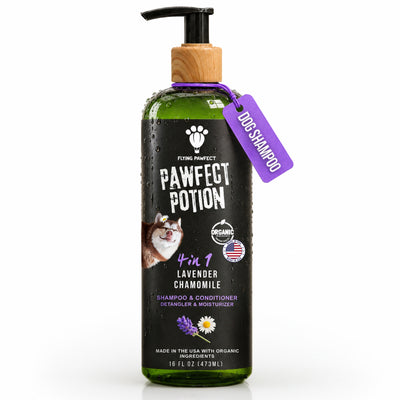
Flying Pawfect 4-in-1 Dog Shampoo and Conditioner
A bath matters more on this breed than brushing does, because water is how a crisp curl is reset. A Curly-Coated Retriever that comes out of a proper wash and is allowed to dry undisturbed will have a better coat than one that has been brushed every day.
The 4-in-1 cleans and conditions in one step, which reduces brushing friction and means less handling of a wet coat. On a curl that twists if you rub it, every minute less of towel work is worth having.
It is pH balanced for dogs, uses plant derived cleansers and organic ingredients, and is free of dyes, SLS, parabens, phthalates and alcohol. It is made in the USA. It is also the right thing to reach for after a swim in salt or chlorinated water, both of which leave a coarse coat feeling gritty.
- Best for: resetting the curl, and rinsing out salt, chlorine and pond water after swimming.
- Why it works: cleaning and conditioning in one step means less rubbing of a wet curl.
- Drying: blot with a towel, never rub, and let the coat air dry if you possibly can.
- How often: when the dog is dirty or has been swimming in treated water, not on a schedule.

Flying Pawfect Long Tooth Comb
On this breed the comb is the everyday tool, which is unusual. It is the only thing that can check the few soft areas where a Curly-Coated Retriever genuinely mats without disturbing the curl everywhere else.
Work it behind and under the ears, in the armpits, the groin and the tail. If the teeth pass through, that area is clear and nothing more is needed. If they stop, you have found a mat early, while it is still something fingers and a damp cloth can open.
It is also the tool that tells you a shed has started. When the comb begins coming away with hair from the body rather than passing cleanly through, that is the signal to start the damp slicker sessions and keep them going for a few weeks.
- Best for: the weekly five minute check of the ears, armpits, groin and tail.
- Why it works: teeth pass through a healthy curl and stop at a mat, so it finds problems early.
- What it tells you: when a shed has begun, which is when the slicker becomes useful.
- Technique: short sections, and stop rather than pull if the comb meets resistance.
Step by Step: Working Through a Curly-Coated Retriever Coat
This is the shedding season routine, because that is the only time the whole coat needs attention. Outside a shed, do steps one and four only and you are finished in five minutes.
- Comb the soft areas first: behind the ears, armpits, groin and tail. Deal with anything the comb stops on before any brushing starts.
- Damp down one section: a light mist of plain water or a damp cloth over an area about the size of your hand. Never work a dry curl.
- Work that section with the curved slicker: short light strokes in the direction the curl lies, until the pins stop collecting hair.
- Let it dry undisturbed and move on: the curl reforms as it dries, so do not comb or rub a section you have just worked.
Two or three sections in a sitting is plenty. Doing the whole dog means handling a damp coat for too long, and the areas you finish with end up frizzed.
The closest comparison on the site is Best Brush for Lagotto Romagnolo Dogs. A Lagotto coat is woolly and felts, where this one is crisp and frizzes, and the two faults want opposite corrections.
Preventing Frizz and Mats in a Curly-Coated Retriever
Prevention here is mostly a list of things not to do. The coat is self maintaining for most of the year and the damage comes from over handling rather than under handling.
- Never brush a dry coat, in any season, with any brush
- Blot a wet dog rather than rubbing it with a towel
- Take a collar or harness off whenever the dog is not using it
- Separate the tail and thigh curls with your fingers after swimming, before they dry
Heat is worth naming too. A hot dryer held close dries the outside of each spiral faster than the inside and leaves the coat harsh, so cool air at a distance is better.
If a mat has already set hard, do not work at it with a slicker. Open it with fingers from the outside edge inward on a damp coat, and let a groomer take out anything that will not give.
Common Mistakes With a Curly-Coated Retriever Coat
Almost every mistake on this breed comes from applying doodle advice to it. The two coats look related in a photograph and behave like different materials in the hand.
- Daily brushing: a tight curl brushed every day is a frizzy curl within a week and stays that way for months.
- Line brushing a dry coat: the technique is right for a fleece and wrong here, because it straightens the spiral.
- Using an undercoat rake: there is no undercoat to lift, and blades cut curl and reach skin on a single coated dog.
- Clipping it short to reduce the work: the texture of the regrowth changes, and the work was never in the coat to begin with.
One more, and it is the most common. A Curly-Coated Retriever that looks slightly untidy is usually a correct one. The breed is not meant to look sculpted, and trying to make it look like a show poodle is what causes most of the coat damage.
FAQs
What is the best brush for a Curly-Coated Retriever?
A large curved slicker with long pins on a flexible bed, used only on a damp coat and mainly during a shed. For the rest of the year a long tooth comb is the tool you will reach for, because the curl needs checking far more than it needs brushing.
How often should I brush a Curly-Coated Retriever?
Outside a shedding season, almost never. A weekly five minute comb check of the ears, armpits, groin and tail is enough. During a shed, work one or two damp sections with a slicker every couple of days until the loose hair stops coming.
Why does my Curly-Coated Retriever look frizzy after grooming?
Because the coat was brushed dry. A crisp curl that is pulled straight does not spring back, so the straightened hairs stand out from the coat until they grow out. Work on a damp coat and let each section dry undisturbed and the curl reforms.
Should a Curly-Coated Retriever be clipped?
Usually not. The coat is single and crisp, and clipping changes the texture of what grows back. Most owners tidy the tail and the feet and leave the rest entirely alone, which is also what the breed standard expects.
Can I use a dematting rake on a Curly-Coated Retriever?
No. This is a single coated breed with no soft undercoat for a rake to lift, so the blades can only cut through curl and reach the skin. Flying Pawfect makes a Dematting Rake and it is the wrong tool for this coat.
Do Curly-Coated Retrievers shed?
Yes, in patches and usually twice a year. The released hair stays trapped inside the curls instead of falling out, so the coat can look and feel lumpy quite suddenly, and that is the period when a damp slicker session is genuinely useful.
How do I dry a Curly-Coated Retriever after swimming?
Rinse if the water was salty or chlorinated, blot with a towel rather than rubbing, and run your fingers through the tail and thigh curls to separate them before they dry. A hot dryer close to the coat leaves it harsh, so cool air at a distance is better.
Is a Curly-Coated Retriever coat the same as a Lagotto coat?
No. A Lagotto carries a woolly curl that felts together into dense sheets, while a Curly-Coated Retriever carries a crisp spiral that frizzes when it is damaged. The faults are different and so are the corrections, which is why the two breeds want different routines.
Final Thoughts
A Curly-Coated Retriever is the rare dog where doing less is the skill. The coat sets itself with water, holds its shape for weeks, and loses that shape the moment a brush is pulled through it dry.
Keep a long tooth comb for the weekly check of the four soft spots, keep a large curved slicker for the shedding weeks and use it damp, and wash the dog when it needs washing rather than on a schedule.