

The best brush for an Anatolian Shepherd is a large flat slicker, backed by a long tooth comb, with an undercoat rake brought out for about three weeks a year. The coat is only one to four inches long, so for most of the year there is very little to do. Then the undercoat comes out in sheets.
That is the whole shape of the job on this breed. An Anatolian is not a difficult coat. It is an easy coat on an enormous dog, with one short window where the volume is genuinely startling.
The dog is the other half of the problem. A hundred and thirty pounds of independent livestock guardian will not lie on its side for forty minutes while you work through it in layers, and it does not need to, because on a coat this short there are no layers to part.
The large flat slicker and the long tooth comb below are the tools this breed needs all year. The rake earns its place for a few weeks each spring, and the reason it is recommended here and refused almost everywhere else is set out further down.
Why an Anatolian Shepherd Coat Looks Like Less Work Than It Is
An Anatolian carries a short to medium double coat, roughly one inch over most of the body and up to three or four inches through the neck ruff, over the rump and down the back of the thighs. Under it sits a thick undercoat that does all of the insulating.
Almost every large breed guide assumes the opposite coat. On a long coated giant you part the hair down to the skin, work a line at a time and watch the coat open in front of you. On an Anatolian there is nothing to part, so the whole method stops being available.
What that costs you is sight. On a long coat, packed undercoat changes the way the hair sits and you can see it from across the room. On a one inch coat the surface looks identical whether the layer beneath it is clear or solid, which is why owners are told this breed needs nothing and then find a dense pad of dead hair in April.
For the long coated version of the same working dog, Best Brush for Great Pyrenees walks through a heavy double coat you can open with your fingers. Reading the two side by side makes it obvious how much of normal grooming advice depends on coat length rather than on the dog.
- Roughly one inch of body coat, with three to four inches through the ruff, rump and britches
- A thick insulating undercoat under a coarse, weather shedding topcoat
- Too short to part, so line brushing is not an available method
- Packed undercoat is invisible from the surface on a coat this short
How a Short Double Coat Packs Down Instead of Matting
Anatolians almost never mat. A mat needs length, because it is made of hairs wrapping around one another, and a one inch coat cannot do it. What happens instead is packing.
Dead undercoat is released, cannot fall through a dense coarse topcoat, and is held flat against the skin by the live hair above it. It builds up as a mass rather than a knot, so there is nothing to catch a comb, nothing to pull on the skin and nothing to tell you it has happened.
The cost is airflow. A packed layer sits between the skin and the air, holds whatever moisture gets into it and takes a long time to dry, and on a dog that lies on wet ground by choice that matters more than it would on a house dog.
Where an Anatolian Shepherd Coat Actually Needs Checking
Four zones, in this order, and the check is a comb rather than a look.
- The ruff around the neck and the front of the chest, which is the deepest coat on the dog and sits under a collar
- Across the loin and the top of the rump, where the coat lengthens and the dog cannot reach
- The britches at the back of the thighs and the underside of the tail
- Behind the elbows and along the belly, which are in contact with the ground every time the dog lies down
The same pass is a skin check, and on this breed that is not a small thing. A dog that works or lives outdoors collects grass seeds, burrs, ticks and small scrapes, and a dense coat hides all four until they are a problem.
Anything hot, weeping, bald or smelling is a vet visit rather than a grooming job. Do not brush at a sore patch to clean it up, and do not try to clear a thick crust off skin you cannot see properly.
What a Realistic Anatolian Shepherd Grooming Year Looks Like
For about ten months of the year, once a week and ten minutes. One pass with the slicker over the whole dog, then the comb through the four zones. That is honestly the entire routine.
Then the spring coat blow arrives and the figure changes completely. For two to three weeks, plan on fifteen to twenty minutes most days, and expect to fill a bin bag. Autumn is usually a lighter repeat of the same thing.
Keep the sessions short and keep the dog standing. This is a breed that was selected for making its own decisions, and it will cooperate for five or ten minutes at a time far more reliably than for one long session on its side.
The nearest thing on this site to the everyday version of this coat is Best Brush for an Australian Cattle Dog, which is the same short dense structure on a forty pound frame. The routine is similar in kind and completely different in scale, and the scale is what changes which brush is worth owning.
Recommended Tools for a Short Dense Coat on a Very Large Dog
Three tools and a bottle. Nothing here involves clippers or scissors, because an Anatolian coat is never cut and a shaved double coat loses the insulation that keeps the dog cool as well as warm.
One of the four is unusual on this site, and it is the rake. Most breeds here are told to leave it alone. An Anatolian is one of the few that genuinely should own one, and the block below explains exactly when and where.

Flying Pawfect Flat Slicker Brush
The Flat Slicker Brush in the large size is the right instrument here, and the large size is the whole point. A flat head meets a short coat level, so the entire pin field is working at once instead of a leading edge digging in.
Area is the only genuinely hard thing about this dog. There is nothing clever to do to an Anatolian coat, there is simply a great deal of it, and the difference between a small head and a large one over a hundred and thirty pound dog is the difference between a job you repeat and a job you abandon.
The pins are fine bent stainless steel, densely set, long enough to pass through an inch of coarse topcoat and lift dead hair out of the undercoat rather than skating across the surface. On the deeper ruff coat they reach without needing pressure.
- A flat head sits level against a short coat so the pressure is shared
- The large size is about covering a very big dog, not about coat depth
- Densely set fine pins pass through a coarse topcoat into the undercoat
- The first tool in every session, including during a coat blow

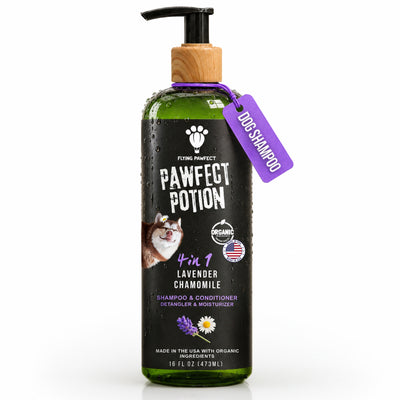
Flying Pawfect 4-in-1 Dog Shampoo and Conditioner
An Anatolian needs very few baths. The topcoat sheds dirt on its own and dried mud brushes out of it better than it washes out, so the usual honest answer to a muddy guardian dog is to let it dry and then brush it.
When a wash is genuinely needed, the difficulty is the density rather than the length. Water sits on top of a weather shedding coat, so it has to be worked down to the skin deliberately, and the undercoat then has to be dried all the way or it stays damp under a coat that already looks dry.
The 4-in-1 cleans, conditions, detangles and moisturises in one step, which means one product to rinse out instead of two and less time spent soaking a very large dog. It uses plant derived cleansers and organic ingredients and is free of dyes, SLS, parabens, phthalates and alcohol. It is made in the USA.
- Dried mud brushes out of this coat better than it washes out
- Water has to be worked into a dense weather shedding coat deliberately
- One product to rinse rather than two, which matters on a dog this size
- Brush and comb first, and dry the undercoat completely afterwards

Flying Pawfect Long Tooth Comb
On a coat this short the Long Tooth Comb is the diagnostic tool, and it is the one piece of kit an Anatolian owner is most likely to skip. A short coat looks finished long before it is.
Drawn slowly through the ruff or across the rump, the comb either passes to the skin or it stops. If it stops on a dog with no mats, what it has found is packed undercoat, and that is information nothing else in the kit can give you.
It is also how the skin gets looked at. Parting a dense coat with a comb is how a grass seed, a tick or a small sore patch gets found on a dog that spends its day outdoors and will not mention any of them.
- Tells you whether a short coat is clear right down to the skin
- Finds packed undercoat on a dog that will never develop a mat
- Parts the coat so grass seeds, ticks and sore patches get seen
- Always after the brush, never as the first tool

Flying Pawfect Dematting Rake
This is the breed that should own one, and it is worth saying why, because the honest answer on most dogs is no. A rake works by drawing blades through packed hair, and it needs two things to be safe: enough coat depth that the blades never reach skin, and a hide solid enough to stay still underneath them.
An Anatolian has both, in the places that matter. The ruff and the rump carry three to four inches of coat over a thick working hide, and that is exactly the depth a rake is designed for. It is also where the packing is worst, so the tool and the problem are in the same place.
The conditions are strict. Use it only during a coat blow, only after the slicker has already opened the area, in slow short passes, and stop the moment it catches instead of pulling through. Keep it off the one inch body coat entirely, where the blades would be working against skin rather than hair.
- Ruff and rump coat is deep enough that the blades work in hair, not on skin
- Only during a coat blow, and only after the slicker has opened the area
- Slow short passes, and stop rather than pull when it catches
- Never on the short body coat, where there is no depth to work in
Step by Step: Working Through an Anatolian Shepherd in Zones
Split the dog into six zones and treat each one as a separate little job. Two zones in a session is a good day, and six zones across a week is a groomed dog.
- Zone the dog: neck and chest ruff, each side and shoulder, loin and rump, britches and tail, belly and behind the elbows
- Start with the dog standing where it chose to stand, and work with the lie of the coat
- Short overlapping strokes with the flat slicker, letting the weight of the brush do the work
- Follow each zone immediately with the comb and feel whether it reaches skin
- If the comb stops, go back to the slicker on that spot rather than forcing the comb
- Stop when the dog is finished rather than when you are, and bank the zones you got
Preventing Packed Undercoat Between Coat Blows
Packing is slow and it is almost entirely preventable, because it only needs the weekly ten minutes to be an actual weekly ten minutes.
- Comb the ruff and the rump once a week even in the quiet months, because those two hold everything
- Dry the coat properly after rain or a swim instead of letting a damp undercoat sit
- Move to short daily sessions the week you first notice tufts lifting away by hand
- Check under the collar every time, since constant pressure on the deepest coat on the dog compacts it fastest
- Never shave or clip the coat to reduce shedding, which removes the protection and not the problem
A dog that suddenly resents being brushed where it never used to is telling you something. On an outdoor working breed the likeliest reasons are a skin problem, a seed or tick, or soreness underneath, and all three are worth looking at properly rather than brushing around.
Common Mistakes Anatolian Shepherd Owners Make
- Believing a short coat needs nothing, which is true for ten months and badly wrong for two
- Waiting for mats as the signal to groom, on a breed that will never really produce one
- Brushing the back and sides, which look the part, and skipping the ruff and the rump, which do not
- Taking a rake to the short body coat because it worked on the ruff
- Bathing a shedding dog instead of brushing it, which packs the dead hair tighter
- Shaving the coat in summer, which removes insulation that works in both directions
The rake is the one worth being careful about. If you want the full argument for where it belongs and where it does damage, Dematting Rakes for Dogs sets out the depth and the technique in more detail than a breed page can.
FAQs
What is the best brush for an Anatolian Shepherd?
A large flat slicker brush for the coat and a long tooth comb to check it. The flat head sits level on a short coat and the large size is what makes covering a very big dog realistic. Add an undercoat rake for the spring coat blow and the kit is complete.
Do Anatolian Shepherds shed a lot?
Yes, and far more than the coat length suggests. They shed moderately all year and then drop most of the undercoat over two or three weeks in spring, usually with a lighter repeat in autumn. The volume surprises almost every first time owner.
How often should I brush an Anatolian Shepherd?
Once a week for about ten minutes outside the coat blow, which is genuinely enough. During the spring blow, most days for fifteen to twenty minutes until the volume drops off.
Can I use a dematting rake on an Anatolian Shepherd?
Yes, which is unusual advice on this site, and only with conditions. Use it on the deep ruff and rump coat during a coat blow, after the slicker has opened the area, in slow passes, and keep it off the short body coat where the blades would be working against skin. Stop the moment it catches instead of pulling it through.
Should an Anatolian Shepherd ever be shaved or clipped?
No. The double coat insulates against heat as well as cold and it also shields the skin from sun, so shaving a guardian breed that works outdoors removes protection it needs. Removing loose undercoat with a brush and a rake does what owners hope shaving will do.
My Anatolian lives outside, does it still need brushing?
Yes, and arguably more. An outdoor dog collects grass seeds, burrs and ticks, and gets wet and dries slowly, all of which make the weekly comb pass more useful rather than less. Treat it as a skin check that happens to remove hair.
How long does a coat blow last on an Anatolian Shepherd?
Usually two to three weeks of heavy shedding, sometimes stretching to a month in a mild spring. If heavy shedding carries on well beyond that, or comes out in patches rather than evenly, ask your vet rather than brushing harder.
My Anatolian will not stand still to be brushed, what should I do?
Stop asking for long sessions. Work in five or ten minute blocks on one or two zones at a time, with the dog standing where it already is, and finish before it decides to leave. A guardian breed will give you a short routine reliably and a long one almost never.
Final Thoughts
An Anatolian Shepherd is an easy coat on a hard dog to get around. Nothing about the hair is complicated, but the signal that usually tells an owner to groom, a mat, never arrives on this breed.
Ten minutes a week with a large flat slicker and a comb covers most of the year. Keep the rake for the three weeks in spring when the undercoat lets go, and this is one of the lowest maintenance giant breeds there is.