


A dog that mats on one side and not the other almost never has a coat problem. It has a pressure problem. The side a dog lies on gets held flat for hours at a time, and coat that is held flat cannot shed the hair it has already released.
That is the short answer, and it is true far more often than owners expect. A favourite sleeping hip, a harness that has slipped, a bed pushed against a wall so the dog always turns the same way, even which side you stand on while you brush, all produce the same lopsided result.
The useful part is that a one-sided mat tells you exactly where to look. It is a map of where the coat is being compressed, and once you find the cause the side stops matting instead of matting again in six weeks.
Below is how to work out which pressure is doing it, how to clear the side that has already felted without hurting skin that may be tender, and the one version of this that is a vet question rather than a grooming one.
Why One-Sided Matting Is Almost Always a Pressure Problem
Mats form when hair that has already died stays in the coat long enough to tangle with the hair still growing. Brushing is simply how that dead hair leaves. Anything that stops it leaving builds a mat, and sustained pressure is the most effective blocker there is.
Pressure does three things at once. It pins the loose hair in place, it pushes the coat against itself so the strands interlock, and it adds warmth and a little moisture from the skin, which makes the whole layer behave more like felt than like hair.
So a one-sided mat is not a mystery. It is a record of where something has been pressing.
- Bodyweight. The hip, shoulder, flank and elbow on whichever side the dog prefers to lie on.
- Hardware. A collar that hangs to one side, or a harness strap that sits lower on one shoulder.
- Habit. A dog that always gets up on the same leg, or sleeps wedged against one arm of a sofa.
- Injury or stiffness. A sore joint on one side makes a dog lie on the other, so the good side mats.
- Your own reach. Most people brush from their dominant side and get less depth on the far one.
The hardware version of this is common enough to have its own pattern, and Why Dogs Get Mats After Wearing a Harness covers what a strap does to the coat underneath it. A harness that is doing this on one side only is usually simply fitted a little crooked.
How a Favourite Sleeping Side Turns Coat Into Felt
Dogs are not even-handed about lying down. Most have a side they go to by default, and over a week that side carries many more hours of compression than the other. In a long or dense coat the difference is visible within a month.
The sequence is predictable, and knowing it tells you how far along a side has gone.
- Week one. The coat on that side looks slightly flatter and lies in a direction the rest does not.
- Week two or three. A comb starts to catch at the hip and behind the elbow rather than running through.
- Week four. Small firm pads form, still separate from each other, still liftable away from the skin.
- Week six and beyond. The pads join into a sheet that moves as one piece when you lift it.
- After that. The sheet traps warmth and damp against the skin, which is when it stops being cosmetic.
Two places on the pressed side go first and both are easy to miss. The armpit is one, because it is a tight crease that bears weight and almost nobody turns the dog over to reach it. How to Brush a Dog's Belly and Armpits deals with that whole underside properly.
The second is the point of the hip. It is the bony part that takes the dog's weight directly, the coat there is often shorter and finer than the coat around it, and a mat sitting on bone is the one most likely to make a dog flinch when you work it.
What to Check Before You Blame the Coat
Before changing anything about brushing, spend ten minutes finding out what is actually pressing. This is the part that stops the problem rather than managing it.
- Watch the dog settle. Three or four times over a day, note which hip goes down first. That is almost always the matted side.
- Look at the bed. A bed against a wall, or one with a raised bolster on one side, trains a dog to lie one way.
- Take the harness off and look underneath. Compare the two shoulders. A dip or a flattened band on one side tells you the fit is off.
- Check the collar. A tag and clip hanging to one side keeps constant light pressure on that side of the neck.
- Note which way you brush. Stand on the other side for one session and see whether the comb finds more.
- Feel both sides with a flat hand. Not the brush. Your palm picks up a warm, firm, slightly damp patch long before a brush does.
One result changes the plan completely. If the dog has started lying on one side because the other side hurts, the coat is a symptom and not the problem. Stiffness getting up, a short stride on one leg, flinching when you touch a joint, or a dog that will not settle on a side it used to prefer all belong to a vet before they belong to a brush.
The same applies if the one-sided change is loss rather than matting. Hair thinning, breaking or going bald on one flank, or skin that is red, flaky, smelly or hot under the coat, is a veterinary question. No brushing routine addresses any of those, and brushing harder over sore skin makes a dog harder to groom for years.
Recommended Tools for a Coat That Has Been Pressed Flat
A compressed side needs a slightly different kit from a normally tangled one. The coat is lying in the wrong direction, it is denser than it looks, and the skin underneath may be tender from being lain on. Even pressure matters more than power here.

Flying Pawfect Flat Slicker Brush
A flattened patch of coat is a flat surface, and that is the argument for a flat head here. The pin field meets the pressed area level, so every pin carries a similar share of the load instead of a few taking all of it.
A curved head is built for the opposite job, following a deep rounded coat. Driven into a flat patch it meets the coat at its corners first, which is exactly the wrong place to concentrate pressure when the skin underneath has been bearing a dog's weight all night.
The medium coral head is the size most people reach for on an average dog, because it is wide enough to clear a flank without being so wide that it cannot be angled into an armpit or around the point of a hip. Those two spots are where a one-sided mat usually starts.
The pins are fine bent stainless steel, set densely, and they are what let you take a compressed layer apart in thin slices rather than dragging at the whole sheet. Work with the coat lifted and the brush moving away from the skin, not down into it.
The brush pictured is the medium coral version of the Flat Slicker Brush for Dogs & Cats, which is sold in three sizes through the one product page.
- Best for: A side that has been pressed flat, plus general finishing on any coat.
- Why it works: A level pin field spreads the load across tender skin instead of concentrating it.
- Context: Use it in short strokes on a lifted section, never as a long sweep over a mat.

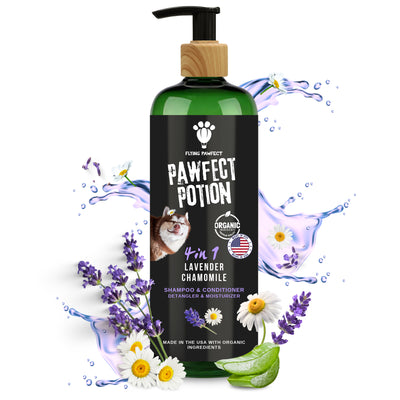
Flying Pawfect Pawfect Potion 4-in-1 Shampoo
The bath comes after the matted side is clear, never before. Water tightens a mat, and a compressed sheet that gets wet dries smaller and harder than it started.
Once the side is actually open, a wash earns its place. It cleans and conditions in one step, detangles as it goes, and leaves the coat with less friction, which matters on a side that is going to be lain on again tonight.
It is pH balanced for dogs, uses plant-derived cleansers and organic ingredients, and is free of dyes, SLS, parabens, phthalates and alcohol. It is made in the USA and it suits all animals, so one bottle covers the household.
Dry the pressed side properly before the dog settles. A damp flank under bodyweight is the single quickest way to rebuild the mat you have just spent an evening removing.
- Best for: The wash that follows a demat, once the coat runs clear.
- Why it works: Cleaning and conditioning in one step, with less friction left in the coat.
- Context: Comb first, wash second, dry thoroughly, and only then let the dog lie down.

Flying Pawfect Long Tooth Comb
The comb is the tool that makes one-sided matting measurable. A brush tidies a surface and a flattened side looks tidy almost immediately, which is why so many owners believe they have cleared it when they have not.
Used as a test it answers one question honestly: does it reach the skin and come back out. Run it on the good side first, then the pressed side, and the difference between the two is the size of the job.
It is also how you track progress across a week without guessing. The same comb on the same two spots on both sides turns a vague impression into something you can actually compare.
The Comb Test Every Dog Owner Should Know sets out how to use it as a check rather than as a dematting tool, which is the distinction that matters most on a tender side.
- Best for: Proving whether the pressed side is genuinely clear or only looks it.
- Why it works: Dual density steel teeth reach the base of a compressed layer a brush skims over.
- Context: Comb the unaffected side first so you have an honest comparison in your hand.
Step by Step: Working the Matted Side Without Hurting the Skin
The dog has been lying on this side. Treat the skin as sore until proved otherwise, and work in short sessions rather than trying to finish in one go.
- 1. Map it with your hand first. Palm flat, slow, both sides. Find the edges of each firm patch before any tool touches the dog.
- 2. Start the dog standing. Weight off the side you are working on. Lying the dog on the mat you are trying to remove makes it tighter.
- 3. Work the edges inward. Pick at the loose outer margin of a pad and take thin slices off it. Never attack the middle.
- 4. Hold the coat at the base. Fingers between the brush and the skin takes the pull off the follicles and off a tender spot.
- 5. Stop at ten or fifteen minutes. A compressed side is a two or three session job. Finishing it tonight is not the goal.
- 6. Comb-check, then wash. Only once the comb runs through does the bath help rather than hurt.
If a pad is solid to the skin, hot, smells, or the dog reacts sharply to light contact, that is where this stops being a home job. When You Should Stop Brushing and Call a Groomer draws that line clearly. A groomer clipping a felted patch out in ten minutes is kinder than three evenings of picking at it.
Never cut a mat off a pressed side with scissors. The skin is tented up inside the mat, it is closer to the blade than it looks, and the wounds this causes are almost always on exactly the areas described here.
Preventing the Mat From Coming Back on the Same Side
Clearing the side is the easy half. The pressure is still there tomorrow, so prevention is about changing what presses rather than brushing more.
- Make the bed symmetrical. Move it off the wall, or choose a flat bed without a bolster, so lying either way is equally comfortable.
- Refit the harness. Even up the straps and check both shoulders after a week. A crooked fit is usually a two minute fix.
- Take hardware off indoors. A collar removed at home cuts the pressed hours on a neck substantially.
- Brush the pressed side first. Not last. The side done first gets the attention and the patience.
- Swap which side you stand on. Alternate every session and the depth you reach evens out on its own.
- Run a weekly two-spot comb check. Hip and armpit on the pressed side. Thirty seconds, and it catches a rebuild at week two rather than week six.
None of this requires more grooming time. It requires the same time spent on the side that actually needs it, which is rarely the side facing you.
Common Mistakes With One-Sided Mats
- Brushing both sides equally. Even effort on uneven pressure keeps the gap exactly where it was.
- Bathing to soften a mat. Water tightens it. Every demat happens on a dry coat.
- Working the dog lying on the bad side. It compresses the mat you are trying to open and puts your tool against loaded skin.
- Judging the side by how it looks. A pressed side looks flat and tidy. Flat and tidy is the problem, not the proof.
- Assuming a favourite side is just a preference. Sometimes it is pain on the other side, and that is worth ruling out.
- Fixing the coat and not the cause. A mat cleared without moving the bed or the harness is a mat booked in again for next month.
FAQs
Why does my dog only mat on one side?
Almost always because that side is under more pressure than the other, usually from the dog lying on it. Compression pins dead hair in the coat and lets it felt. A crooked harness, a bed against a wall or your own brushing habits produce the same result.
Can a sore leg or hip cause matting on the opposite side?
Yes, and it is a pattern worth knowing. A dog that is uncomfortable on one side shifts its weight to the other, so the healthy side takes the hours and mats. If the preference is new, or comes with stiffness or a changed stride, see a vet before changing the grooming.
Should I brush the matted side harder to catch it up?
No. Harder brushing on a side that has been lain on risks brush burn on skin that may already be tender, and it teaches the dog that grooming hurts. Brush that side first, more often and more gently rather than harder.
Is a one-sided bald or thinning patch the same problem?
No, and that one is a vet question. Matting is coat held in place, while hair that is breaking, thinning or missing on one flank points at skin, hormones or a rubbing injury. Redness, heat, a smell or persistent scratching all need looking at rather than brushing.
How long does it take to clear a side that has gone solid?
For a firm but liftable layer, expect two or three sessions of ten to fifteen minutes over a week. A sheet that has joined up and will not lift away from the skin is a groomer's job, and clipping it out is usually the kindest answer.
Will changing the bed actually stop it coming back?
Often, yes, and it is the cheapest thing on the list. A flat bed away from a wall gives a dog no reason to favour one side, which spreads the pressed hours across both. Pair it with a weekly comb check on the old spot and the pattern usually breaks.
Final Thoughts
One-sided matting looks like a coat that has gone wrong and is nearly always a map of where something is pressing. Find the pressure, change it, and the side stops needing rescuing.
Work that side first, work it gently, and let a comb rather than your eye tell you when it is clear. If the favourite side is new, or the coat is thinning rather than felting, that is a conversation with a vet and not a harder brush.