
A treated lawn does leave something on a dog's coat, and it lands almost entirely on the paws, the legs and the belly rather than across the back. Granular feed, weed killer and liquid treatments sit on the grass for a while after they go down, and a dog walking through them collects the residue on whatever actually touches the ground.
The amount is usually small. Most of what a dog picks up off a treated lawn is dried product and dust rather than a wet chemical soaking, and a short walk across a neighbour's verge is not the same as lying out on a freshly sprayed garden for an afternoon.
It still matters, for two reasons that have nothing to do with how much landed. A dog grooms itself with its mouth, so whatever sits on the legs ends up being licked off them. And the coat carries the rest indoors, onto the floor the dog sleeps on and the sofa the family sits on.
The grooming answer is short. Keep the dog off until the product label says the lawn is safe again, then rinse the parts that touched the ground and dry them properly. The rest of this guide covers what lands where, how to get it off without bathing a whole dog every day, and the signs that belong to a vet rather than to a brush.
If you are already in the habit of a quick check-over after every walk, this slots straight into it. The right comb and a cup of water at the back door does most of the work.
Why a Treated Lawn Reaches the Coat in the First Place
A dog's contact with grass is lower than ours and far wider. Bare paw pads press straight into whatever is on the surface, the hair between the toes acts like a mop, and on anything other than a short-legged breed the belly and the inside of the back legs brush the blades the whole way across.
Longer coats hold more because there is more surface to hold it. Feathering on the back of the legs, the trousers on a doodle and the fringe along a spaniel's belly all trap fine dry granules the way they trap grass seed and dust. A short smooth coat picks up the same material and simply sheds most of it again within the hour.
Moisture is the variable that changes everything. Dew, rain or a freshly watered lawn turns a dry granule into something that sticks, and a wet coat holds it rather than shaking it loose. The same walk at midday on dry grass and at seven in the morning on wet grass gives you two very different dogs at the back door.
- Paws and between the toes. The highest contact area on the dog and the hardest to rinse properly.
- The lower legs and feathering. Long hair here sweeps the grass at exactly the height treatment sits.
- The belly and groin. Thin coat, thin skin, and constant contact on a dog that lies down on the lawn.
- The chest and the front of the shoulders. Picks up anything the dog pushes through rather than walks over.
- The muzzle and beard. On any dog that sniffs the ground, which is most of them.
This is the same map as mud, grass seed and pollen, which is why the routine below will feel familiar if you already read How to Brush a Dog After a Walk to Prevent Mats. The difference is that debris can wait until the evening and residue is better off the dog sooner.
What Lawn Treatments Actually Leave on a Dog
Lawn products fall into a few broad groups, and they behave differently on a coat. Granular feed is the most common and the easiest to see, because the granules are large enough to catch in long hair and often coloured. They are also the easiest to remove, because a comb lifts most of them out dry.
Liquid weed treatments and sprays are the ones people worry about most. Once they have dried onto the blade they transfer far less, which is exactly why the label gives a time to wait. A dog crossing a lawn that is still visibly wet picks up much more than one crossing the same lawn the next day.
Then there is everything that is not the treatment itself. Irrigation water, loose soil, clippings and the general dust of a cut lawn all come along with it, and in practice that mixture is most of what you are rinsing off. A coat that looks grubby after a walk across treated grass is usually dirty rather than contaminated.
The honest summary is that the exposure from normal walking is low and the sensible response is still to rinse. It costs five minutes, it removes the dirt as well, and it takes the question off the table entirely.
How Long to Keep a Dog Off a Treated Lawn
The product label is the only answer that is actually worth anything here, because the wait depends on the product rather than on the dog. Most domestic lawn treatments specify a period, commonly until the lawn is fully dry or until it has been watered in, and that instruction is written for pets and children as much as for anyone.
If you did not apply it yourself, you cannot know. A lawn treatment flag on a verge, a neighbour's garden or a park edge tells you something went down and tells you nothing about what or when. Walking round it is easier than working it out.
On your own lawn, timing is the one thing fully in your control. Treat it when the dog can be kept off for the full window, water it in if the label says to, and let it dry before the dog is back out. Doing that properly removes nearly all of the residue question before it starts.
Recommended Tools for Coats That Walk on Treated Grass
None of this needs special equipment. It needs one thing that washes well at a low dose, one thing that lifts dry material out of hair, and one thing that gets right down between the toes and through the feathering.

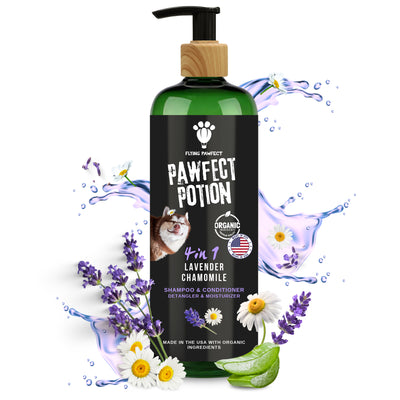
Flying Pawfect Pawfect Potion 4-in-1 Shampoo
For a dog that is outside every day, the useful property in a shampoo is that it works on a small area at a low dose. The 4-in-1 Dog Shampoo & Conditioner cleans, conditions, detangles and moisturises in one step, so a pair of back legs can be washed properly without turning into a whole bath.
That matters because the alternative is washing the entire dog far more often than its skin wants. Legs and belly are the only parts that need it after a walk across treated grass, and a product that does the whole job in one pass keeps that a five minute job at the back door.
It is built on plant-derived cleansers with organic ingredients, it is pH balanced for dogs, and it is free of dyes, SLS, parabens, phthalates and alcohol. It is made in the USA and it suits all animals, which is convenient in a household where the cat walks on the same lawn.
The conditioning side earns its place on the feathering. Long leg hair that has been wetted and dried outdoors several times a week tangles quickly, and a coat with less friction in it combs out instead of knotting at the back of the hock.
Dilute it in a jug rather than pouring it straight on, wash only what touched the ground, and spend the time on the rinse rather than on the lather. Half the product and twice the rinse is the right trade here.
- Best for: Dogs with daily lawn and garden access, and any dog with long feathering on the legs.
- Why it works: One product cleans and conditions, so a partial wash stays quick and rinses out cleanly.
- Context: Use it on legs and belly only. A full bath after every walk does the skin no favours.

Flying Pawfect Flat Slicker Brush, Large
Before anything gets wet, a dry brush out takes most of the loose material off the coat and drops it outside instead of in the kitchen. The Flat Slicker Brush for Dogs & Cats in the large size covers a leg or a flank in a few passes, which is what makes a back-door routine survive a wet week.
The flat head suits the job because the areas that need it most are flat planes. The outside of a thigh, the side of a belly and the top of a foot all take a straight head better than a curved one, and the fine pins pull dry granules and grass dust out of the hair rather than pushing them further in.
Work with the lie of the coat in short strokes and keep the pressure light. The point is to lift material out, not to scrub the skin, and skin that has already had a damp day outside does not need a hard brush on top of it.
- Best for: Medium and large dogs, and any coat long enough to hold dry debris.
- Why it works: A dry pass first means less material goes into the water and far less comes indoors.
- Context: Do it outside or in a doorway. Brushing a dusty coat indoors just relocates the problem.

Flying Pawfect Long Tooth Comb
The comb is the tool that actually finishes this job, because the places that collect the most are the places a brush reaches worst. The Long Tooth Comb gets between the toes, under the pasterns and through the feathering behind the legs, which is where granules sit until something physically lifts them out.
Use the wide end first to open the hair, then the fine end to check what is left in it. If the fine teeth come through clean on the feathering and between the toes, the leg is done, and if they keep catching, that spot needs the water rather than more combing.
It is also the honest way to find what else came home. Grass seed, burrs and small thorns all arrive on the same walk and all show up on a comb long before they show up as a limp.
- Best for: Feet, feathering, the belly line and anywhere a brush skates over the top.
- Why it works: Two tooth spacings on one comb open the hair and then prove it is clear.
- Context: Comb the feet every time. It is the single highest-value thirty seconds in the whole routine.
Feet deserve their own attention here, and How to Brush a Dog's Paws and Between the Toes covers the handling side of it in more detail than there is room for below.
Step by Step: Cleaning a Dog Down After a Treated Lawn
This is a five minute routine at the back door, not a bath. Done consistently it is far more useful than an occasional deep clean, because the point is to get material off before the dog licks it or lies on it.
- Stop at the door. Everything below happens outside or on a hard floor, before the dog reaches carpet or bedding.
- Dry brush the legs and belly first. Short light passes with the slicker take off loose granules, dust and clippings.
- Comb the feet. Wide teeth between the toes, then the fine end to check nothing is left wedged in there.
- Rinse what touched the ground. Warm water over paws, lower legs and belly, with a dilute wash only if the dog is genuinely dirty.
- Rinse longer than feels necessary. Under-rinsing leaves shampoo in the feathering, which is its own cause of itching.
- Dry properly, especially between the toes. Damp hair between the pads is where skin trouble starts.
Drying is the step people skip, and on a dog being rinsed several times a week it is the one that decides whether the skin stays comfortable. How to Dry a Dog After a Bath covers the areas that stay wet longest, and the feet are top of that list.
Prevention Tips for Households With a Treated Lawn
Nearly all of this is timing rather than grooming, and the timing is free.
- Read the label and keep to the full wait. It is the only number in this article with any authority behind it.
- Treat the lawn when the dog can genuinely be kept off it. A morning application before a day out is easier than policing a garden door.
- Walk around flagged verges and sprayed park edges. If you do not know what went down, the route is the simplest control you have.
- Keep the hair between the pads trimmed. Less hair down there means less held, and an easier rinse every time.
- Keep a towel and a jug by the door. A routine that needs no setting up is a routine that actually happens.
- Wash the bedding on the normal cycle. Whatever does come indoors ends up where the dog sleeps.
Common Mistakes After a Dog Walks on Treated Grass
- Bathing the whole dog every time. Only the lower half touched anything, and over-washing dries the skin out.
- Using a household cleaner or wipe on the coat. Products made for floors have no business on skin.
- Skipping the dry brush and going straight to water. Wetting dry granules first makes them stick instead of lifting out.
- Leaving the feet damp. This causes more real trouble than the lawn treatment ever does.
- Scrubbing hard at a stained leg. Discoloured feathering is usually saliva or soil and will not come off with pressure.
- Treating a sick dog as a grooming problem. Vomiting, drooling or wobbliness after a lawn is a phone call, not a rinse.
When a Treated Lawn Becomes a Vet Question
Everything above is housekeeping. There is a clear line where it stops being a grooming subject, and it is worth knowing in advance rather than working it out on the day.
Call your vet straight away if your dog has eaten granules or drunk from a puddle on a treated lawn, or if you see vomiting, drooling, tremors, unsteadiness, laboured breathing or sudden lethargy after time on treated grass. Take a photograph of the product packaging with you or read the label down the phone, because the active ingredient changes the advice entirely.
Red, swollen or sore paws, persistent licking at one foot, or skin that looks irritated for more than a day are also a vet matter rather than a brushing one. A dog chewing at a single paw after every walk is telling you something a comb cannot fix.
FAQs
How long should a dog stay off a lawn after it has been treated?
Follow the time printed on the product label, because it varies by product and nothing else is a reliable guide. Many domestic treatments say to keep pets off until the lawn is completely dry or until it has been watered in. If you did not apply it yourself and cannot find out, stay off it.
Do I need to bath my dog after every walk on grass?
No, and doing so would dry the skin out. A dry brush and a rinse of the paws, lower legs and belly deals with ordinary walking, and a full bath belongs on its normal schedule. Save the whole-dog wash for when the dog is genuinely dirty.
Can lawn treatment cause itching or a rash on a dog?
Contact irritation is possible, and it usually shows on the belly, the groin and between the toes where skin meets grass directly. Mild redness that settles within a day after a rinse is one thing, and skin that stays sore, swollen or is being licked constantly is a vet appointment. Do not try to treat it with a shampoo.
Is a wipe-down as good as a rinse?
For a quick clean after dry grass, a damp cloth over the legs and feet is reasonable and much better than nothing. Water is still better where something has genuinely gone onto the coat, because wiping moves material around rather than removing it. Never use a household surface wipe on a dog.
My dog's white legs have gone brown. Is that from the lawn?
Almost certainly not. Brown or rust-coloured staining on white feathering is usually saliva from licking, and it builds up over weeks rather than appearing after one walk. Soil marking washes out and saliva staining does not, which is the quickest way to tell them apart.
Does a long coat make the problem worse?
It holds more and it is harder to rinse, so yes in practice. Feathering on the legs and a long belly fringe collect dry material the way they collect grass seed, and both take real combing to clear. Keeping the hair between the pads short makes the biggest difference for the least work.
Final Thoughts
A treated lawn is an ordinary part of life with a dog, and it is handled by timing far more than by grooming. Keep to the wait on the label, walk round what you cannot identify, and the question mostly stops existing.
What is left is a five minute routine at the back door. Brush the legs dry, comb the feet, rinse what touched the ground and dry it properly. If the dog is unwell or a paw stays sore, stop grooming it and ring your vet, because that is a different problem wearing the same coat.