
Your dog is going grey because the follicles in the skin are making less pigment than they used to, and that is almost always ordinary ageing rather than a problem. It starts on the muzzle and around the eyes, where the hair is finest and the growth cycle is quickest, and it spreads outward from there over several years.
When it begins is mostly genetic. Some dogs show their first white hairs at four or five, some are still dark at ten, and large breeds tend to grey earlier than small ones. There is nothing you can do to slow it down and nothing you need to do about it.
What does change is how the coat behaves in your hands. Owners very often say a greying coat feels drier, coarser and less inclined to lie flat, and whether that is the white hair itself or simply everything else that changes with age, the grooming consequence is identical.
So this guide is about the practical half. What greying is, what it is not, how a changed coat asks to be handled, and the small number of situations where a coat losing its colour is worth mentioning to your vet.
Why a Dog's Coat Starts to Lose Its Colour
Hair colour comes from melanin, loaded into each hair as it grows. As a dog ages the cells that make it become less productive, so new hairs grow in with less pigment and eventually with none. The hair is not dying. It is growing perfectly well and arriving pale.
The muzzle usually goes first because those hairs are short and turn over quickly, so a drop in pigment shows there within months rather than years. The eyebrows, the chin and the chest follow, and on many dogs the back and the legs barely change at all.
That timetable sits inside the broader picture of what age does to a coat, which is covered in Aging Gracefully: Senior Dogs, Coat Care, and the Slicker Brush Magic. Greying is the visible part of it and usually the least important.
There are a few causes of pale hair that have nothing to do with age:
- Scar sites. Hair that regrows over an old wound, a bite or a surgical incision often comes back white and stays white.
- Clipped patches. A shaved area can regrow a slightly different shade or texture, particularly on a double coat.
- Sun and weather. A dark coat that lives outdoors fades at the tips, which lightens the whole dog without any new white hair.
- Saliva and tear staining. This is the opposite problem, a pale coat going rust coloured, and it is easy to mistake for a colour change.
- Breed patterning. Plenty of breeds simply change shade between puppyhood and adulthood as the adult coat comes through.
How Grey Hair Behaves Differently Under a Brush
This is the part that matters for grooming, and it is worth being honest about. The published evidence on whether white hair is genuinely coarser is mixed, but the everyday experience of handling an older coat is not in doubt.
Three things usually change at once, and they compound. Skin becomes thinner and less elastic. The oils that keep hair sliding past hair are produced a little less generously. And the dog moves less, so the coat gets less of the self-grooming and rubbing that used to redistribute those oils for free.
The result is a coat that tangles in new places and complains about handling it used to accept:
- Hair grips hair more, so small tangles form faster and sit tighter than they did.
- White hair shows every bit of staining, so a muzzle that greys also looks grubbier.
- Thinner skin tents up under a pin before you feel any resistance in your hand.
- Pressure points mat first, because an older dog lies down longer and in the same spot.
- The coat loses some of its spring, so it holds a brush mark instead of falling back.
- Sore joints change what the dog will let you reach, which is often the real limit on a session.
What Changes in a Grooming Routine as the Coat Greys
Nothing in the routine needs replacing. It needs shortening, softening and splitting up, which is a different thing from doing less of it.
Two short sessions a week become four shorter ones. Ten minutes becomes two lots of four with a break in between. The dog stands for less time, the sore side gets done on its own terms, and the whole thing stops being an event.
The other change is where you look. On a younger dog you brush the coat; on an older one you check the dog. Hips, elbows, the base of the tail, the back of the thighs and whatever side the dog sleeps on are where a greying coat quietly mats, because those are the places that carry weight and get the least movement.
Recommended Tools for a Greying, Coarser Coat
The tools do not change with age, but which one you reach for first does. A head small enough to work around bones carefully, a wash that puts some slip back into the hair, and a comb to prove the work went deep enough.

Flying Pawfect Flat Slicker Brush
On an older dog the argument for a flat head is about load rather than coat length. A flat pin field sits level against the body, so every pin carries the same share of the pressure, and nothing presses harder than anything else on skin that has become thinner.
The Flat Slicker Brush for Dogs & Cats uses fine bent stainless steel pins, densely set, which is what lets it lift loose hair out of the coat on a light pass instead of a firm one. The small size shown here is the one to choose for an older dog, because almost everywhere you need to work is close to a hip, an elbow or a spine.
A small head is also what makes two minutes useful. You can do one shoulder, stop, and come back later without the session ever having become a wrestle, which is the single most important change in grooming a dog that is slowing down.
Hold it loosely and let its own weight do the work. If you find yourself pushing, the answer is a thinner layer of coat rather than more force, and the technique for that is set out in How to Brush a Dog Without Pulling the Skin.
- Best for: Senior dogs, bony areas, and short sessions around sore joints.
- Why it works: A level pin field spreads pressure evenly over thinner skin.
- Context: Small head, light hand, several short visits rather than one long one.

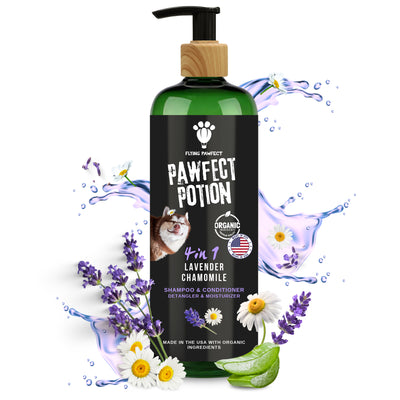
Flying Pawfect Pawfect Potion 4-in-1 Shampoo
The thing an older coat has lost is slip, and that is exactly what a conditioning wash puts back for a few weeks. The 4-in-1 Dog Shampoo & Conditioner cleans, conditions, detangles and moisturises in one step, which also means one short bath rather than a long one with two products in it.
Bath time is harder work for a stiff dog than for a young one, so the length of the bath matters as much as what is in the bottle. A single pass that does four jobs keeps a senior dog standing on a wet floor for less time, and that is a welfare point rather than a selling point.
It is pH balanced for dogs, built on plant-derived cleansers with organic ingredients, and free of dyes, SLS, parabens, phthalates and alcohol. It is made in the USA, and it suits all animals.
The practical benefit on a greying coat is friction. A conditioned coat combs out with less drag, and less drag means less pressure on skin that has become thinner, which is the whole aim.
Dry an older dog properly and warmly afterwards, and comb the coat through while it is still slightly damp. A thin coat on a thin dog loses heat quickly, and a damp coat left to dry in a heap is where the next mat starts.
- Best for: Coats that have lost their slip, and baths that need to be short.
- Why it works: Cleaning and conditioning in one step reduces brushing friction afterwards.
- Context: Warm water, a quick wash, and thorough drying before anything else.

Flying Pawfect Long Tooth Comb
An older dog cannot tell you where it hurts, and a tidy looking coat is not evidence that anything was reached. The Long Tooth Comb is the only tool here that reports the truth, because it either passes to the skin or it does not.
On a greying dog it earns its place twice over. It finds the tight little tangles that form at pressure points before they become mats, and parting the coat with it is how you get a proper look at skin that nobody has seen for a while.
Use it as a check rather than as a brush, a few strokes in each of the places an older dog mats, while the coat is dry and the dog is settled. Anything it will not pass through needs a different approach, never more force.
- Best for: Checking pressure points and looking at the skin underneath.
- Why it works: Dual density steel teeth reach the skin and cannot be fooled by the surface.
- Context: A test, not a treatment. If it stalls, stop and look rather than pull.
Step by Step: Brushing a Greying Senior Dog Comfortably
The aim of each session is to finish with the dog still happy to see the brush. Length is the first thing to give up.
- Groom where the dog already is. A bed or a rug beats a table or a slippery floor for a dog that is less steady.
- Start on the good side. Shoulders and back first, because they are rarely sore and they settle the dog.
- Work in thin layers. Lift the coat with your free hand and brush the layer underneath, one shallow pass at a time.
- Keep the sore areas to seconds. Hips, knees and the back of the thighs get a few strokes, then you move on and come back.
- Comb-check the pressure points. Elbows, hips, the sleeping side and the base of the tail, every session.
- Stop before the dog asks you to. Four good minutes repeated often beats fifteen that end badly.
Prevention Tips for Mats in a Coat That Has Changed Texture
A greying coat does not need more grooming so much as more frequent grooming, and a little attention to the places the dog can no longer manage itself.
- Brush more often and for less time. Frequency is what stops a tangle becoming a mat, not session length.
- Rotate the bedding and add padding. A softer surface means less compression on the side the dog lies on.
- Keep the back half on the list. Most older dogs stop reaching their own hindquarters long before anyone notices.
- Wipe a white muzzle after meals and drinks. Staining shows on pale hair in days, and it is easier to prevent than to clear.
- Book the groomer a little more often rather than a lot less. Shorter, simpler appointments suit a stiff dog better than a rescue demat.
- Tell your groomer what hurts. A dog that cannot be stood up for long needs that known in advance.
Common Mistakes Owners Make With a Greying Coat
Most of these come from reading a changed coat as neglect and over-correcting.
- Brushing harder to get the same result. Thinner skin takes that pressure, and it marks more easily than it used to.
- Bathing more often to brighten a white muzzle. Extra baths dry the coat out and the staining usually is not dirt.
- Buying supplements to stop the greying. Nothing restores pigment to a hair that has already grown in white.
- Letting sessions get longer because there is more to do. This is the quickest way to make a dog dislike being handled.
- Reading every objection as grumpiness. An older dog that flinches at one spot is usually telling you about pain.
- Clipping a matted senior coat off at home. Loose, thin skin and scissors or clippers is how older dogs get cut.
When Early Greying Is Worth Mentioning to Your Vet
Greying on its own is not a symptom, and a dog that goes grey at five is usually just a dog that goes grey at five. It is worth raising when it arrives with something else.
- The coat is thinning as well as paling, or hair is coming away in patches rather than shedding evenly. The difference is explained in Shedding vs Hair Loss in Dogs.
- Pigment is disappearing from the skin, the nose or the lips as well as the hair.
- The coat has changed texture quickly, over weeks rather than years.
- There is weight change, lethargy, heat seeking or a change in appetite alongside it.
- The dog has become anxious or reactive at the same time, which is worth a conversation in its own right.
- The skin underneath is red, flaky, smelly or sore anywhere.
None of that is a reason to panic, and none of it is something a brush or a bottle fixes. It is simply the short list of things worth saying out loud at the next appointment.
FAQs
At what age do dogs start going grey?
Most dogs show their first grey hairs on the muzzle somewhere between five and seven, and larger breeds tend to start earlier than small ones. Some begin at two or three and some are still dark at ten, which is normal variation rather than a sign of anything. Timing is largely inherited.
Is early greying in a dog a sign of stress?
There is research associating premature greying in young dogs with anxiety and impulsivity, so it is worth taking seriously as one small clue among others. On its own it proves nothing, because plenty of relaxed dogs grey early for purely genetic reasons. If your dog seems anxious as well, that is worth discussing with your vet.
Does grey hair feel coarser than the rest of the coat?
Many owners say it does, and an older coat certainly handles differently, with more friction and less spring. Whether the white hair itself is coarser is not settled, and in practice it does not matter, because the brushing changes you would make are the same either way.
Can anything stop a dog going grey?
No. Once a hair grows in without pigment, nothing puts the colour back, and no diet, supplement or shampoo changes the process. Good coat condition makes a greying dog look better cared for, which is a different and achievable goal.
Why is my dog's white muzzle turning brown?
That is usually staining from saliva, tears or food rather than a colour change in the hair. It shows up on pale hair within days and responds to wiping the area after meals and drinks. Persistent licking of one spot is worth a vet check rather than more cleaning.
Should I change my dog's brush as the coat greys?
Usually not the type, only the size and the way you hold it. A smaller head, a lighter hand and shorter sessions suit an older dog better than anything new, and a comb check at the pressure points matters more than it used to.
Final Thoughts
A greying muzzle is not a grooming problem. It is the most visible sign of an animal that has been with you long enough to change, and the coat under it simply asks for a gentler version of what you were already doing.
Shorter sessions, more of them, a lighter hand and a comb check at the places that carry weight. Watch for the things that turn up alongside the grey rather than the grey itself, and that part belongs to your vet.