

Introduction:
As our beloved furry companions grow older, they deserve all the care and attention in the world. Just like us, senior dogs experience changes in their bodies, including their coats. This is where the magic of the slicker brush comes into play. In this blog post, we'll explore the unique grooming needs of senior dogs and how the slicker brush can be their best friend in aging gracefully.

The Golden Years: A Time for Extra TLC
Senior dogs are truly special. They've shared years of loyalty and love, and now it's our turn to ensure their golden years are comfortable and happy. Grooming plays a crucial role in the well-being of senior dogs, and the slicker brush is a valuable tool in this process. If stiff or sore joints are part of the picture, How to Brush a Dog With Arthritis Without Causing Pain sets out how to adapt the session.

Why Senior Dogs Have Special Grooming Needs
As dogs age, their coats tend to undergo changes. These changes can include:Thinning Fur: Many senior dogs experience thinning or loss of fur. This can leave their skin more exposed and vulnerable.
Matting: Reduced mobility in senior dogs can lead to matting or tangles in their fur, especially in hard-to-reach areas.
Skin Sensitivities: Senior dogs may develop skin sensitivities or conditions that require extra care. Any sudden change in the coat or the skin underneath is worth a conversation with your vet rather than a change of brush.

The Slicker Brush: A Senior Dog's Best Friend
Here's how the slicker brush can address these specific needs:Gentle Detangling: Slicker brushes are designed to gently remove tangles and mats without causing discomfort. This is especially important for senior dogs with mobility issues.
Stimulating Circulation: Regular brushing with a slicker brush can stimulate blood circulation, which is beneficial for senior dogs' skin and coat health.
Loose Fur Removal: Even senior dogs with thinning fur benefit from having loose hair removed. This helps prevent matting and keeps their coat looking its best.
Skin Inspection: Brushing with a slicker brush allows you to closely examine your senior dog's skin. This is important for early detection of skin issues or irritations.
A slower, gentler version of the usual routine is set out in How to Brush a Dog Without Pulling the Skin, which matters more on an older dog than on any other.
Tips for Grooming Senior Dogs with a Slicker Brush
Choose the Right Slicker Brush: Opt for a slicker brush with fine, flexible pins that are gentle on your senior dog's sensitive skin.Regular but Gentle Sessions: Aim for regular but shorter grooming sessions. This reduces stress on your senior dog and makes grooming a more pleasant experience.
Be Patient: Senior dogs may require more time and patience during grooming. Allow them breaks and lots of praise.
Check for Discomfort: Always monitor your dog for discomfort during grooming. If you notice any, stop immediately and consult your veterinarian.

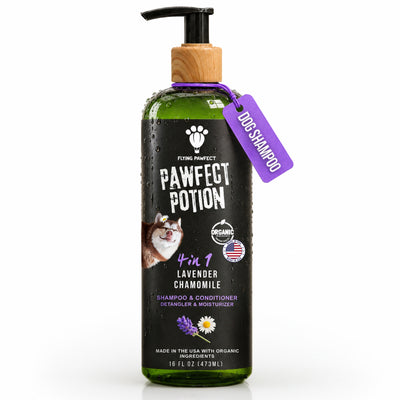
Flying Pawfect Pawfect Potion 4-in-1 Shampoo
A detangling spray only helps for the brushing session it is used in. A conditioning shampoo changes how the coat behaves between baths, and that is the gap Pawfect Potion fills.
It cleans, conditions, detangles and moisturises in one step. The coat comes out softer and easier to brush, so there is less friction for the slicker and the comb the next time you work through it.
It is pH balanced for dogs, made with plant-derived cleansers and organic ingredients, and free of dyes, SLS, parabens, phthalates and alcohol. It is made in the USA.
Always brush and comb before the bath. Water tightens any tangle it reaches, and no shampoo will dissolve a mat that is already there.
- Best for: Regular baths on long, thick, curly or double coats.
- Why it works: Cleaning, conditioning and detangling in one step, which reduces brushing friction afterwards.
- Context: Brush out first, rinse until the water runs clear, then dry fully before brushing again.
FAQs
How often should I brush a senior dog?
A little and often beats a long session, so aim for a few short sessions a week rather than one weekly sitting. An older dog gets stiff standing still and loses patience faster, so five or ten minutes at a time is usually the honest limit. Frequency is what keeps mats away, not session length.
Is my senior dog's coat supposed to change colour and texture?
Some change is normal with age: greying around the muzzle and eyes, a softer or duller feel, and a thinner coat overall. What is not normal is a sudden change, patchy loss, broken hair or irritated skin underneath, all of which are worth a vet appointment. There is more on the pigment side of it in Why Is My Dog Going Grey, and What It Means for the Coat.
Can I use a slicker brush on thin or fragile senior skin?
Yes, with a light hand and a flexible pin bed, which is what lets the pins give way instead of scraping. Use almost no downward pressure and let the pins do the work rather than your arm. If the skin is reddening, flaking or the dog flinches at a particular spot, stop and ask a vet.
My senior dog will not stand for grooming. What should I do?
Work with the dog lying on its side on a bed or a sofa and do one body section per session. Standing is the part most older dogs object to, not the brushing, so taking standing out of the equation usually solves it. Never hold a dog in place to finish a section.
What if the coat is already badly matted?
Do not try to brush out a mat that has felted close to the skin, and never cut one out with scissors. On an older dog a long dematting session is a welfare question as much as a grooming one, so this is a job for a groomer or a vet rather than a determined evening at home. The trade-offs are set out in Should a Matted Dog Be Sedated for Grooming?
Why does my senior dog's coat look worse just after I brush it?
Brushing lifts the coat and opens it up, so a thin or uneven coat often looks patchier for an hour afterwards before it settles. On an older dog with thinning fur that effect is more noticeable than it used to be. The full explanation is in Why Your Dog's Coat Looks Worse Right After Brushing.
Should I bath my senior dog more often or less?
Less, as a rule, because older skin tends to be drier and over-bathing makes flaking worse. Bath when the dog is actually dirty rather than on a schedule, and always brush and comb-check first, since water tightens any tangle it finds. Dry thoroughly and keep the dog warm afterwards.
Final Thoughts
In the journey of life, senior dogs have given us countless moments of joy and companionship. As they enter their golden years, it's our privilege to return that love with attentive care, and grooming with a slicker brush is a beautiful way to do just that. So, let's celebrate our senior dogs and embrace the magic of the slicker brush in keeping them happy, comfortable, and looking their best in their well-deserved retirement years.Explore our range of slicker brushes designed with your senior dog in mind and make their grooming routine a breeze. After all, they've earned every bit of pampering and love.

Ready to transform grooming into a tail-wagging delight? Shop our Pet Slicker Brush now and treat your furry friend to the love and care they deserve.