


Most dogs need a bath every four to six weeks. Short-coated breeds can go six to eight weeks, curly-coated breeds usually need every three to four, and a dog that swims or rolls in things needs one whenever it smells. Coat type decides the schedule far more than breed name does.
Bathing is one of the few grooming jobs where doing it too often is as much of a problem as not doing it enough. Wash a dog every week and you strip the oils that keep skin comfortable. Leave it too long and odour, greasiness and matting build up together.
The right interval depends on three things: what kind of coat your dog has, how it spends its days, and what its skin is like. This guide works through all three, then covers how to actually get a dog clean and properly dry without creating mats on the way out of the bath.
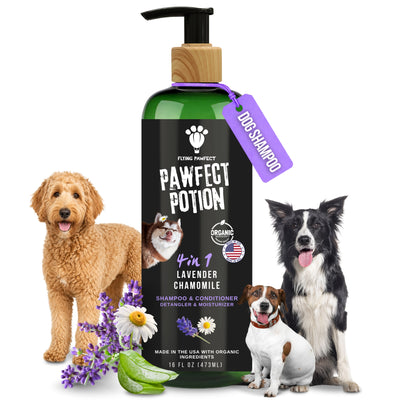
If you want a single product that handles the whole wash, the Flying Pawfect Pawfect Potion 4-in-1 is covered further down, along with the brush that does the work before and after the bath.
Why Bathing Frequency Matters for Dog Skin and Coat
A dog's skin produces sebum, a natural oil that coats each hair and forms a barrier on the skin surface. That barrier holds moisture in and keeps the coat water resistant and flexible.
Every wash removes some of it. That is the point of washing, and the oil replenishes over the following days. Trouble starts when washes come faster than the skin can restore the barrier.
Here is what shifts when the interval is wrong in either direction:
- Too often: dry, flaky skin, a dull coat, more scratching, and in double-coated breeds a topcoat that loses some of its water resistance.
- Too rarely: a greasy coat, a strong doggy smell, dander build-up, and dead undercoat that stays packed in and starts to mat.
- About right: a coat that smells of nothing much, feels slightly cool and springy, and parts easily when you push your fingers through it.
The last one is the test worth learning. A clean, well conditioned coat lets your fingers reach the skin without resistance. If they stop partway, the issue is usually brushing rather than bathing.
How Coat Type Changes the Bathing Interval
Breed lists are a rough guide. What actually matters is the structure of the coat, because that determines how much oil it holds and how fast dirt works its way down to the skin.
- Short, smooth coats, every 6 to 8 weeks. Beagles, Boxers, Staffies, Dalmatians. Little for dirt to cling to, and the skin is close to the surface, so frequent washing dries it out quickly.
- Double coats, every 4 to 6 weeks. Golden Retrievers, Huskies, German Shepherds, Corgis, Border Collies. The topcoat repels water, so the real job is getting the shampoo down into the undercoat and then getting the undercoat properly dry.
- Curly and wavy coats, every 3 to 4 weeks. Poodles, Bichons, doodles of every kind. These coats hold dirt and shed hair inside the curl instead of dropping it, so they need washing more often and brushing out before and after.
- Long silky coats, every 3 to 4 weeks. Shih Tzus, Yorkshire Terriers, Afghan Hounds. The coat is close to human hair in behaviour and looks greasy fast.
- Wire coats, every 6 to 8 weeks. Terriers of most kinds. Frequent washing softens the harsh texture that a wire coat is supposed to have.
- Hairless and near-hairless, every 1 to 2 weeks. Chinese Cresteds and similar. Skin oils sit on exposed skin with no coat to absorb them, so these dogs genuinely need frequent gentle washing.
If you have a mixed breed, work from the coat in front of you rather than from the parentage. A doodle with a tight curl behaves like a Poodle no matter what the other half was.
For the brushing side of the same question, How Often Should You Groom Your Dog? Easy Guide covers how the two routines fit together across the week.
How Lifestyle and Season Shift the Schedule
Two dogs of the same breed can need bathing at very different intervals. What the dog does all day usually matters more than the calendar.
- Swimmers. Sea water and chlorine both dry out coat and skin. Rinse with plain fresh water after every swim, and keep the actual shampoo baths on the normal schedule.
- Working and hiking dogs. Mud, dust and seeds work down to the skin. These dogs often need a wash sooner, but a thorough brush-out will sometimes do the job instead.
- City dogs. Road grime and pollution settle on the coat. A wash every four to six weeks suits most of them regardless of coat type.
- Coat blow season. A bath in the middle of a heavy shed loosens enormous amounts of dead undercoat. The brushing session straight after drying is usually the single most productive of the year.
- Winter. Indoor heating dries skin out, so stretching the interval slightly and drying very thoroughly is kinder than washing more.
- Senior dogs. Older skin is thinner and less oily. Keep baths gentle, quick and less frequent, and keep the room warm.
If your dog is shedding in clouds rather than drifts, that is seasonal rather than a washing problem. How to Brush a Double-Coated Dog Properly (Reduce Shedding & Mats) explains how to get the undercoat out once the bath has loosened it.
Signs Your Dog Actually Needs a Bath
Rather than counting weeks, learn to read the coat. These are the reliable signals:
- A smell that returns within minutes of the dog drying off. A brief damp-dog smell after rain is normal. A persistent one is not.
- A greasy or tacky feel when you run your hand against the direction of the coat.
- Visible dandruff or grit at the skin when you part the coat.
- Dull, flat-looking fur that has lost its usual lift.
- Mud or sand worked down to the skin that brushing alone will not shift.
One signal that is not a bathing cue: persistent scratching, licking or chewing at one spot. Itching that continues after a bath, along with redness, bald patches, scabs, a sudden change in coat texture or a smell that returns within a day or two, is a reason to see a vet. Skin problems in dogs have many causes and none of them is fixed by washing more often.
Recommended Products for Dog Bath Day
Bath day needs two things: something that cleans without stripping the coat, and a brush that opens the coat before the water goes on and clears the dead hair once it is dry.

Flying Pawfect Pawfect Potion 4-in-1 Shampoo
Pawfect Potion is a lavender and chamomile 4-in-1 that cleans, conditions, detangles and moisturises in a single step. On a dense or long coat that matters practically, because working three separate products down to the skin and rinsing each one is what turns a twenty minute bath into an hour. For a fuller look at which bottles a 4-in-1 takes off the shelf and when to reach for one, read 4-in-1 Dog Shampoo and Conditioner: What It Replaces and When to Use It.
It is pH balanced for dogs. Dog skin sits at a different pH from human skin, which is the reason human shampoo, however gentle it feels to you, is the wrong product for a dog.
The cleansers are plant-derived and the formula contains organic ingredients. It is made in the USA and contains no dyes, SLS, parabens, phthalates or alcohol.
The conditioning and detangling side is what makes the difference on bath day. A conditioned coat has less friction, so the brush passes through more easily afterwards and the post-bath session is shorter and more comfortable for the dog. On curly and long coats that is the step that decides whether you finish with a smooth coat or a set of new tangles.
Dilute a little in warm water before applying rather than pouring it straight onto the coat. Diluted shampoo spreads through a dense coat far more evenly, and you use less of it.
Work it in with your fingertips down at the skin, not just over the surface. On a double coat especially, most of what needs washing is underneath the layer you can see.
Then rinse for longer than you think you need to. Shampoo left in the coat is one of the most common causes of post-bath itching, and on a thick coat it takes real time to run clear.
- Best for: Routine baths on any coat type, and bath day during a heavy shed.
- Why it works: Cleans, conditions, detangles and moisturises in one pass, cutting brushing friction afterwards.
- Context: pH balanced for dogs, plant-derived cleansers, no dyes, SLS, parabens, phthalates or alcohol.

Flying Pawfect Slicker Brush
The brush does two separate jobs around a bath, and skipping the first one is the most common bath day mistake there is.
Before the bath, brush the dog out thoroughly. Water tightens an existing tangle into a firm mat, and a mat that was loose enough to comb out dry can be impossible once it has been soaked and dried. Never put a matted dog in the bath.
After drying, brush again. This is when the coat gives up the most dead hair it will all month, because the wash has loosened the undercoat and the conditioner has reduced the friction holding it in.
The large flat slicker has 25 mm fine bent stainless steel pins, which is long enough to pass through a topcoat and work in the undercoat where the loose hair actually sits. Shorter pins skim the surface and leave the layer that matters untouched.
The bend in the pins lets them slide along the hair shaft and lift dead hair out rather than catching and snapping living guard hairs. At 121.6 grams the brush is light enough that the pin length does the work instead of downward pressure, which is what keeps the session comfortable.
Work in sections, parting the coat with your free hand and brushing outward from the skin. Sweeping across the top of the coat looks tidy and removes very little.
- Best for: Brushing out before the bath and clearing loosened undercoat once the dog is dry.
- Why it works: 25 mm bent stainless steel pins reach through the topcoat into the undercoat.
- Context: Light at 121.6 g, so it works by pin length rather than pressure.
Step by Step: Bathing and Drying a Dog at Home
- 1. Brush the dog out completely first. Every tangle, every mat. This step is not optional.
- 2. Set up before the dog comes in. Non-slip mat, warm room, towels, diluted shampoo, brush within reach.
- 3. Use lukewarm water. Comfortable on your inner wrist. Hot water is uncomfortable on dog skin and dries it out.
- 4. Wet the coat right through to the skin. On a double or curly coat this takes longer than it looks, and the water beads off at first.
- 5. Work the shampoo in with your fingertips, moving down to the skin rather than over the surface. Leave the face for a damp cloth.
- 6. Rinse until the water runs completely clear, then rinse once more. Pay attention to the chest, armpits and the backs of the legs.
- 7. Squeeze, then towel. Squeeze water out along the coat rather than rubbing, because rubbing tangles long and curly coats.
- 8. Dry all the way to the skin. A low warm setting, and brush as you dry rather than afterwards. A coat left damp underneath packs down and mats as it dries.
- 9. Final brush-out. Section by section, down to the skin. This is where the dead undercoat comes away.
Step eight is the one that gets skipped, and it causes more matting than anything else on this list. A thick coat can feel dry on the surface while still being wet at the skin, particularly over the rump and behind the ears.
For long coats, the drying and brushing stage is where the result is decided. Brushing Tips for Long-Haired Dogs | Grooming Guide covers the technique in more detail.
Prevention Tips for Odour and Post-Bath Matting
- Brush between baths, not just at bath time. Regular brushing keeps a coat smelling fresh far longer than extra washing does.
- Rinse after swimming. Plain fresh water, no shampoo. Salt and chlorine left in the coat cause most post-swim skin irritation.
- Dry thoroughly every time, including after rain. Damp undercoat is the root cause of most household matting.
- Wash bedding on the same schedule as the dog. A clean dog on a dirty bed smells again within days.
- Keep the schedule steady. A predictable interval suits skin better than long gaps followed by several washes close together.
Common Mistakes Dog Owners Make at Bath Time
- Bathing a matted dog. Water tightens mats. Brush out completely first, every time.
- Using human shampoo. The pH is wrong for dog skin, however mild the product is on people.
- Under-rinsing. Residue left in a thick coat is a very common cause of itching in the days after a bath.
- Rubbing with a towel. It feels efficient and it tangles long coats badly. Squeeze and blot instead.
- Letting the dog air dry. Fine on a smooth coat, a reliable way to create mats on anything thicker.
- Washing more often to fix itching. Persistent itching needs a vet, not a shorter bathing interval.
FAQs
How often should you bathe your dog?
Every four to six weeks suits most dogs. Short smooth coats can stretch to six or eight weeks, while curly and long silky coats usually need every three to four. Adjust from there based on smell, feel and how the dog spends its days.
Can you bathe a dog too often?
Yes. Frequent washing strips the natural oils that keep skin comfortable and the coat water resistant, which can leave the skin dry and flaky and the coat dull. If your dog needs washing more than every two weeks, look at brushing and bedding first.
Can I use human shampoo on my dog?
No. Human skin and dog skin sit at different pH levels, so a product balanced for people is not balanced for a dog. Use a shampoo formulated for dogs, however gentle the human one seems.
Should I brush my dog before or after a bath?
Both. Brush thoroughly before, because water tightens existing tangles into mats that are far harder to remove. Then brush again once the dog is fully dry, which is when the coat releases the most loose hair.
Do I need a separate conditioner for my dog?
Not if your shampoo already conditions. A 4-in-1 that cleans, conditions, detangles and moisturises covers the same ground in one step, which is much quicker on a thick or long coat.
How often should you bathe a puppy?
Less often than an adult, and mainly to build a good habit. Keep the sessions short, warm and positive so the puppy learns that baths are unremarkable, and check with your vet about timing around vaccinations.
Should I bathe my dog during shedding season?
Yes, a bath during a heavy shed helps the coat release dead undercoat. Dry the dog completely and brush straight afterwards, because that session removes far more hair than a normal one.
Why does my dog still smell after a bath?
Usually because the coat was not dried fully at the skin, or the shampoo was not rinsed out completely. If a strong smell returns within a day or two, or comes from the ears, mouth or skin folds, it is worth a vet check.
Final Thoughts
There is no single right answer to how often you should bathe your dog, but there is a reliable way to find yours. Start from the coat type, adjust for how your dog lives, and then let smell and feel fine-tune the interval from there.
Get the routine around the bath right and the bath itself becomes easy. Brush out before the water goes on, rinse for longer than feels necessary, dry all the way to the skin, and brush again at the end. Those four habits prevent almost every problem people associate with bathing a dog at home.