


To get tree sap or chewing gum out of a dog's coat, soften it with a plain edible oil such as olive, coconut or vegetable oil, work it apart with your fingers and a wide-toothed comb, then wash the oil out with a gentle shampoo. Never use a solvent. Turpentine, white spirit, acetone, nail polish remover and rubbing alcohol are all genuinely dangerous on a dog, and they are the first things an internet search will suggest.
Sap is a different problem from mud. Mud dries and falls out. Sap does not dry, it cures, and as it hardens it glues a bundle of hairs into a rigid lump that pulls on the skin every time the dog moves. Left alone it collects grit and becomes a mat with a stone in the middle of it.
Almost every sticky coat comes out with oil, patience and a comb, and almost every disaster comes from reaching for something stronger. Keep the dog from licking the patch while you work, which matters more than the removal itself, for reasons the next section explains.
Why Tree Sap and Gum Are Harder to Remove Than Mud
Dried mud is a solid sitting between hairs. It has no grip of its own, so once dry it breaks up and brushes out. Sap does the opposite. It is tacky while fresh, then sets into a hard resin bonded to the hair shaft along its whole length.
That bond is why pulling fails. Tug at a sap lump and the hair does not slide free, it takes the skin with it, and the dog remembers it.
Chewing gum behaves similarly but stays soft and stretchy, so it smears. A patch the size of a coin can be spread across a whole flank by an owner working it out dry, which turns a five minute job into an hour.
- Sap bonds to the hair shaft. It does not sit loose between hairs the way dirt does.
- It hardens with time. A fresh patch is far easier than a three day old one.
- It gathers everything it touches. Grit, leaf litter and loose hair all stick to it.
- Water makes it worse. Wetting a sticky patch tightens the surrounding hair around it before you have loosened anything.
That last point catches people out constantly, and it is the same mechanism that turns a small tangle into a real mat in the bath. The reasoning is worth reading in How to Get Dried Mud Out of a Dog's Coat, which covers the opposite case where drying is the right first move.
How Sap Sets in a Dog's Coat and Why Pulling Makes It Worse
Conifer resin is the usual culprit, picked up from a trunk the dog brushed past or a fallen branch it lay against. Pine, spruce and fir are the worst offenders, and the tackiest sap comes from fresh damage, so recently felled woodland is a sticky place to walk a long-coated dog.
Once on the coat, resin stiffens over hours and holds the hairs it touched parallel in a hard bundle. The dog keeps moving, the bundle rotates against the skin, and the hair around it winds in. That is how a small patch becomes a mat within a couple of days.
The other risk is the dog dealing with it before you do. Dogs lick and chew at anything sticky, and two things follow from that. Pine resin in quantity can upset a dog's stomach, and chewing gum is a much more serious matter, because many sugar-free gums contain xylitol, which is highly toxic to dogs even in small amounts. If you find gum in the coat and any of it may have been swallowed, phone a vet straight away rather than finishing the grooming first.
Sap around the eyes, inside the ears, or worked into the pads between the toes is also not a home job. Those are all places where a slip with scissors or an oil in the wrong spot does real harm, so let a vet or a groomer deal with them.
What to Use on Sap and Gum, and What Never to Put Near a Dog
The whole method rests on one idea: resin dissolves in oil, not water. A plain edible oil breaks the bond between resin and hair without hurting the skin, and washes out afterwards with an ordinary shampoo. It is slow, messy, and it works.
- Safe to use: olive oil, coconut oil, sunflower or plain vegetable oil, or a little mineral oil. Warmed slightly in your hands, not heated.
- Also useful: an ice cube held against chewing gum for a minute or two. Hardened gum crumbles instead of smearing.
- Never use: turpentine, white spirit, paint thinner, acetone, nail polish remover, petrol, or hand sanitiser and rubbing alcohol.
- Also never: household degreasers, oven cleaner or any product carrying a hazard label. A dog's skin absorbs more than yours and the dog will lick the spot afterwards.
- Think twice about peanut butter. It does soften gum, but some brands contain xylitol. If you are not certain the jar is xylitol free, use oil.
Solvents come up in almost every discussion of this problem because they work brilliantly on sap and badly on animals. They strip the skin's protective oils, they can burn, and several are absorbed through the skin. There is no version of this job where they are the right answer.
Recommended Tools for Getting Sticky Residue Out of a Coat
You need very little: something to break the bond, something to ease the hairs apart, and something to wash the oil out afterwards. A comb does the delicate work, the brush tidies the area once it is clean, and the shampoo is what makes the whole method practical rather than leaving a greasy dog.

Flying Pawfect Curved Slicker Brush, Large
The brush is not the tool that removes the sap. It is the tool that deals with what the sap left behind, and that matters, because the hair around a sticky patch is almost always tangled by the time you get to it.
A curved head suits this job because sap most often lands on the coats where it does the most damage: the long feathering on the legs and chest, the trousers on the back of a doodle, the ruff of a Collie. The curve follows the shape of a limb or a shoulder instead of fighting it, so you can work along a leg without the corners of the head digging in.
Use it after the oil has done its work and after the coat has been washed and dried, not before. Bringing a slicker to a sticky patch simply loads the brush with resin, and cleaning resin out of a pin field is its own miserable afternoon.
Work outward from the edges of the affected area rather than starting in the middle. The hair at the margin is least damaged, so you shrink the tangle inwards instead of attacking the worst part head on.
Keep the pressure light and take the brush out of the coat at the end of each stroke rather than sweeping back and forth. The curved slicker brush shown here is the large size, which suits a medium or large dog. For a small dog or for the fine hair on the ears, the small head gives you far more control.
- Best for: tidying the tangled hair around a patch once the sap is gone.
- Why it works: the curved head follows a leg or a shoulder instead of digging in at the corners.
- Timing: after the wash, never on a sticky coat.

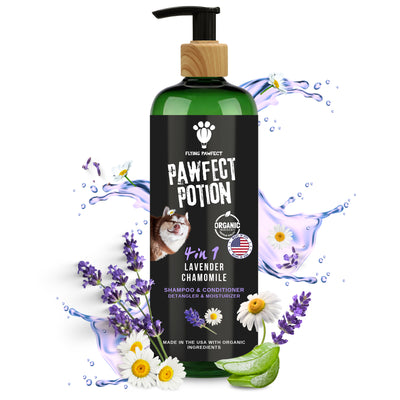
Flying Pawfect Pawfect Potion 4-in-1 Shampoo
The oil is what makes this method work, and the shampoo is what makes it liveable. Without a proper wash afterwards you have traded a sticky dog for a greasy one, and oil left in a coat attracts dirt for days.
Wash only the affected area if the rest of the dog is clean. Work the shampoo in neat, without wetting it first, because water dilutes the lather before it can lift the oil. Add water gradually once it is worked through, then rinse for longer than feels necessary.
The Pawfect Potion is pH balanced and uses plant-derived cleansers, with no dyes, SLS, parabens, phthalates or alcohol. It cleans and conditions in one step, which is useful here because the hair around the patch has already been handled a good deal and does not need a second round of products worked through it.
Two washes of the same patch are often needed after a heavy oiling. Dry the area properly, then leave the dog alone for a day before deciding whether any hair needs tidying. Coat that looks ruined while wet often looks fine once it has settled.
What the shampoo replaces in a routine like this, and when a single bottle is genuinely enough, is covered in 4-in-1 Dog Shampoo and Conditioner.
- Best for: washing the oil back out once the sap has released.
- Why it works: cleans and conditions in one step with no dyes, SLS, parabens or alcohol.
- Method: neat onto the oily patch first, water second, rinse twice.

Flying Pawfect Long Tooth Comb
The comb is the tool that actually gets the sap out, and it is the one most people skip. Fingers alone cannot separate a hardened bundle of hair without pulling on the skin. A comb can, because you can use it to hold the hair steady above the lump while you work below it.
Start with the wider-spaced half of the teeth. Slide a few teeth into the coat between the skin and the sap, so the comb takes the tension instead of the dog, then tease at the hardened hairs from the outside of the bundle inwards with the oil already worked in. A few hairs release at a time and that is the correct speed.
The long teeth are what make this possible. They reach right down to the skin, so you can get the comb underneath the lump rather than skating across the top of it, and once the comb is under it you have complete control over how much tension the dog feels.
Come back to it in stages. Oil, comb a little, wait ten minutes, repeat. Resin keeps softening while you wait, so three short attempts do more than one long one.
Finish with the closer-spaced half once the sap is out and washed. Why long coats need both a comb and a slicker, and which does which job, is set out in Dog Comb vs Slicker Brush.
- Best for: easing hardened hairs apart without pulling on the skin.
- Why it works: long dual density steel teeth get underneath the lump and take the tension.
- Method: wide teeth first, in stages, with oil already worked in.
Step by Step: Removing Tree Sap From a Dog's Fur
Set aside twenty minutes and expect to use ten of them waiting. The waiting is where the work happens.
- 1. Stop the dog licking it. A brief distraction, a lead, or another person. If gum may have been swallowed, call a vet before anything else.
- 2. Find the edges of the patch. Part the coat around it so you know how much hair is actually involved. It is usually less than it looks.
- 3. Work oil right into it. Enough to saturate the hardened hairs, rubbed in with your fingers. For gum, hold an ice cube against it first instead.
- 4. Wait ten minutes. This is the step people skip and it is the one that does the work.
- 5. Slide the comb in below the lump. Between the skin and the sap, so the comb holds the tension rather than the dog.
- 6. Tease from the outside in. A few hairs at a time, from the edge of the bundle towards its centre. Add more oil whenever it stiffens.
- 7. Stop if the dog objects. Come back in half an hour. Nothing here is urgent and a forced session costs you the next one.
- 8. Wash the oil out. Shampoo neat onto the patch, water second, rinse twice, then dry thoroughly.
- 9. Brush the area the next day. Once it is fully dry, tidy the surrounding coat with the slicker.
If a stubborn core will not release after two or three sessions, cutting it out is reasonable, but do it with blunt-ended scissors held parallel to the skin and never pointing at it, or better, take the dog to a groomer with clippers. Hair grows back. Skin cut with scissors because a dog moved does not heal as quickly.
Prevention Tips for Sticky Coats After Woodland Walks
You cannot keep a dog away from trees, but you can make sap a nuisance instead of an event.
- Check the coat after conifer walks. Hands over the legs, chest and belly at the door takes fifteen seconds.
- Deal with it the same day. Fresh sap is soft and comes out in minutes. Three day old sap is a project.
- Avoid freshly felled woodland with a long-coated dog. Cut timber runs sap for weeks.
- Keep the feathering in order. A tangle-free leg gives sap far less to grab.
- Keep a small bottle of oil in the car. Treating a patch before it sets on the drive home saves the whole job.
- Pick up gum in the park before the dog does. Benches and bins are where it finds it.
Common Mistakes When Removing Sap or Gum
Nearly every sap removal that ends badly goes wrong in one of these six ways.
- Reaching for a solvent. The single most harmful thing you can do. Nothing with a hazard label goes on a dog.
- Bathing the dog first. Water tightens the surrounding coat and does nothing to the resin.
- Pulling at the lump. The hair is bonded along its length, so a pull lifts skin rather than freeing hair.
- Cutting blind into the coat. Skin tents up into scissors far more easily than owners expect, especially on the belly and armpits.
- Not waiting after oiling. Ten minutes of patience replaces twenty minutes of tugging.
- Ignoring what the dog swallowed. Gum is the real risk in this whole article, not the coat.
FAQs
How do you get tree sap out of dog fur?
Work a plain edible oil such as olive, coconut or vegetable oil into the hardened hair, leave it for about ten minutes, then ease the hairs apart with a wide-toothed comb from the outside of the lump inwards. Wash the oil out with a gentle shampoo afterwards and dry the area thoroughly. Repeat in short sessions rather than forcing it in one go.
Can I use rubbing alcohol or nail polish remover on sap?
No. Alcohol, acetone, nail polish remover, turpentine and white spirit all remove sap and all are unsafe on a dog. They irritate and can burn the skin, some are absorbed through it, and the dog will lick the spot afterwards. Oil is slower and it is the only sensible choice.
What if my dog ate some of the sap or gum?
Call a vet, particularly with chewing gum. Many sugar-free gums contain xylitol, which is highly toxic to dogs even in very small amounts and acts quickly. Pine resin in quantity can also upset the stomach, so any vomiting, drooling or unsteadiness is a reason to ring rather than wait.
Is peanut butter safe for getting gum out of dog hair?
Only if you are certain the jar contains no xylitol, which several sugar-free brands now use. Plain oil does the same job with none of the risk, so it is the safer default. An ice cube held against the gum for a minute or two also works well, because hardened gum crumbles instead of smearing.
Should I just cut the sap out?
Cutting is a reasonable last resort once oil and combing have genuinely failed, not a first move. If you do cut, use blunt-ended scissors held parallel to the skin and never pointing towards it, and stop if the dog moves. A groomer with clippers is safer than scissors in almost every case.
Why did washing my dog make the sap worse?
Water does not dissolve resin, and wetting the coat tightens the hair around the sticky patch before anything has been loosened. That turns a contained lump into a mat with sap in the middle of it. Oil first, comb second, wash last is the order that works.
How long does sap take to harden in a coat?
Fresh resin is tacky for a few hours and noticeably stiffer by the next day. After two or three days it is hard, it has collected grit and loose hair, and the surrounding coat has usually started to mat around it. Dealing with it the same day is by far the easiest version of this job.
What if the sap is near my dog's eyes or in the paw pads?
Leave those to a vet or a professional groomer. The skin around the eyes and between the pads is delicate, the dog is least likely to hold still there, and both oil and scissors carry more risk in those spots than anywhere else on the body.
Final Thoughts
Sap looks alarming and is usually simple. Oil, ten minutes of patience, a comb worked from the outside in, then a proper wash. The only things that turn it into a real problem are solvents, water applied too early, and trying to pull a bonded lump out of a coat.
The part worth being genuinely careful about is not the coat at all. If your dog may have swallowed chewing gum, that is the emergency, and it is worth a phone call before you pick up a comb.
![[CL] Flying Pawfect coral large flat slicker brush for dogs](http://flyingpawfect.com/cdn/shop/files/CoralLarge2026.jpg?v=1783693245&width=400)
![[BL] Flying Pawfect baby blue large curved slicker brush for doodles and long haired dogs](http://flyingpawfect.com/cdn/shop/files/CBL_HERO_26_05_819be2a4-36dd-43dc-bda3-1730fa9e5818.jpg?v=1784475444&width=400)