

The best brush for a German Shorthaired Pointer is a flat slicker brush with fine, densely set stainless steel pins, used in short strokes with almost no downward pressure. The coat is short, hard and flat, so the brush is not there to detangle anything. It is there to lift dead hair out of a coat that holds it, and to put your hand and your eyes over every inch of skin after a day outdoors.
That second job is the one most owners miss. A Pointer works in cover, and cover leaves things behind: grass seed, burrs, dried mud, thorn scratches and ticks. A short coat does not display any of that the way a feathered coat does. It hides it flat against the skin, which is exactly where you cannot see it.
So a German Shorthaired Pointer brushing routine is really a skin inspection with a brush in your hand. It takes about ten minutes, it needs two tools rather than a drawer full, and it matters most on the days the dog has actually been working.
Why Brushing a German Shorthaired Pointer Is a Skin Job
A German Shorthaired Pointer carries a single coat of short, coarse, water resistant hair with very little undercoat. There is no soft layer to pack down, and there is no length for a mat to form in. Judged on tangles alone, this is one of the lowest maintenance coats in the gundog group.
That is precisely why the grooming conversation has to move elsewhere. On a long coat the brush solves a visible problem; on a Pointer it is the only routine that reliably brings your hands into contact with the whole animal, which is how small injuries get found while they are still small.
Short hair also sits tight to the body, so a scratch, a swelling or an embedded seed can be invisible at arm length and obvious under a palm. Owners of heavily coated breeds find problems late because the coat is in the way; owners of short coated breeds find them late because nobody is looking.
- A hard flat coat sheds steadily all year, not only in spring and autumn
- Short hairs weave into fabric, so loose hair removed at source saves hours of cleaning
- Ticks favour the thin skinned areas a short coat leaves exposed
- Grass seed travels along the hair and stops where the skin folds, not where you can see it
If you want the wider version of this argument on another lean, short coated breed, the companion piece on Best Brush for a Doberman covers the same ground from a different angle.
How Field Debris Hides in a Short Pointer Coat
Grass seed is the main offender, and it is built to travel one way only. The barbed head works forward along a hair shaft and cannot reverse, so every step the dog takes moves it closer to the skin rather than back out into the air.
Once it reaches skin it keeps going. The usual landing sites are between the toes, inside the ear, in the armpit, in the groin and along the soft skin behind the elbow. A seed that has entered the skin is a veterinary problem, not a grooming one, and the window where a brush can still solve it is measured in hours rather than days.
Burrs behave differently. They catch on the surface and are easy to lift out with fingers if you find them the same evening. Dried mud is the quiet one: it sets into a crust at the elbows and hocks, and a dog left to dry out in a crate will often chew at it rather than tell you about it.
- Between the toes: run a thumb between each pair of pads, not just across the top of the foot
- Ear canal and ear flap: lift the leather and look at the underside in daylight
- Armpit and groin: thin skin, almost no coat, and the easiest place for a seed to enter
- Tail set and underside: often skipped entirely because the dog is standing
None of this needs equipment. It needs a fixed habit, which is why attaching it to the brush works so well: the brush is what gets you to do it every time.
What a Weekly German Shorthaired Pointer Routine Involves
For a dog in normal family work, once or twice a week is enough to keep the loose hair under control. For a dog that is actually hunting, running in stubble or swimming, the brush comes out after every outing, because the point of it has changed from coat care to damage control.
The whole routine should take ten minutes. Keep the order the same every time: a dog that knows the sequence stands still for it, and a dog that stands still lets you look at the places that matter rather than the places that are easy to reach.
- Twice weekly: a full slicker pass for loose hair, five minutes
- After every outing in cover: hands and eyes over feet, ears, armpits and groin
- Monthly: a comb pass through the softer hair behind the ears and under the tail
- As needed: a bath after mud, water or anything the dog has rolled in
Recommended Tools for Short Dense Pointer Coats
Three tools cover the entire breed, and two of them do almost all of the work. A slicker brush for the coat, a shampoo for the days the dog comes home filthy, and a long tooth comb used purely as an inspection instrument rather than a grooming one.
Flying Pawfect does not make a rubber curry mitt or a deshedding blade, and a German Shorthaired Pointer does not need either. A deshedding blade is designed to pull dead undercoat out of a thick double coat, and this breed has almost no undercoat to pull. Used on a short single coat it scrapes the guard hair and the skin underneath it, which is a good way to make a shiny coat look dull.

Flying Pawfect Flat Slicker Brush
The flat head is the right geometry for this breed. A German Shorthaired Pointer is a series of long flat planes, the ribcage, the shoulder, the thigh, and a flat pin bed sits level against all of them so every pin carries the same load. A curved head is built to follow the depth of a heavy coat, which this breed does not have.
The pins are fine bent stainless steel, set densely. On a short hard coat that density is what matters, because the hair you are trying to remove is only a centimetre or two long and a sparse pin field simply passes over the top of it. Dense fine pins catch short hair the way a wide toothed tool never will.
Use it with the weight of the brush and nothing more. The common error on short coated breeds is to press, because nothing seems to be happening, and pressing on a coat this thin puts the pin tips straight onto skin. Short light strokes in the direction the coat lies will fill the pin bed with loose hair within a minute.
The large size suits an adult Pointer, covering a long flank in fewer strokes and keeping the session inside the ten minutes the dog is willing to give you.
- Best for: Short, hard, flat coats with little or no undercoat
- Why it works: A level pin bed spreads pressure across a flat ribcage instead of concentrating it
- Technique: Short strokes with the lie of the coat, using the weight of the brush only
- Context: Two passes a week keeps shed hair off furniture year round

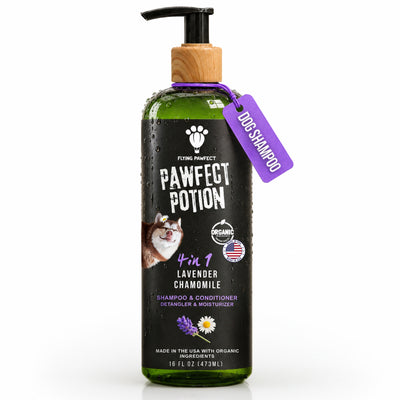
Pawfect Potion 4-in-1 Dog Shampoo and Conditioner
A working Pointer gets dirty in a way a house dog does not. Ditch water, cattle muck, pond weed and set mud all arrive on the same coat, and a short coat holds the smell of all of them because there is no length for the air to move through.
This is a four in one wash that cleans and conditions in one step, which suits a coat washed more often than most. It is pH balanced for dogs, uses plant derived cleansers and organic ingredients, is free of dyes, SLS, parabens, phthalates and alcohol, and is made in the USA.
Dry the dog properly afterwards, especially the ears and the skin folds at the elbow. A short coat looks dry long before it is, and damp skin under a tight coat is how a hot spot starts after a day in water.
- Best for: The bath that follows mud, water or a long day in cover
- Why it works: Cleaning and conditioning in one step on a coat that gets washed often
- Free from: Dyes, SLS, parabens, phthalates and alcohol
- Context: Brush before the bath, never after a coat has dried with mud still in it

Flying Pawfect Long Tooth Comb
On a German Shorthaired Pointer the comb is not a grooming tool at all. It is the instrument that parts the coat so you can see the skin underneath, and on a breed where the whole argument is about finding things early, it is the most useful of the three.
The dual density teeth are what make it work here. The wider spaced half parts the coat cleanly without dragging, and the closer half will lift a tick, a scab or a lodged seed head into view where fingers alone would pass straight over it.
There is softer, slightly longer hair behind the ears, under the tail and along the back of the thighs, and those are the only places on the breed where a genuine tangle ever forms. A comb pass through them once a month is the whole job.
- Best for: Parting a short coat to look at the skin beneath it
- Why it works: Dual density teeth part cleanly and then lift what the parting reveals
- Where to use it: Behind the ears, under the tail, the back of the thighs
- Context: The only tool in the kit that cannot be fooled by a tidy looking surface
Step by Step: Brushing a Pointer After a Day in Cover
Do this with the dog standing, in good light, on a surface where the dog has footing. A tired Pointer will stand for ten minutes quite happily. A Pointer that has just come in and still has energy will not, so let the dog settle first.
- One: Run both hands over the whole dog first, before any tool, feeling for heat, swelling or a flinch
- Two: Slicker the body in short strokes from neck to tail, following the lie of the coat
- Three: Check feet, ears, armpits and groin by hand and by eye, one at a time
- Four: Comb the softer hair behind the ears and under the tail, then clear the brush
Clear the pin bed as you go rather than at the end. A brush carrying a full load of hair stops collecting, and most of the time an owner thinks a coat has stopped shedding the brush has simply stopped working. Keeping the pins clear also makes the tool last, as covered in How to Clean a Slicker Brush.
Preventing Grass Seed and Tick Problems in a Working Coat
Prevention on this breed is almost entirely about timing. The same check done on the evening of the walk is a thirty second job, and done three days later it is a vet visit. Nothing about the tools changes between those two outcomes.
Through high summer, when seed heads are dry and ready to travel, make the foot check daily for any dog that has been in long grass or stubble. Feet account for more embedded seed cases than every other site combined.
- Check the same evening, every time, rather than keeping a mental list for the weekend
- Work in daylight or under a bright lamp, because a tick on a liver coat is close to invisible
- Rinse set mud off the elbows and hocks rather than letting the dog chew at the crust
- Keep the coat short and clean rather than oiling or dressing it, which only traps debris
Head shaking, a foot the dog will not leave alone, a weeping lump between two toes or sudden lameness after a walk in long grass are all reasons to ring a vet rather than reach for a brush.
Common Mistakes Owners Make With Short Coated Gundogs
Almost every mistake on this breed comes from the same assumption, which is that a short coat means there is nothing to do. The coat genuinely is easy. The skin under it is the part that needs the attention, and it does not announce itself.
- Pressing harder: A thin coat gives no feedback, so owners push, and the pin tips reach skin
- Using a deshedding blade: Built for undercoat this breed does not have, and it dulls the guard hair
- Brushing only the back: The places that cause problems are all on the underside
- Skipping the routine in winter: A Pointer sheds all year, and ticks are active far later than most owners expect
The other common error is buying for the wrong animal. A brush chosen for a thick coated dog in the same household will be wrong here, and the piece on Best Brush for Greyhounds and Whippets works through the same choice on another fine, close coated breed.
How Much a German Shorthaired Pointer Really Sheds
More than new owners expect, and more consistently. There is no dramatic twice yearly coat drop of the kind a double coated breed goes through, so there is no obvious season to brace for. Instead there is a steady, low level shed that runs all twelve months.
The hairs are short, stiff and slightly tapered, which is the worst possible shape for fabric. They do not sit on top of a sofa cushion, they work into the weave point first and stay there, which is why a Pointer household often owns a better vacuum than a Collie household does.
Two slicker passes a week is what actually changes this, removing the hair while it is already loose, before the dog distributes it around the house. Bathing does not reduce shedding, and nor does any shampoo, whatever the label says.
FAQs
What is the best brush for a German Shorthaired Pointer?
A flat slicker brush with fine, densely set stainless steel pins. The flat head sits level against the long flat planes of the body, and the dense pin field is fine enough to catch hair that is only a centimetre or two long. Use it with the weight of the brush rather than any downward pressure.
How often should I brush a German Shorthaired Pointer?
Twice a week is enough for a family dog, and it keeps the steady year round shedding under control. A dog that has been working in cover should be checked over the same evening, every time, because that is when grass seed and ticks can still be lifted out easily.
Do German Shorthaired Pointers shed a lot?
They shed steadily all year rather than in two big seasonal drops. The hairs are short and stiff, so they work into upholstery and car seats more stubbornly than longer hair does. Regular brushing removes that hair at source and makes a noticeable difference indoors.
Can I use an undercoat rake on a German Shorthaired Pointer?
No. An undercoat rake and a deshedding blade are both designed to pull dead undercoat out of a thick double coat, and this breed has very little undercoat for them to reach. On a short single coat they scrape guard hair and skin instead, which leaves the coat dull and can make the dog sore.
How do I check a Pointer for grass seeds?
Work through the feet first, running a thumb between every pair of pads rather than just across the top of the foot. Then lift each ear and look at the underside, and finish with the armpits and groin. A seed found the same evening comes out with fingers, and a seed left for days usually needs a vet.
How often should a German Shorthaired Pointer be bathed?
Only when the dog is actually dirty, which for a working dog may be often and for a house dog may be a few times a year. Use a gentle four in one wash that cleans and conditions in one step, and dry the ears and elbow folds properly afterwards.
Why does my Pointer have dry flaky skin after brushing?
Most often the brush is being pressed too hard into a coat that offers no resistance, which irritates the skin surface. Lighten the stroke and shorten the session first. If the flaking continues, or you see redness, scabs or hair loss, that is a question for a vet rather than a change of brush.
Does a German Shorthaired Pointer need a comb at all?
Yes, but as an inspection tool rather than a grooming one. There is softer hair behind the ears, under the tail and on the back of the thighs where small tangles can form, and a comb parts the rest of the coat so you can actually see the skin beneath it.
Final Thoughts
A German Shorthaired Pointer is genuinely easy to groom, and that is the trap. Ten minutes twice a week with a flat slicker brush handles every bit of the coat work this breed needs, which leaves the real job: looking at the dog properly after a day outdoors.
Buy the brush for the coat you actually have. Fine dense pins on a flat head, a light hand, and a comb kept nearby for the places your eyes cannot reach on their own. That is the whole kit, and for this breed it is enough.