


The best brush for a Greyhound or a Whippet is a soft flat slicker used with almost no pressure at all, or a soft rubber hound glove if your dog is particularly sensitive. These are single coated dogs with barely any undercoat, so there is very little hair to remove and very little coat to protect the skin underneath. The tool matters less than the hand holding it.
That is the part most grooming advice gets wrong for sighthounds. Almost everything written about brushing assumes a coat with some depth to it, where you can lean into a stroke and let the pins work. A Greyhound has no such cushion. The skin sits close to the surface, there is very little fat under it, and a brush pressed the way you would press it on a Labrador will leave pink tracks.
The good news is that the whole routine takes about three minutes. A Whippet or a Greyhound in normal condition needs one gentle pass a couple of times a week, a wipe down after a muddy walk, and a bath only occasionally. There is no dematting, no line brushing and no seasonal blow to survive.
What follows is the honest version: which brush, how much pressure, and what those famously bare thighs usually mean.
Why a Sighthound Coat Needs a Gentler Touch Than Any Other Breed
Greyhounds, Whippets, Italian Greyhounds, Salukis in their smooth areas and most other sighthounds share the same coat structure. A single layer of short, fine, close lying hair, with no dense undercoat beneath it. Compare that with a double coated breed, which carries a woolly insulating layer under a coarser outer coat, and you can see why the tools diverge.
Three things follow from that structure, and they shape everything else:
- There is almost nothing to extract. A sighthound sheds a small amount of hair steadily all year rather than dropping a coat twice a year. Any tool sold on its ability to pull out undercoat has nothing to pull.
- The skin is genuinely thin. Sighthounds are built lean, with little subcutaneous fat, so the skin is closer to bone across the ribs, hips and shoulders than it is on most breeds. Pressure that a Beagle would not notice is felt.
- The coat offers little protection. Thin hair does not buffer a pin field, so a stiff brush reaches skin on the first stroke rather than the fifth.
This is why sighthound owners so often conclude their dog hates being brushed. Usually the dog does not hate brushing, it dislikes the pressure, and the same dog will lean into a soft glove quite happily. Short coated breeds in general need a lighter hand than the internet suggests, which is a point made at length in Best Brush for French Bulldogs, another smooth coated breed where technique matters far more than tool choice.
There is a second reason to brush a sighthound even though the hair volume is trivial. A weekly pass over the whole body is the easiest way to find lumps, grazes, ticks and thin patches early, on a breed whose skin tears more readily than most. That health check is the real return on three minutes.
How Bare Thighs and Thin Patches Develop on a Greyhound
Nearly every Greyhound owner asks about this eventually, and it deserves a clear answer rather than a brush recommendation.
Bald or sparse patches on the outside of the thighs are extremely common in Greyhounds, especially ex racing dogs, and in many cases the cause is mechanical rather than medical. Years spent lying on hard kennel surfaces wears the hair away over the bony points of the hips and thighs. The pattern is usually symmetrical, the skin underneath looks normal, and the dog is otherwise well. Many of those coats regrow slowly once the dog is on soft bedding, and some never fully do.
Thin hair also shows up in three other predictable places on sighthounds, and none of them is caused by brushing:
- The underside of the belly and the inner thighs, where hair is naturally sparse on the breed and the skin often shows through.
- The tip of the tail, which gets knocked constantly and rubs bare on doorframes and walls.
- The chest and elbows, where the dog takes its weight lying down.
All of that is worth knowing so you do not attack it with a tool. Brushing harder does not bring hair back, and a stiff brush over a thin patch reaches bare skin immediately.
What does need a vet rather than a brush: patches that are itchy, red, scabby, greasy or smelly, hair loss that is spreading or arrives suddenly, any patch that appears on one side and not the other, and any thinning that comes with a change in appetite, energy or thirst. Those can point to hormonal, parasitic or skin conditions, and no grooming routine addresses them. If you are unsure whether what you are looking at is normal wear or something else, the section on reading skin in How to Groom a Dog With Sensitive Skin is a useful companion to this one.
What a Realistic Greyhound and Whippet Routine Looks Like
Short and unglamorous, which is one of the great pleasures of owning a sighthound.
- Brushing: two or three times a week, three minutes, whole body, very light pressure.
- Bathing: every couple of months at most, or when genuinely dirty. Sighthounds have famously little doggy odour and over bathing dries the skin.
- After walks: a damp cloth or a towel over the legs and belly does more good than a brush, because mud on a fine coat comes off easily once dry.
- Nails and teeth: the two jobs that genuinely matter on this breed and are easy to neglect, because the coat asks nothing of you.
- Coats and jumpers: check underneath them weekly. Anything worn against a thin coat rubs, particularly at the chest and armpits.
Notice what is absent. No dematting, no line brushing, no undercoat rake, no deshedding blade, no stripping. If a grooming routine you have been handed contains any of those for a Greyhound, it was written for a different kind of dog.
Recommended Tools for Fine Single Coats and Thin Skin
Two tools cover almost everything a sighthound needs, and the third is there for the rest of the household. What matters more than any of them is that you hold the brush lightly enough that the pins are combing the hair rather than scraping the skin.

Flying Pawfect Flat Slicker Brush, Medium
Flat, not curved, is the right shape here and the reasoning is simple. A sighthound body is a series of long flat planes, the ribs, the flanks, the shoulders, and a flat pin bed keeps the whole head in contact as it travels. A curved head is built to follow the shape of a curly or heavily furnished coat and it would only ever touch a Greyhound along one edge.
The Flat Slicker Brush for Dogs and Cats uses fine bent stainless steel pins set densely across the pad. The bend is what makes it safe to use on a fine coat: a bent pin enters the hair and lifts the loose strands out on the return, rather than presenting a straight point to the skin.
Choose the medium for a Greyhound or a Lurcher and the small for a Whippet or an Italian Greyhound. The medium head covers the long flat body of a Greyhound in a reasonable number of strokes without being so large that it bridges awkwardly over the hips and ribs. Resist the urge to buy the large simply because a Greyhound is a big dog, because the large is built for depth of coat, which this breed does not have.
Pressure is the entire technique. Hold the brush so lightly that you could drop it, and let the weight of the head alone rest on the coat. If you can see the pins bending against the skin, you are pressing far too hard. On a coat this fine, a stroke that looks like it is barely doing anything is in fact collecting everything there is to collect.
Work in the direction the coat lies, in short strokes of about six inches, and go over the whole dog once rather than working one area repeatedly. Repeated passes over the same patch of thin skin are what causes the pink marks owners sometimes see afterwards and mistake for a reaction to the brush.
Clean the pins with your fingers as you go. There will be much less hair in the pad than on a double coated dog, which is normal and not a sign that the brush is failing to reach anything.
- Best for: Greyhounds, Whippets, Lurchers and other fine single coated dogs, used with the lightest possible hand
- Why it works: Fine bent stainless steel pins on a flat pad follow the long flat planes of a sighthound and lift loose hair without presenting a point to thin skin
- Context: Medium for a Greyhound, small for a Whippet. Never the large, which is built for depth of coat
If your dog genuinely flinches from any pin brush, a soft rubber hound glove is a reasonable substitute for the weekly pass, and it suits nervous ex racers who were never handled gently. It collects less hair and gives you less information about the skin, so it is a compromise rather than an upgrade. The trade offs between the two are set out in Slicker Brush vs Grooming Glove: Which One Actually Works?.

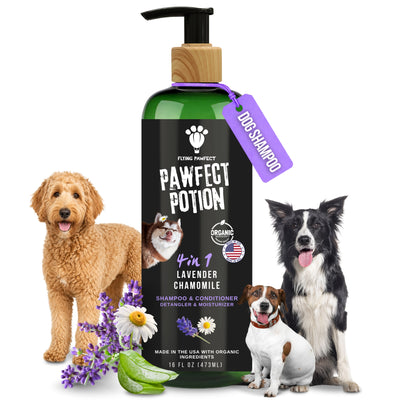
Flying Pawfect Pawfect Potion 4-in-1 Shampoo
Sighthounds are among the cleanest dogs to live with and most need a bath only every couple of months, so the shampoo you choose matters more than how often you use it. A harsh product on a thin coat strips it quickly, and there is no dense undercoat holding oils in reserve.
Pawfect Potion cleans, conditions, detangles and moisturises in a single step, which keeps a sighthound bath to one short wash rather than a wash plus a conditioner. It is pH balanced, made in the USA with plant derived cleansers and organic ingredients, and free of dyes, SLS, parabens, phthalates and alcohol. It suits all animals, so one bottle covers the whole household.
Warm the room and the water before you start. A lean, short coated dog loses heat fast and a cold bath is the fastest way to teach a Greyhound to dread the bathroom. Towel dry thoroughly, and keep the dog somewhere warm until it is properly dry rather than putting it straight outside.
One gentle pass with the slicker once the coat is fully dry finishes the job and lifts anything the bath loosened. On this breed that takes about a minute.
- Best for: The occasional bath a sighthound actually needs, without stripping a thin coat
- Why it works: Cleans and conditions in one step, so a short coated dog spends less time wet and cold
- Context: Warm room, warm water, thorough towel dry, then one light brush pass

Flying Pawfect Long Tooth Comb
Honesty first: a Greyhound or a Whippet does not need a comb. There is no depth of coat for the teeth to travel through and no mats to check for, and running a steel comb over a coat this fine achieves nothing the brush has not already done.
It earns its place in two situations. The first is the one most sighthound owners meet in winter, when the dog lives in a fleece or a padded coat. Anything worn constantly against skin rubs, and the wider spaced teeth are a quick way to lift and check the hair at the chest, the armpits and wherever a strap crosses, without pressing on the skin the way fingers do.
The second is the rest of the household. Very few sighthounds live alone, and if there is a long coated dog or a cat in the house, this is the tool that actually earns its keep there.
Whichever way you use it, never force it. If the teeth stop on a sighthound, you have found something, a scab, a burr or a graze, and it wants looking at rather than combing through.
- Best for: Checking under a winter coat or a harness, and for the long coated animals in the same house
- Why it works: Dual density steel teeth lift and part the hair without pressing on thin skin
- Context: Not a daily tool on this breed, and not needed at all on a Greyhound that wears nothing
Step by Step: Brushing a Greyhound Without Marking the Skin
- Let the dog stand or lie where it is comfortable. Sighthounds tolerate grooming far better lying on their own bed than standing on a slippery floor.
- Run your hand over the whole dog first. Ten seconds, and it tells you where the grazes, ticks and sore points are before a brush finds them.
- Start at the shoulder and work back. Short strokes in the direction the coat lies, with the weight of the brush only.
- Go around the bony points, not over them. Hips, spine, shoulder blades and ribs have almost nothing between skin and bone. Use your hand or a cloth there instead.
- Skip the thin patches entirely. Bare thighs, the belly and the tail tip get a wipe with a damp cloth, never pins.
- Finish with your palm flat down the body. It smooths the coat, spreads the natural oils and gives you one last check for anything you missed.
- Stop while the dog is still relaxed. Three good minutes beats ten that end with the dog getting up and walking off.
Prevention Tips for Coat and Skin Damage in Sighthounds
- Soft bedding, and plenty of it. The single most effective thing you can do for a Greyhound's coat is to keep the bony points off hard floors. Thick, well padded beds in every room the dog uses.
- Check under coats and harnesses weekly. Rub points at the chest and armpits appear quickly on thin hair and are easy to miss under fleece.
- Do not over bathe. A sighthound bathed every fortnight will end up with a drier coat than one bathed every two months.
- Dry properly after wet walks. Damp skin under a coat is the one place a short haired dog does get irritated.
- Watch the tail tip. Padding a doorframe or two is a cheaper fix than repeated grazes on a tail that never heals quickly.
- Take any tear or cut seriously. Sighthound skin is thin enough that a graze another breed would shrug off sometimes needs veterinary attention.
Common Mistakes When Grooming Greyhounds and Whippets
- Using a deshedding blade. These cut through coat to strip undercoat. A sighthound has no undercoat to strip, so the blade only damages guard hairs and sits far too close to thin skin.
- Pressing like you would on a Labrador. The commonest error by a distance, and the reason so many sighthounds are said to dislike brushing.
- Brushing bare patches to encourage regrowth. It does not work and it irritates skin that has no hair protecting it.
- Buying the largest brush because it is a large dog. Head size should match coat depth, not body size.
- Bathing too often because the dog looks dusty. A damp cloth handles dust. Water handles dirt, and only occasionally.
- Ignoring the thigh question. Worn thighs are usually mechanical, but assuming that without a look means missing the cases that are not.
- Grooming on a hard floor. Sighthounds are unsteady on slippery surfaces, and a dog worrying about its feet will not stand still for anything.
FAQs
What kind of brush is best for a Greyhound?
A soft flat slicker in a medium size, used with the weight of the brush alone and no added pressure. Flat rather than curved suits the long flat planes of a sighthound body, and fine bent pins lift the small amount of loose hair without presenting a point to thin skin. A soft rubber hound glove is a reasonable alternative for a dog that dislikes pins.
Do Whippets and Greyhounds shed a lot?
They shed lightly but continuously all year rather than dropping a coat twice a year like double coated breeds. The total volume over twelve months is far lower than a Husky or a Labrador, but the hair is fine and does work its way into fabric. Two or three short brushes a week keeps most of it off your furniture.
Why does my Greyhound have bald patches on its thighs?
In ex racing Greyhounds this is very common and is often mechanical, caused by years of lying on hard kennel surfaces wearing the hair away over the bony points. The pattern is usually symmetrical and the skin underneath looks healthy. If the patches are itchy, red, scabby, spreading, one sided or come with any change in appetite or energy, see your vet rather than assuming it is wear.
How often should I bathe a Whippet?
Every couple of months at most, or when the dog is genuinely dirty. Sighthounds carry very little odour and a thin coat dries out quickly if it is washed too often. Between baths, a damp cloth over the legs and belly after a muddy walk does almost everything a bath would.
Can I use a slicker brush on an Italian Greyhound?
Yes, in the small size and with even less pressure than you would use on a Whippet. Italian Greyhounds are tiny and their skin is thinner still, so the brush should barely rest on the coat. Many owners find a soft glove suits them better, and that is a perfectly good choice on a coat with so little hair to collect.
Should I use a deshedding tool on my Greyhound?
No. Deshedding tools work by cutting through the outer coat to reach and strip a dense undercoat, and a sighthound does not have one. Used on a single coat the blade damages the guard hairs that are the only coat the dog has, and it sits uncomfortably close to unusually thin skin.
Why does my Greyhound flinch when I brush him?
Almost always pressure rather than the brush itself. Try holding it so lightly that you could drop it and letting only the weight of the head touch the coat, and go around the hips, spine and shoulder blades rather than over them. Ex racing dogs may also simply be unused to being handled this way, so keep early sessions to under a minute.
Do Greyhounds get mats?
Very rarely, because mats need length and density to form and a sighthound coat has neither. The exception is where something rubs constantly, such as under a winter coat or a harness, where friction can felt the short hair into small rough patches. Checking under anything the dog wears once a week prevents nearly all of it.
Final Thoughts
Greyhounds and Whippets are the easiest coats in the dog world to look after and the easiest skin to hurt, which is an odd combination and the reason so much general grooming advice misfires on them. A medium flat slicker for a Greyhound, a small one for a Whippet, held lightly enough to feel almost pointless, a couple of times a week.
Spend the time you save on the parts that actually matter for the breed. Soft bedding, weekly checks under coats and harnesses, nails, teeth, and a proper look at anything that changes on the skin.
And if your dog has worn thighs, the most likely answer is a hard bed somewhere in its past rather than anything you are doing now. A good bed will do more for that coat than any brush ever will.
![[CL] Flying Pawfect coral large flat slicker brush for dogs](http://flyingpawfect.com/cdn/shop/files/CoralLarge2026.jpg?v=1783693245&width=400)
![[BL] Flying Pawfect baby blue large curved slicker brush for doodles and long haired dogs](http://flyingpawfect.com/cdn/shop/files/CBL_HERO_26_05_819be2a4-36dd-43dc-bda3-1730fa9e5818.jpg?v=1784475444&width=400)