


The best brush for a West Highland White Terrier is a small flat slicker brush, backed up by a steel comb. A Westie wears a harsh outer jacket over a soft dense undercoat, and a flat slicker lifts dead hair out of that undercoat while the comb finds the knots hiding in the leg furnishings and the skirt.
Westies get sold as a low maintenance breed because they are small and the coat across the back looks short and tidy. The back is not where the work is. The work is in the furnishings, the longer hair on the legs, the chest, the belly skirt and the beard, and those are the parts most owners never reach with a brush.
There is a second thing that changes the job completely, and almost nobody is told about it at the puppy stage. A Westie that is clipped rather than hand stripped grows a softer coat over time, and a softer coat holds dirt and tangles in a way the original harsh jacket never did. If your Westie has been clipped for a few years, you are grooming a different coat than the breed standard describes.
If you are choosing tools for a Westie, or wondering why a coat that used to be easy now knots behind the elbows, the sections below walk through what the coat is doing and what to do about it.
Why the Right Brush Matters for a Westie's Harsh White Coat
A Westie is a double coated breed. The outer coat is straight and harsh, roughly two inches long when grown out, and it sits over a short soft undercoat that sheds quietly all year. The harsh outer hair is what keeps a working terrier dry and clean. The soft undercoat is what mats.
That combination is why a single tool rarely covers a Westie. A brush that glides over the top of a harsh jacket has not touched the layer that causes problems, and a tool aggressive enough to force through a mat will take healthy coat with it.
A slicker brush with fine bent pins threads between the harsh outer hairs and lifts the loose undercoat out from underneath. On a small dog the head size matters as much as the pins, which is covered in What Size Slicker Brush Do I Need?. A large head cannot follow the curve of a Westie's leg or get in under the chest.
- The harsh jacket protects the skin, so it is brushed through rather than stripped back at home
- The soft undercoat is the layer that felts, and it felts where the coat rubs
- White hair shows every bit of grass stain, saliva and garden debris, so brushing is also how the coat stays clean
- A Westie is short enough that most owners brush the back and never turn the dog over
How a Clipped Westie Jacket Changes What You Need
Show Westies are hand stripped, which means the dead outer hairs are pulled out by hand or with a stripping knife so new harsh hair grows in its place. Most pet Westies are clipped instead, because stripping is slow and a lot of groomers no longer offer it.
Clipping cuts the harsh hairs rather than removing them. Over several years the coat that grows back is softer, fluffier and less weather resistant, and the colour often dulls toward cream or yellow. None of that is harmful, and plenty of Westies live happy clipped lives. It does change the grooming.
A softened Westie coat behaves more like a Bichon or a Cavapoo coat than a terrier jacket. It traps damp, it holds sand and grass seed, and it forms mats close to the skin rather than surface tangles you can see. A dog that needed brushing twice a week at two years old can need it every other day at six.
The tell is texture. Run your fingers backward through the coat over the shoulders. Harsh coat feels dry and wiry and springs back. Softened coat feels cottony and stays where you push it, and that is the coat that needs the comb check after every brushing session.
What a Realistic Westie Brushing Routine Looks Like
Two or three sessions a week keeps most Westies clear. The sessions are short, five to ten minutes, and they are worth far more than one long battle at the weekend.
Split the dog into areas rather than trying to do all of it every time. Legs and skirt on one day, chest and armpits on another, beard and head whenever the beard has been in the food bowl. The back takes almost no time at all.
- Every session: a slicker pass over the furnishings, then a comb check through the same area
- Twice a week: armpits, behind the ears, the belly skirt and the back of the thighs
- After every wet or muddy walk: dry the legs and beard properly, then comb them out before the coat sets
- Before any bath: brush and comb the dog out first, because water tightens a tangle that was loose an hour earlier
The beard deserves its own mention. A Westie beard collects water, food and whatever the dog has been digging in, and it is the single most reliable place to find a mat on an otherwise well kept dog. The same problem shows up on a Schnauzer, and the approach that works there works here, described in Best Brush for a Schnauzer Beard and Leg Furnishings.
Recommended Tools for a Harsh Jacket and Soft Furnishings
Three tools cover a Westie properly. A small slicker for the body and furnishings, something to wash a white coat with, and a comb to prove the work is done.

Flying Pawfect Flat Slicker Brush, Small
The small flat slicker is the tool a Westie actually needs. The Flat Slicker Brush for Dogs and Cats carries fine bent stainless steel pins set densely across a flat pad, and that flat face is the right shape for a terrier jacket. A curved head is built to sweep through a long doodle coat and wastes most of its contact on a dog this size.
Small is deliberate. A Westie leg is narrow, the armpit is a tight pocket and the area behind the ear is smaller again. A large brush head simply cannot sit flat against any of them, so it ends up working the outside of the coat while the mat forms underneath.
The bent pins do the real work. Because the tips angle away from the skin rather than pointing straight into it, they slide between the harsh guard hairs and catch the soft undercoat below. That is the layer you are trying to remove, and it is the layer a bristle brush never reaches.
Use it in short light passes that follow the lie of the coat, working in sections about the width of your palm. There is no benefit in pressure. If the brush is not picking anything up, the answer is a different angle, not a harder push.
On the furnishings, lift the hair above where you are working with your free hand and brush the layer underneath first, then let the next layer down and repeat. Working upward in layers like this reaches the skin, and on a clipped Westie coat it is the difference between a tidy looking dog and a genuinely clear one.
The face and the area around the eyes are not slicker territory. Use the comb there, slowly, and stop at the first sign the dog has had enough. A Westie that trusts the brush at eighteen months is easy to groom for the next decade.
- Best for: Leg furnishings, the belly skirt, the chest and the shoulders
- Why it works: Fine bent pins thread through a harsh jacket and lift the soft undercoat beneath it
- Size: The small head fits a narrow leg and a tight armpit, which a large head cannot

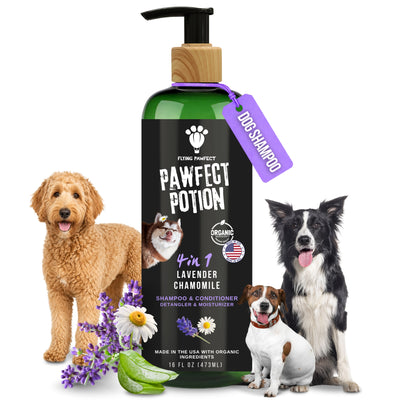
Flying Pawfect Pawfect Potion 4-in-1 Shampoo
A white dog that digs needs washing more often than a dark one, and the Pawfect Potion 4-in-1 Shampoo cleans, conditions, detangles and moisturises in a single step, which keeps bath day short.
It is pH balanced, built on plant derived cleansers with organic ingredients, and free of dyes, SLS, parabens, phthalates and alcohol. It is made in the USA and it suits all animals, so one bottle covers the household.
The practical benefit for a Westie is friction. A conditioned coat combs out with less drag, which matters on furnishings that have to be combed through every few days.
Brush and comb the dog out before the bath, every time. Washing a coat that still holds tangles sets them, and on a softened clipped jacket a bath can turn three loose knots into one solid patch.
Dry the legs, the beard and the skirt properly afterwards, then comb them through once more while the coat is still slightly damp. Air drying a Westie skirt and leaving it is how the mats behind the elbows begin.
- Best for: A white coat that picks up garden and grass staining
- Why it works: Cleans, conditions, detangles and moisturises in one step, so combing out afterwards drags less
- Order: Brush out, then bath, then dry, then comb again

Flying Pawfect Long Tooth Comb
The comb is how you find out whether the brushing worked. A slicker can leave a Westie looking finished while a flat pad of felted undercoat sits against the skin behind the elbow, and the only way to know is to put a comb through.
Run it slowly through the furnishings after every slicker session. If it passes to the skin and out again without catching, that area is done. If it stops, there is a tangle there and it needs working on before it becomes a mat.
The comb is also the right tool for the beard and the head, where a slicker is too much. Take the beard in small sections from the tips back toward the muzzle, holding the hair at the base so nothing pulls at the skin.
The dual density teeth make this straightforward. The wider spaced side opens up a loose tangle, the finer side checks the same patch afterwards, and nothing has to be forced through anything.
Never drive a comb through a solid mat. If it will not lift after a minute of gentle work at its edges, that mat needs a groomer. A Westie is a small dog with thin skin under those furnishings, and a mat that is pulled rather than released hurts.
- Best for: Checking the work, and for the beard and head where a slicker is too harsh
- Why it works: Dual density teeth open a loose tangle on one side and verify the area on the other
- Rule: If the comb stops, work the edge of the tangle, never force the tool through it
Step by Step: Brushing a Westie From Skirt to Beard
The order matters, because it puts the hardest part first while the dog is still fresh and leaves the face until last.
- 1. Set the dog up: On a non slip surface at a height you can reach without bending over the dog
- 2. Start at a back leg: Brush the furnishings upward in layers, lifting the coat above the section you are working on
- 3. Comb the same leg: Prove it before moving on, rather than brushing everything and checking at the end
- 4. Work forward: The other back leg, the belly skirt, the chest, then each front leg and armpit
- 5. Do the back and sides: Quick light passes with the lie of the coat, which takes a minute on a Westie
- 6. Behind the ears last but one: Comb first to find anything, then a light slicker pass if it is clear
- 7. Beard and head with the comb only: Small sections, from the tips back, holding the base of the hair
Stop while it is still going well. A five minute session that ends with a Westie relaxed is worth more than fifteen minutes that ends with a dog trying to leave, because the next session starts wherever the last one finished emotionally.
Prevention Tips for Mats Behind a Westie's Ears and Elbows
Westie mats are predictable. They form where something rubs, where the coat stays damp, and where the owner cannot see.
- Comb behind both ears twice a week, because a collar and a scratching back foot both work that spot
- Check the armpits and the elbow creases whenever the dog wears a harness
- Dry the belly skirt after wet walks rather than letting it dry flat against the body
- Keep the hair between the paw pads trimmed by a groomer, because grass seed and mud collect there first
- Book the clip before the coat needs rescuing, not after, so the groomer is trimming rather than shaving out mats
One more thing worth knowing about the breed. Westies are known for sensitive skin, and persistent scratching, redness, a change in coat smell or hair loss in patches is a reason to see a vet rather than to brush harder. Grooming keeps a coat clear; it does not treat a skin problem. There is practical guidance on handling a dog that flinches in How to Groom a Dog With Sensitive Skin.
Common Mistakes Westie Owners Make With a Slicker Brush
Most Westie grooming problems come from four habits, and all four are easy to change.
- Brushing only the back. The back is the part of a Westie least likely to mat, and it is the part that gets ninety percent of the attention
- Pressing the pad flat into the skin. Pressure does not reach the undercoat, it just makes the dog dislike the brush
- Bathing a tangled coat. Water tightens tangles, so the bath has to come after the brush out, never before
- Treating a clipped coat like a stripped one. A softened jacket needs more frequent combing than the breed books describe
There is a fifth, quieter one: no comb in the house at all. A slicker alone tells you the coat looks brushed. A comb tells you whether it is.
FAQs
What is the best brush for a West Highland White Terrier?
A small flat slicker brush, used with a steel comb. The flat pad suits a harsh terrier jacket, and the small head is the only size that fits a Westie's narrow legs and armpits properly. The comb is what confirms the undercoat is actually clear.
How often should I brush a Westie?
Two or three short sessions a week suits most Westies with a harsh coat. A clipped Westie whose jacket has softened over the years usually needs the furnishings combed every other day. Short and frequent beats long and occasional every time.
Do Westies shed?
Yes, though less visibly than a double coated spitz breed. The harsh outer coat holds a lot of the loose undercoat in place instead of dropping it on the floor, which is why an unbrushed Westie mats rather than sheds. Brushing is how that trapped hair leaves the dog.
Should a Westie be hand stripped or clipped?
Hand stripping keeps the harsh weather resistant jacket and the bright white colour, which is why show dogs are stripped. Clipping is quicker, more widely offered and perfectly acceptable for a pet, but the coat softens over the years and needs more combing as a result. It is a decision to make with your groomer based on the dog's coat and temperament.
Will a slicker brush hurt my Westie?
Not when it is used with light passes that follow the lie of the coat. Discomfort comes from pressure and from dragging the pins over bare skin, not from the brush itself. If your dog pulls away from a particular spot every time, check that area with your fingers for a mat or sore skin before brushing it again.
How do I stop my Westie's beard from matting?
Comb it through with a steel comb every few days, and always after a meal that involved anything wet. Take it in small sections from the tips back toward the muzzle while holding the hair at its base. Drying the beard after drinking and after wet walks removes most of the problem before it starts.
Why is my Westie's white coat turning yellow or pink?
Cream or yellow tones usually come from a softened clipped coat and from garden staining, and regular washing keeps that in check. Pink or rust coloured staining on the paws and legs is a different thing and is generally caused by persistent licking. If your Westie is licking one area repeatedly, that is a conversation with a vet rather than a grooming fix.
Final Thoughts
A Westie is a small dog with a complicated coat, and the tools follow from that. A small flat slicker for the furnishings and the body, a comb to check the work, and a wash routine that keeps a white coat looking like one.
The habit that matters most is not the brush at all. It is turning the dog over. Everything that goes wrong on a Westie coat goes wrong underneath, behind the elbows, in the armpits, along the belly skirt and behind the ears, and five minutes a few times a week in those four places keeps a Westie out of trouble for years.
![[CL] Flying Pawfect coral large flat slicker brush for dogs](http://flyingpawfect.com/cdn/shop/files/CoralLarge2026.jpg?v=1783693245&width=400)
![[BL] Flying Pawfect baby blue large curved slicker brush for doodles and long haired dogs](http://flyingpawfect.com/cdn/shop/files/CBL_HERO_26_05_819be2a4-36dd-43dc-bda3-1730fa9e5818.jpg?v=1784475444&width=400)