


The best brush for a Cavalier King Charles Spaniel is a soft flat slicker in a small or medium head, used lightly and backed up by a long tooth comb. A Cavalier carries a single silky coat with long feathering on the ears, chest, legs and tail, and that feathering is where every mat starts. The coat needs frequency and a light hand, not force.
This is a breed that looks easy to groom right up until the day you find a solid pad of felt behind an ear. The body hair is short enough to look after itself for weeks. The feathering is not, and it tangles quietly under a collar, behind an ear flap and on the backs of the thighs where nobody looks.
The good news is that a Cavalier is one of the quickest coats on the list to keep right once you know the five places to check. Ten minutes twice a week is genuinely enough for most of them, and the dog usually enjoys it, because a Cavalier is built to lie across a lap and be fussed over.
If your Cavalier is already matting faster than you can keep up, the routine below is the one to start with, and the tools section covers what actually helps on a silky coat rather than what gets sold for thick double coats.
Why a Cavalier King Charles Spaniel Needs a Gentle Brush
Cavalier hair is fine, silky and sits fairly flat. There is no dense woolly undercoat holding it up the way there is on a Husky or a Samoyed, so a harsh deshedding tool has nothing useful to do and simply drags on skin.
Fine hair also breaks easily. Long feathering that is repeatedly pulled through a stiff brush ends up thin, frizzy and shorter than it should be, which is how a Cavalier loses the ear fringe it took two years to grow.
The skin under that feathering is thin too, especially behind the ears and in the armpit. Pressure that a Labrador would not notice is enough to leave a Cavalier sore and suspicious of the brush for weeks afterwards.
- Single silky coat, so there is no undercoat to strip out
- Long feathering on ears, chest, legs, feet and tail
- Thin skin behind the ears and under the front legs
- Hair that breaks rather than stretches when it is pulled
If you have a Cavalier cross rather than a purebred, the same principles hold but the coat can be softer and far more prone to felting. The routine in Best Brush for Cavachons covers that softer, wavier coat in detail.
How Cavalier Feathering Mats Behind the Ears and on the Legs
Mats on a Cavalier are almost always friction mats. Two surfaces rub, the fine hair rolls between them, and within a few days the roll tightens into a pad that a brush cannot open.
There are five reliable places, and they are the same on nearly every Cavalier:
- Behind and under the ear flap: the ear moves constantly and the hair underneath never gets air
- Under the collar: the collar sits exactly where the ruff hair is longest
- The armpit, where the front leg swings against the chest
- The backs of the thighs, the long trousers that brush against each other at every step
- Between the toes and around the pads, where feathering catches grit and damp
Damp is the accelerator. A Cavalier that has been out in wet grass and then dried off lying in a bed will often have a fresh mat behind one ear the next morning, because the hair dried in a twisted position and stayed there.
Ear feathering deserves a separate mention for a reason that is not cosmetic. Long, heavy ear hair keeps the ear canal warm and poorly ventilated, and this breed is already prone to ear trouble. Head shaking, a smell from the ear, redness or a dog that flinches when you touch the base of the ear is a vet visit, not a grooming problem.
One more thing worth saying plainly. If your Cavalier yelps, scratches at its neck, or pulls away sharply when you handle the head and shoulders, do not assume it is the brush. Several conditions common in this breed cause exactly that, and the right answer is a vet appointment rather than a gentler brush.
What a Realistic Cavalier Brushing Routine Looks Like
Most Cavaliers do well on two proper sessions a week plus a thirty second feathering check after any muddy or wet walk. That is far less work than a doodle and far more than most owners actually do.
A proper session is short. The body takes a minute because there is not much hair on it. The feathering takes the other nine.
- Twice weekly: full brush and comb through all five friction zones
- After wet walks: dry the feathering and run a comb through the ears and trousers
- Every few weeks: a bath, with the coat combed out before the water goes anywhere near it
- Spring and autumn: a short daily pass while the dog is shedding more heavily
The leg feathering is the part people skip, and it is the part that costs them. The method in How to Brush a Dog's Legs Without Missing Mats applies directly to a Cavalier's trousers and front feathering.
Recommended Tools for a Cavalier's Silky Feathered Coat
Three tools cover this coat properly. A flat slicker for the feathering, a shampoo that leaves the hair slippery rather than squeaky, and a long tooth comb to prove the work is done.

Flying Pawfect Flat Slicker Brush, Medium
A flat slicker is the right shape for a Cavalier. The pin field sits level, so it follows the flat lie of a silky coat instead of lifting it the way a curved head does on a doodle. The Flat Slicker Brush for Dogs and Cats is the one to use here, and the medium head is the size most Cavaliers suit.
Size matters more than it sounds. A large head cannot get under an ear flap or into an armpit without the corner digging in, so owners end up brushing the easy parts and avoiding the parts that actually mat. A medium head reaches all five friction zones without any awkward angles.
The pins are fine bent stainless steel, densely set. On a silky coat the bend is what stops them scratching, because the tip travels along the skin rather than into it. That is the difference between a dog that leans into the brush and a dog that slides off the sofa when it sees it.
The head is light, which matters on a breed that is usually being groomed while lying across your knees. A heavy tool encourages you to rest its weight on the dog, and resting weight on thin skin over a shoulder blade is how brush burn happens.
Use it in short strokes with almost no downward pressure, working from the ends of the feathering back toward the body. On a Cavalier you should be able to hear the pins pass through the hair. If you can feel them catching on skin, the angle is wrong.
One honest limit. A slicker opens loose tangles and lifts shed hair beautifully, and it will not open a tight felted mat. If the brush stops dead and the hair moves as a solid sheet, stop and read the mat section below rather than working at it.
- Best for: ear fringe, chest ruff, leg trousers and tail plume
- Why it works: a flat pin field follows a silky coat instead of fluffing it
- Size to pick: medium for an adult Cavalier, small for a puppy or a very fine coat

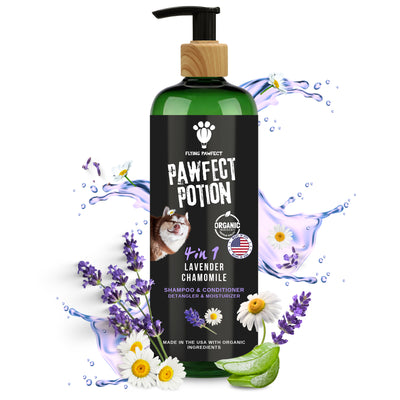
Pawfect Potion 4-in-1 Dog Shampoo and Conditioner
Bath day decides how the next two weeks of brushing go. A coat that has been stripped dry feels squeaky, and squeaky hair grips itself, which is exactly what you do not want on feathering that already rubs against itself all day.
The Pawfect Potion cleans, conditions, detangles and moisturises in one bottle, which keeps a Cavalier bath short. That matters on a breed that is small enough to get cold quickly and patient enough to let you keep going long after it has stopped enjoying itself.
It is pH balanced for dogs and uses plant-derived cleansers, with no dyes, SLS, parabens, phthalates or alcohol. On fine silky hair that gentleness is practical rather than decorative, because harsh detergents leave the cuticle rough and rough hair tangles faster.
The conditioning side is what reduces brushing friction afterwards. Hair that slides past itself is hair that does not roll into a pad behind an ear, and you will feel the difference in the comb at the next session.
Comb the coat out before the bath, not after. Water tightens an existing tangle into a mat that is much harder to open, which is the single most common way a manageable Cavalier coat becomes a clipper job.
Dry the feathering properly. A Cavalier left to dry on its own in a bed will set a twist into the ear fringe, and that twist is tomorrow's mat.
- Best for: keeping fine feathering slippery between grooms
- Why it works: cleans and conditions in one step, so bath time stays short
- Use it with: a full comb through before the water, and proper drying after

Flying Pawfect Long Tooth Comb
The comb is the honesty check. A slicker can glide over the top of a Cavalier's feathering and leave a firm layer underneath completely untouched, and the only way to know is to put steel teeth through to the skin.
Work the comb through the ear fringe, the chest, the armpit and the back of each thigh. If it passes cleanly from skin to tip, that area is finished. If it stops, you have found the mat before it had time to grow.
The long teeth are what let it reach the base of the feathering on a small dog without you having to push. The dual density spacing gives you a wider side for the first pass and a closer side for the final check.
Using the two tools together is a skill worth ten minutes of reading. How to Use a Slicker Brush and Comb Together sets out the order that groomers actually use.
- Best for: proving the feathering is clear right down to the skin
- Why it works: long steel teeth reach the base of the hair without pressure
- When to use it: after the slicker, on every session, in all five friction zones
Step by Step: Brushing a Cavalier From Ears to Tail
Sit the dog across your lap or beside you on the floor. A Cavalier does not need a grooming table and usually settles faster without one.
- Start with the ears. Lift one flap, support it flat in your palm, and brush the fringe downward in short strokes from the tip toward the base
- Then under the ear. Check the skin underneath the flap and the hair immediately behind it, which is the single most reliable mat spot on the breed
- Take the collar off. Brush the ruff with nothing sitting on it, then comb through before the collar goes back on
- Chest and armpits next. Lift each front leg gently and work the hair in the hollow with the flat of the brush, never the corner
- Front legs, then back trousers. Brush downward with the lie of the hair, then comb upward through the same area to find what the brush missed
- Finish with the tail plume and the feet. Check between the toes and around the pads for grit and matted hair
If you meet a mat, do not pull. Hold the hair firmly between the mat and the skin so the dog does not feel the tension, then work at the outside edge of the mat with the end teeth of the comb, a few hairs at a time. Small mats give way in a couple of minutes.
A mat that is flat against the skin, larger than a coin, or on the ear itself is a groomer's job. Scissors near a Cavalier's ear leather or armpit is how dogs get cut, and the skin there lifts up into the mat in a way you cannot see until it is too late.
Preventing Mats on a Cavalier's Ears, Chest and Culottes
Prevention on this breed is about friction and damp, not about brushing harder.
- Take the collar off indoors, or comb under it every few days if it stays on
- Dry the ear fringe and leg feathering after wet walks rather than letting the dog dry in a bed
- Use a harness that clears the armpit, and check that area whenever the harness comes off
- Keep the hair between the pads short and clean, since grit there starts foot mats
- Comb before every bath, without exception
- Book a groomer before the coat gets bad rather than after, so a tidy is a tidy
Cocker Spaniels mat in almost exactly the same places for the same reasons, and the prevention detail in How to Prevent Cocker Spaniel Ear, Chest and Leg Mats transfers well to a Cavalier.
Common Mistakes Cavalier Owners Make With Brushing
None of these are careless. They are all reasonable things to do that happen to be wrong for this particular coat.
- Brushing only the back. The back is the one part of a Cavalier that rarely mats
- Using a deshedding blade. There is no thick undercoat to remove, so it cuts silky hair instead
- Leaning on the brush. Pressure on thin skin over the shoulder and ribs makes a dog dread grooming
- Bathing a tangled coat. Water sets a tangle into a mat, every time
- Skipping the comb. Without it you are guessing about everything below the top layer
- Treating ear trouble as a grooming issue. Smell, heat, redness or head shaking means a vet
FAQs
What is the best brush for a Cavalier King Charles Spaniel?
A soft flat slicker brush with fine bent stainless steel pins, in a small or medium head, paired with a long tooth comb. The flat pin field suits a silky single coat, and the medium size reaches under the ear flap and into the armpit without the corner digging in. The comb is what confirms the feathering is clear to the skin.
How often should I brush my Cavalier?
Twice a week is enough for most Cavaliers, with a quick feathering check after any wet or muddy walk. During heavier spring and autumn shedding, a short daily pass keeps loose hair out of the trousers and off your furniture. Frequency matters far more than how long each session lasts.
Do Cavalier King Charles Spaniels shed a lot?
They shed moderately all year, with heavier periods in spring and autumn. Because the hair is fine and silky it tends to collect in the feathering rather than dropping straight off, which is why regular brushing removes so much of it. Most of what ends up on your clothes was already loose in the coat.
Can I use a slicker brush on a Cavalier's ears?
Yes, as long as you support the ear flap flat in your palm and use almost no pressure. Ear leather is thin and the hair on it breaks easily, so short strokes from the tip of the fringe toward the base work best. If the ear is hot, smelly or sore, stop and see a vet rather than grooming it.
Should a Cavalier's feathering be trimmed?
Trimming the hair between the pads and tidying the feet is sensible and helps prevent foot mats. Cutting the ear or leg feathering back is a personal choice and is best done by a groomer, because it changes the outline of the dog and grows back slowly. Never cut into a mat yourself with scissors.
Why does my Cavalier keep getting mats behind the ears?
That spot combines constant movement, warmth and hair that is longer than the hair around it, which is the perfect recipe for friction matting. A collar sitting just below it makes matters worse. Combing under the ear flap twice a week, and drying it properly after wet walks, clears up most of the problem.
Is a curved or flat slicker better for a Cavalier?
Flat is the better default. A curved head is designed to lift and open a dense curly or wavy coat, which a Cavalier does not have, so on silky feathering it tends to fluff the hair rather than smooth it. Save the curved shape for doodles and thick wavy coats.
My Cavalier flinches when I brush its neck. What should I do?
Stop brushing that area and book a vet appointment. Several conditions seen in this breed cause pain or sensitivity around the head, neck and shoulders, and a dog that reacts sharply to gentle handling is telling you something a lighter brush will not fix. Rule out a medical cause first, then go back to grooming.
Final Thoughts
A Cavalier is not a demanding coat, but it is an unforgiving one if you only brush what you can see. The body is easy. The ears, the ruff under the collar, the armpits, the trousers and the feet are the whole job.
Get a medium flat slicker into those five places twice a week, follow it with a comb to prove the work is done, and keep the feathering dry after walks. That routine takes ten minutes and it is the difference between a Cavalier that keeps its beautiful fringe and one that ends up clipped short in January.
![[CL] Flying Pawfect coral large flat slicker brush for dogs](http://flyingpawfect.com/cdn/shop/files/CoralLarge2026.jpg?v=1783693245&width=400)
![[BL] Flying Pawfect baby blue large curved slicker brush for doodles and long haired dogs](http://flyingpawfect.com/cdn/shop/files/CBL_HERO_26_05_819be2a4-36dd-43dc-bda3-1730fa9e5818.jpg?v=1784475444&width=400)