


Brushes for Long-Haired Cats
![[CL] Flying Pawfect coral large flat slicker brush for dogs](http://flyingpawfect.com/cdn/shop/files/CoralLarge2026.jpg?v=1783693245&width=533)
![[CS] Professional groomer approved coral flat slicker brush being used on a collie](http://flyingpawfect.com/cdn/shop/files/FBINPOSTS_READYTOUSE_-DOWNLOADASJPG_4.jpg?v=1747157854&width=533)
Flat Slicker Brush for Dogs & Cats - Eco Brush for Detangling, Deshedding & Finishing
 5.0/5 (19 reviews)
![[BS] Flying Pawfect baby blue small curved slicker brush for small dogs and cats](http://flyingpawfect.com/cdn/shop/files/CBS_HERO_2026.jpg?v=1784475692&width=533)
![[BS] Baby blue small curved slicker brush for small dogs and cats](http://flyingpawfect.com/cdn/shop/files/AMAZONPOSTS_451a3747-abba-4cfe-a39d-2db9889253ba.jpg?v=1747157920&width=533)
Small Curved Slicker Brush - Baby Blue
4.6/5 on Amazon![[BL] Flying Pawfect baby blue large curved slicker brush for doodles and long haired dogs](http://flyingpawfect.com/cdn/shop/files/CBL_HERO_26_05_819be2a4-36dd-43dc-bda3-1730fa9e5818.jpg?v=1784475444&width=533)
![[BL] Professional groomer using a baby blue Flying Pawfect slicker brush on a collie](http://flyingpawfect.com/cdn/shop/files/FBIN_POSTS_READY_TO_USE_-_DOWNLOAD_AS_JPG_9.jpg?v=1747157970&width=533)
Curved Slicker Brush for Doodles & Long-Coated Dogs - Long Soft Pins for Dematting, Detangling & Deshedding
5.0/5 (8 reviews)![[CS] Flying Pawfect coral small flat slicker brush for small dogs and cats](http://flyingpawfect.com/cdn/shop/files/FCS_HERO_26_05.jpg?v=1784476165&width=533)

Flat Slicker Brush - Coral - Small Pet Brush
4.6/5 on Amazon![[CS] Flying Pawfect coral small curved slicker brush for small dogs and cats](http://flyingpawfect.com/cdn/shop/files/CCS_HERO_26_05.jpg?v=1784476529&width=533)
![[CS][CL] Coral curved slicker brush grooming a long haired dog](http://flyingpawfect.com/cdn/shop/files/FBIN_POSTS_READY_TO_USE_-_DOWNLOAD_AS_JPG_8.jpg?v=1767797111&width=533)
Curved Slicker Brush - Coral - Small
4.6/5 on Amazon![[FBS] Flying Pawfect baby blue small flat slicker brush for small dogs and cats](http://flyingpawfect.com/cdn/shop/files/FBS_HERO_26_05_1.jpg?v=1788459614&width=533)
![[FBM][FBS] Groomer approved baby blue flat slicker brush](http://flyingpawfect.com/cdn/shop/files/ApprovedBlue_4c27af00-c8d9-4d2f-85b2-29d15faa773f.jpg?v=1784475695&width=533)
Flat Slicker Brush - Baby Blue - Small
4.6/5 on AmazonCat skin is noticeably thinner than dog skin, and cats remember a bad grooming session for a long time. That is the whole problem with most cat brushes on the market: the pins are too short and too stiff, the cat objects once, and the coat never gets brushed again.
Where cat mats actually form
Not on the back, where owners brush. Mats form in the armpits, on the belly, in the britches behind the hind legs, and around the base of the tail. These are the spots a cat cannot easily groom itself, and they are also the spots a cat least wants you touching. Start elsewhere, get the cat settled, and work toward them.
Softer pins change the answer
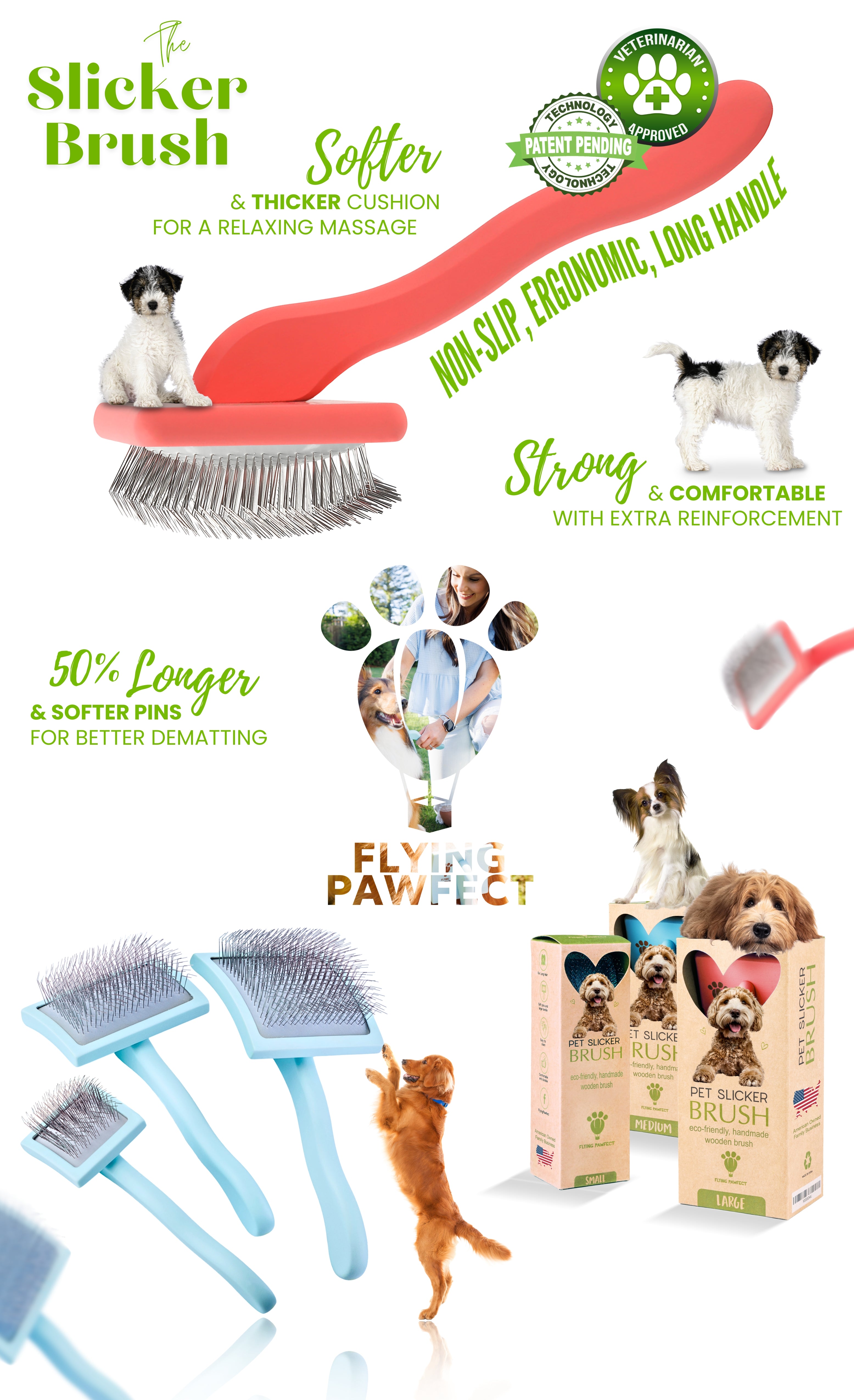
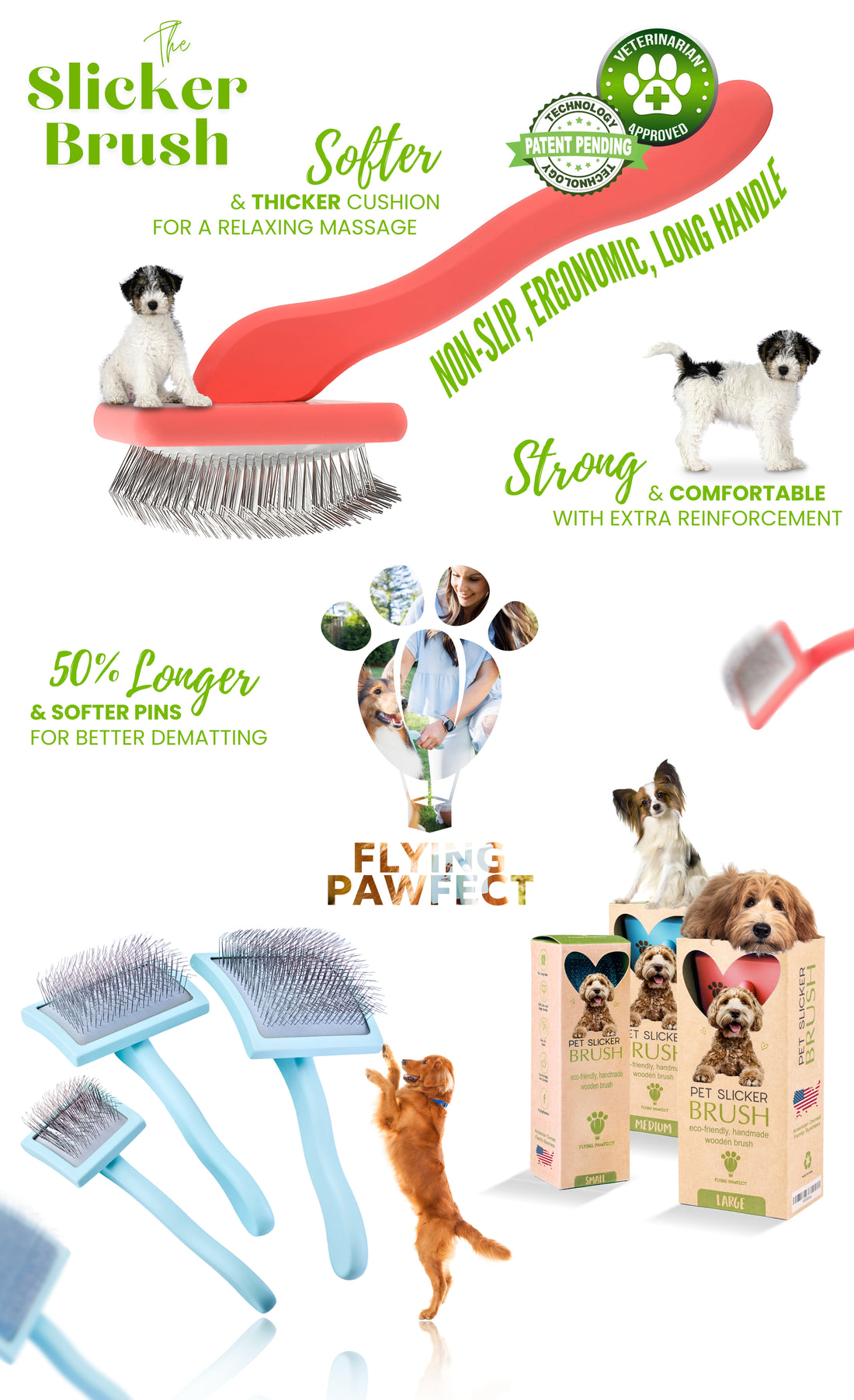
Longer, softer pins flex against the skin instead of digging into it. Most cats tolerate them far better, and a good number will lean into the stroke the way they do a scratch. That single difference is usually what turns brushing from a monthly wrestling match into something the cat comes to you for.
Size and session length
Use a small head for the face, ears and legs, and a medium for the body. A large is more brush than most cats need. Keep sessions to three or four minutes and stop while the cat is still relaxed, even if you are not finished. Two short sessions a week will prevent more matting than one long fight a month, and a cat who is regularly brushed swallows less hair and brings up fewer hairballs.
Our brushes are perfect for...


 Shop Now