Dogs that enjoy brushing are responding to three things at once: slow, predictable touch, which most social mammals find calming; the physical relief of having an itch reached that they cannot reach themselves; and a social behaviour that in group-living animals signals safety. When a dog leans into the brush, it is not tolerating grooming. It is asking for more of it.
This is worth understanding because it explains the gap between dogs that adore being brushed and dogs that hate it. The difference is almost never the dog. It is whether the touch is slow and predictable or fast and unpredictable, and whether it feels good or slightly stings.
Get the conditions right and most dogs move from tolerating grooming to seeking it out, which changes the whole job. A dog that comes and sits in front of you when the brush comes out is a dog whose coat will never mat.
Here is what is going on, and how to produce it deliberately.
Social Grooming Is an Old Behaviour
Many social mammals groom each other. It removes parasites and debris, but the reason it persists is at least as much social as practical: animals that groom each other are animals that tolerate each other at close range.
Dogs show a version of this. Dogs that live together will lick and nibble each other around the head, neck and ears, and they do it most with individuals they are comfortable with. A dog that lets you brush its neck is granting a similar kind of access.
This is also why the head, neck and shoulders are where most dogs enjoy being brushed most, and why the belly, paws and tail are where they enjoy it least. The areas dogs groom each other are the areas dogs expect to be touched.
Why Slow Touch Feels Good
Skin does not just detect pressure. It also responds to slow, moderate stroking in a way that is distinct from a quick pat or a poke, and across mammals this kind of touch is associated with lowered arousal.
The practical version is easy to observe. Fast, light, unpredictable touching tends to make a dog more alert. Slow, firm, rhythmic touching tends to make it settle. Anyone who has watched a dog gradually lie down during a long brushing session has seen this happen.
Rhythm matters as much as speed. Regular repeated strokes in the same area are predictable, and predictability is a large part of what allows an animal to relax. Jumping around the body keeps the dog guessing.
The Scratch Factor
There is a much less romantic reason many dogs love brushing: it reaches places they cannot.
A dog can scratch its ears and neck with a back foot, and can chew at its legs and flanks. What it cannot do is reach the middle of its own back, the base of its tail, or deep into a thick ruff. Those are exactly the spots where dogs lean, wriggle and offer themselves up during a brushing session.
During a seasonal shed this effect is much stronger. A coat full of loose undercoat is genuinely uncomfortable, and a brush that lifts it out provides real relief. This is why dogs that are ambivalent about brushing in July become enthusiastic about it in April.
Recommended Tools for Comfortable Brushing
Whether a dog enjoys brushing comes down almost entirely to what the tool feels like against the skin, and how you use it.
A brush with unfinished pins delivers a small sting on every stroke. No amount of good technique overcomes that, and a dog that has been stung a few hundred times has drawn a reasonable conclusion.
Flying Pawfect Slicker Brush
A dog's opinion of brushing is formed at the pin tip, which is the only part of the tool it actually experiences.
The pins are fine stainless steel with a slight bend and a smooth, burr-free finish. They pass between the guard hairs and lift from underneath, which produces a sensation closer to being scratched than being scraped. That is the difference between a dog that leans in and one that steps away.
The cushion pad flexes and returns, so the pins give way when they meet skin rather than pressing into it. Over hundreds of sessions that is what keeps the association positive.
Because it reaches the loose undercoat rather than skating over the top, it delivers the relief that dogs actually enjoy during a shed. A brush that removes nothing provides none of that.
Use it slowly and rhythmically. Stay in one area, repeat the same short stroke, and let the dog settle before you move on. Speed is the enemy of enjoyment here.
Start where dogs like it most, the shoulders, the neck and the base of the tail, and use those areas to bookend the sensitive ones.
- Best for: Building a dog that enjoys grooming, double coats during a shed, curly coats, and daily maintenance.
- Why it works: Smoothly finished pins in a flexing pad feel like scratching rather than scraping, and they actually reach the itch.
- Context: Slow, rhythmic, one area at a time. Start and finish on the areas the dog likes.

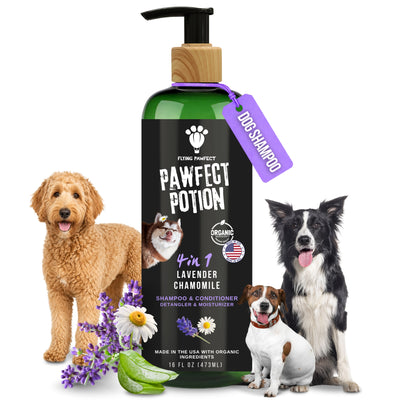
Pawfect Potion 4-in-1 Shampoo
Coat condition changes how brushing feels. A dry, static coat resists the pins, so every stroke involves a small tug, and the dog notices even if you do not.
This formula cleans, conditions, detangles and moisturises in one pass. It is pH balanced for dogs and uses plant-derived cleansers from coconut with organic aloe vera and coconut oil, plus lavender and chamomile.
The result you care about here is that the brush glides. Less friction means less pulling, which means a dog that stays relaxed for longer and comes back willingly next time.
Brush and comb-check before the bath. A coat with tangles going into water comes out with mats, and mats are the main reason brushing hurts.
Brush again while drying. Many dogs enjoy this most of all, because a warm, damp coat separates easily and the strokes are smooth.
- Best for: Dry or static coats, sensitive skin, and making brushing more comfortable generally.
- Why it works: A conditioned coat lets the pins pass through instead of tugging.
- Context: Brush first, bath second, brush again while drying.
Where Dogs Like to Be Brushed
- The neck and ruff. The classic social grooming area, and one dogs cannot reach well themselves.
- The shoulders and along the spine. Predictable, muscular, and easy to stroke rhythmically.
- The base of the tail. The area most dogs cannot reach at all, and the one that produces the most obvious enjoyment.
- The chest. Many dogs will stand and lean into chest brushing indefinitely.
- Behind the ears. Enjoyed by many, but only gently, since the skin there is thin.
The areas most dogs like least are the paws, the belly, the tail itself and the face. None of those are places dogs groom each other, and all of them are vulnerable.
Step by Step: A Session a Dog Will Enjoy
- Step 1. Choose a moment when the dog is already calm. A dog that has just come in from the garden will not settle.
- Step 2. Sit at the dog's level rather than standing over it.
- Step 3. Start with your hand, slowly, on the neck and shoulders.
- Step 4. Introduce the brush on the same area, matching the rhythm your hand was using.
- Step 5. Stay in one area long enough for the dog to settle before you move.
- Step 6. Do the sensitive areas in the middle of the session, surrounded by areas the dog enjoys.
- Step 7. Finish on a favourite spot, while the dog still wants more.
The full home routine that this fits into is in the ultimate guide to grooming your dog at home.
Why Some Dogs Hate It
The reasons are consistent and almost all fixable.
- The tool stings. Unfinished pins or a rigid pad.
- Mats pull. Working through a matted coat hurts, and the dog associates the brush with the pain the mat caused.
- Sessions are too long. Enjoyment has a duration, and pushing past it converts a good experience into a bad one.
- The dog is held in place. Restraint removes the choice that makes social touch tolerable.
- Something hurts. A consistent objection to one spot is usually physical.
- Brushing only happens when there is a problem. If the brush only appears when there is a mat, the brush always means discomfort.
Working back from any of those is covered in why your dog hates being brushed.
Common Mistakes That Put Dogs Off Brushing
Brushing quickly. Speed makes touch stimulating rather than calming. Slow strokes settle a dog, fast ones wind it up.
Jumping around the body. Unpredictable touch keeps the dog alert. Finish an area before moving.
Only brushing when the coat is bad. Regular short sessions on a clear coat are what build the positive association.
Going on too long. Ending while the dog still wants more is what makes it want more next time.
Starting on a sensitive area. Paws and belly first sets the tone for the whole session.
Assuming enjoyment is a personality trait. It is mostly conditions. Change the tool, the pace and the length, and most dogs change with them.
FAQs
Do dogs actually enjoy being brushed or just tolerate it?
Many genuinely enjoy it. A dog that leans in, sighs, lies down or comes back for more is not merely tolerating the process.
Why does my dog love it during shedding season?
Loose undercoat trapped against the skin is uncomfortable, and a brush that lifts it out provides real physical relief. Enthusiasm rises sharply during a shed.
Where do dogs most like being brushed?
The neck, shoulders, chest and the base of the tail. Those are the areas dogs groom each other and cannot reach themselves.
Is brushing good for a dog's mood?
Slow, predictable touch generally lowers arousal in dogs, and regular calm handling makes them easier to examine and treat. It is not a substitute for exercise or company.
My dog falls asleep while I brush. Is that normal?
Very. It is one of the clearest signs that the pace and pressure are right.
Should I brush every day?
For most coat types a short daily session is ideal, both for the coat and for the habit. Curly and long coats benefit most from daily work.
Can brushing replace petting?
No, but it adds something petting does not, because it reaches places your hand cannot and removes hair at the same time.
My dog only enjoys it sometimes. Why?
Usually timing. A dog that is excited, hungry or has just been active will not settle. The same dog an hour later often will.
Final Thoughts
Enjoyment is not a fixed trait. It comes from slow rhythmic strokes, a brush that does not sting, sessions that end early, and starting in the places dogs already want to be touched.
Get those four things right and grooming stops being a chore you impose and becomes something the dog comes and asks for, which is the point at which the coat stops being a problem at all.
![[CL] Flying Pawfect coral large flat slicker brush for dogs](http://flyingpawfect.com/cdn/shop/files/CoralLarge2026.jpg?v=1783693245&width=400)
![[BL] Flying Pawfect baby blue large curved slicker brush for doodles and long haired dogs](http://flyingpawfect.com/cdn/shop/files/CBL_HERO_26_05_819be2a4-36dd-43dc-bda3-1730fa9e5818.jpg?v=1784475444&width=400)