Winter coat care comes down to three things: get the coat properly dry every time it gets wet, rinse road salt off the legs and belly before it dries, and brush more often rather than harder because indoor heating pulls moisture out of the coat and makes hair brittle. Almost every winter grooming problem traces back to one of those three.
Winter is the season owners most often assume grooming can slow down. The dog is outside less, the coat looks thick and healthy, and brushing feels less urgent. Under that thick coat, though, damp is being trapped against the skin, salt is drying into the paws, and static is making fine hair cling to itself.
This guide covers what actually changes in a coat over winter, how to handle wet and salted fur safely, and the small routine adjustments that prevent the mats that show up in February.
The tool matters more in winter than it feels like it should. A coat that is damp at the roots needs opening up so air can reach the skin, and that is exactly what a slicker brush is for.
Why Winter Changes What a Coat Needs
Two opposite things happen at once in winter. Outside, the coat is repeatedly getting wet from snow, rain and slush. Inside, central heating drops the humidity and dries the coat out. A coat that is soaked and then baked dry indoors, several times a week, is under more strain than at any other time of year.
Dogs also shed in winter, which surprises people. The undercoat thickens in autumn and then adjusts through the season. That loose undercoat sits in a coat that is regularly damp, which is close to ideal conditions for matting.
- Damp undercoat pressed under a dry outer coat is the fastest way to form a mat.
- Indoor heating dries hair out and makes it snap rather than bend.
- Road salt and grit dry into hard crystals in the paws and leg feathering.
- Static makes fine hair cling together, which starts tangles in coats that never usually tangle.
- Coats and jumpers compress the fur at the chest, shoulders and under the straps.
If your dog has a heavy double coat, the winter version of this problem is worse, because there is more undercoat holding more moisture. There is more on that coat type in Should You Shave a Double-Coated Dog?.
How Wet Winter Coats Turn Into Mats
A dog comes in from a wet walk, gets a quick rub with a towel, and lies down by a radiator. The outer coat dries within the hour and looks fine. The undercoat, which holds far more water, is still damp hours later, and it dries flattened into the shape the dog was lying in.
Repeat that three or four times and the flattened undercoat starts to felt. By the time you can see it from the outside, the mat is already dense.
- The towel-and-radiator routine: Dries the surface and leaves the layer that matters wet.
- Snowballs in the feathering: Snow packs into leg and belly fur, melts slowly and soaks the coat from below.
- Salt and grit: Dry into sharp crystals that irritate skin and glue hair together.
- Coats and harnesses: Worn over a damp coat, they press the fur flat exactly where it is wettest.
- Less brushing: Winter routines slip, so nothing catches the problem early.
- Static: Dry indoor air makes hair cling, which turns loose undercoat into small knots.
The belly, the backs of the legs, behind the elbows and the chest under a harness are where winter mats appear first. Those are the lowest, wettest and most compressed parts of the coat.
What a Winter Grooming Routine Looks Like
The winter routine is not longer than the summer one. It is just ordered differently, with drying treated as the main event rather than an afterthought.
- Rinse the legs, belly and paws with plain lukewarm water after any walk on treated pavement.
- Towel firmly, then keep going for longer than feels necessary, especially on the underside.
- Brush the coat while it is still slightly damp to lift it away from the skin so air can get in.
- Check between the pads for compacted snow, grit and salt.
- Take coats and harnesses off indoors so the fur underneath can recover.
- Brush a full pass two or three times a week, focusing on the underside rather than the back.
Brushing a slightly damp coat is the part people get wrong in both directions. Brushing a soaking coat drags and tightens tangles. Brushing a bone-dry one in winter creates static. Slightly damp, after a good towel, is the sweet spot.
Recommended Tools for Winter Coats
Winter needs no special equipment, but it does put more demand on what you have. You are brushing a coat that is thicker, occasionally damp, and carrying more debris than usual.

Flying Pawfect Slicker Brush
The job a slicker brush does in winter is slightly different from the rest of the year. In summer you are mostly removing loose hair. In winter you are also lifting the coat up off the skin so that trapped damp can escape.
The fine stainless steel pins reach past the outer coat into the undercoat, which is the layer that holds water. Lifting and separating that layer after a wet walk does more to prevent winter mats than any amount of towel drying on the surface.
Work in sections, parting the coat with your free hand, and pay most attention to the underside. The belly, chest, armpits and the backs of the legs are wettest and most compressed, and they are also the areas people skip because the dog has to be persuaded to stand still for them.
On a damp coat, use lighter pressure and shorter strokes than usual. Damp hair is weaker than dry hair, and dragging through it causes breakage that shows up as a dull, frizzy coat by spring.
The brush also earns its keep on salt. Loosening dried salt out of leg feathering with a brush is far kinder than picking at it, and it gets the crystals away from the skin before they cause irritation.
Through the winter months, two or three full passes a week plus a quick underside check after wet walks is usually enough on most coats. Heavy double coats and long feathered legs will want more.
- Best for: Damp winter coats, double coats, feathered legs, and lifting undercoat away from the skin.
- Why it works: It opens the coat so trapped moisture can escape instead of drying flat against the skin.
- Context: Use on a towel-dried, slightly damp coat with light pressure, then comb-check.

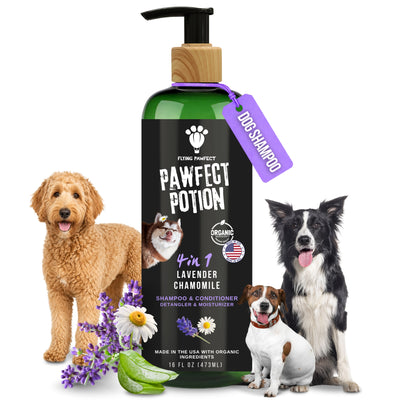
Pawfect Potion 4-in-1 Shampoo
Winter is the season coats dry out most, between cold air outside and heated air inside. A shampoo that conditions and moisturises in the same pass helps keep the coat pliable rather than brittle.
It is pH balanced for dogs, uses plant-derived cleansers from coconut, and includes organic aloe vera and coconut oil. That matters in winter because a coat stripped of its natural oils goes static, and static is what starts winter tangles in fine coats.
Bath less often in winter, not more, unless the dog is genuinely dirty. Over-washing in a dry-air season makes the coat worse. When you do bath, brush and comb-check first so water cannot tighten anything.
The drying afterwards is the part that counts. Get the undercoat dry, not just the top, and brush it out as it dries so it does not set flat.
- Best for: Dry winter coats, static-prone fine hair, and dogs bathed after muddy walks.
- Why it works: Conditions in the same pass, so the coat keeps some flexibility through a dry-air season.
- Context: Brush before, dry thoroughly after, and bath less often than in summer.
Step by Step: After a Wet or Snowy Walk
This is the five minute routine that prevents most winter coat problems. Doing it every time matters more than doing it perfectly.
- Rinse the underside: Lukewarm water over paws, legs and belly if the pavements were salted or gritted.
- Check between the pads: Compacted snow and grit sit there and are easy to miss.
- Towel the belly and legs first: Not the back. The underside is where the water is.
- Keep towelling past the point it feels done: Double coats hold far more water than they look like they do.
- Brush the damp coat in sections: Lift the hair so air reaches the skin.
- Take the coat or harness off: Do not leave a wet dog compressed under a jacket indoors.
- Comb-check the feathering: Legs, tail and chest are where salt and damp collect.
If a tangle has already set hard, do not fight it. The point at which home grooming should stop is covered in When You Should Stop Brushing and Call a Groomer.
Prevention Tips for Salt, Static and Damp
Winter prevention is mostly about the environment rather than the brushing. Change what happens around the dog and the coat looks after itself.
- Rinse the legs and paws after every walk on treated roads or pavements.
- Keep a dedicated towel by the door so drying actually happens.
- Do not let a damp dog settle against a radiator, which dries the outside and traps the inside.
- Remove jumpers and harnesses indoors so the coat underneath can lift.
- Bath less often in winter, and always condition when you do.
- Brush before the walk as well as after, so the coat starts out open rather than tangled.
- Trim excess hair between the pads if snow keeps packing there, or ask a groomer to.
Cracked pads, persistent licking of the paws, redness between the toes or a sudden reluctance to walk on treated pavement are veterinary questions rather than grooming ones. Salt can genuinely irritate skin.
Common Winter Grooming Mistakes
Almost every winter mistake comes from treating cold weather as a reason to do less. The coat needs the same attention, just aimed at different places.
- Assuming a thick coat needs less brushing: It needs more, because it holds more damp.
- Drying only the back: The water is underneath, where you cannot see it.
- Leaving salt on the legs: It dries into crystals against the skin.
- Leaving a coat or harness on indoors: It presses damp fur flat for hours.
- Bathing more often to deal with mud: Rinsing the legs is usually enough and is far kinder to the coat.
- Shaving a double coat for easier winter care: It removes the insulation the dog needs most right now.
- Brushing hard to deal with static: Static needs moisture and conditioning, not force.
FAQs
Do dogs shed in winter?
Yes. The undercoat thickens in autumn and continues to turn over through winter. Because that loose undercoat sits in a coat that is often damp, winter shedding causes more matting than summer shedding does.
How do I stop my dog getting mats in winter?
Dry the undercoat properly after every wet walk, brush the coat while it is still slightly damp so air can reach the skin, and take coats and harnesses off indoors. Most winter mats are damp mats.
Is road salt bad for dog paws and fur?
It can be. Salt and grit dry into sharp crystals in the paws and leg feathering, irritate skin, and glue hair together. Rinse the legs and paws with lukewarm water after walks on treated pavement.
Should I bath my dog more often in winter?
No, less often. Cold air outside and heated air inside already dry the coat out. Rinse mud off the legs instead, and save full baths for when the dog is genuinely dirty.
Can I brush my dog while the coat is damp?
Slightly damp is ideal after a good towel. Do not brush a soaking coat, which drags and tightens tangles, and try not to brush a bone-dry coat in winter, which creates static.
Why is my dog coat full of static in winter?
Indoor heating drops the humidity and dries the hair out. A conditioning shampoo helps, as does brushing on a slightly damp coat rather than a completely dry one.
Should my dog wear a coat indoors after a walk?
No. Take it off as soon as you are inside. A jacket over a damp coat presses the fur flat against the skin for hours, which is one of the fastest ways to create a mat.
Where do winter mats form first?
The belly, chest, armpits, backs of the legs and under a harness. Those are the lowest, wettest and most compressed parts of the coat, and they are the areas most often skipped when brushing.
Final Thoughts
Winter coat care is a drying problem more than a brushing problem. If the undercoat gets properly dry after every wet walk, and salt gets rinsed off before it dries, most of the season looks after itself.
Brush the underside rather than the back, use lighter pressure on damp hair, and take the jacket off the moment you are indoors. Those three habits prevent the majority of the mats that turn up at the end of winter.
If the coat has already gone past what a brush can fix, book a groomer rather than working at it. A packed winter mat sits tight against skin that is already dry and easily irritated.
![[CL] Flying Pawfect coral large flat slicker brush for dogs](http://flyingpawfect.com/cdn/shop/files/CoralLarge2026.jpg?v=1783693245&width=400)
![[BL] Flying Pawfect baby blue large curved slicker brush for doodles and long haired dogs](http://flyingpawfect.com/cdn/shop/files/CBL_HERO_26_05_819be2a4-36dd-43dc-bda3-1730fa9e5818.jpg?v=1784475444&width=400)