


If you’re searching for the best brushes for a Goldendoodle, you’ve probably already learned one thing: this coat needs the right tools. Soft, curly, and often dense, a Goldendoodle coat can quickly turn into tangles and painful mats without a proper brushing routine.
Some Goldendoodles have tighter curls, while others have a looser wavy coat, but both types can trap loose fur close to the skin. That means brushing only the surface is not enough. You need tools that work through the coat properly.
Areas like behind the ears, under the collar, along the chest, and on the legs are especially prone to tangles. And mats aren’t just a cosmetic issue. They can pull on the skin, trap debris, and make grooming uncomfortable for your dog.
The good news is that with the right brushes and a simple routine, you can keep your Goldendoodle’s coat softer, healthier, and much easier to manage at home. For the wider kit beyond brushes, including shampoo, drying and trimming supplies, see Best Grooming Tools for a Goldendoodle (Complete Guide 2026).
Must Have Grooming Tools Every Goldendoodle Owner Needs
Before you start brushing, you need tools made for curly, wavy, and often thick coats. Using the wrong brush can smooth the top layer while leaving hidden tangles underneath.
Below are the three best tools to help keep your Goldendoodle’s coat healthy, soft, and easier to maintain, plus one bonus product that can make brushing more comfortable.
1. Flying Pawfect Slicker Brush

A slicker brush is the most important tool for a Goldendoodle coat. It helps remove loose fur, loosen tangles, and prevent mats from forming deep in the coat.
The Flying Pawfect Slicker Brush is especially useful for dense, curly, or fluffy coats because it can work through more than just the top layer. This makes it one of the best everyday brushes for home grooming.
Why this brush works so well:
- Reaches through dense coats
- Helps break up tangles before they tighten
- Supports regular coat maintenance at home
- Useful for common mat-prone areas
If your Goldendoodle’s coat tends to get fluffy, thick, or tangled between grooming sessions, this is the brush to build your routine around.
2. Metal Comb

A slicker brush helps loosen tangles, but a metal comb helps you confirm they are actually gone. This is the tool that tells you whether the coat is truly detangled all the way to the skin.
After brushing, run the comb from root to tip. If it catches, there is still a hidden tangle that needs more work before it turns into a mat.
This comb is especially helpful for:
- Behind the ears
- Under the chin
- Under the collar
- Chest feathering
- Armpits
- Back legs
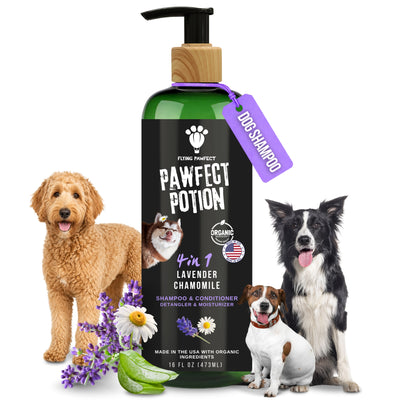
Bonus: Detangler Spray

If you’ve ever tried brushing a dry, slightly tangled coat, you know how much resistance it can create. A light mist of detangler can make grooming more comfortable and help the brush move through the coat more smoothly.
It can be especially helpful around mat-prone areas or when your Goldendoodle’s coat feels dry and harder to work through.
Why it helps:
- Reduces tugging
- Makes brushing more comfortable
- Helps prevent breakage
- Leaves the coat softer and easier to manage
Step-by-Step: How to Brush a Goldendoodle
Now let’s talk about how to actually groom your Goldendoodle properly. A simple, repeatable routine works much better than waiting until the coat is already tangled.
1. Start with a Dry Coat
Never brush wet fur. Wet hair can tighten knots, increase breakage, and make mats worse.
2. Lightly Mist with Detangler
Focus on mat-prone areas like behind the ears, under the collar, along the chest, and on the legs. A small amount is enough.
3. Line Brush with the Slicker Brush
This is the most important step because mats often form underneath the top layer of fur. If you have not line brushed before, How to Line Brush a Doodle in 60 Seconds walks through the hand position.
How to line brush:
- Start at the bottom of the coat
- Lift a small section of hair upward
- Brush from the skin outward
- Move up gradually in small sections
Behind the ears: Hold the ear flap gently forward and brush the hair underneath in small sections.
Leg feathering: Use short strokes and work slowly to avoid pulling.
4. Check with a Comb
After brushing a section, run the comb through it. If it glides through easily, you’re done. If it snags, go back with the slicker brush.
5. Stay Consistent
The easiest way to prevent mats is to keep a regular brushing schedule.
- Brush 3 to 4 times per week
- Brush more often during heavier shedding periods
- Check trouble spots every session
Common Trouble Spots to Watch
Goldendoodles are especially prone to matting in areas where the coat rubs or traps moisture.
- Behind the ears
- Under the collar
- Armpits
- Chest feathering
- Back legs
- Tail base
If you find something already felted rather than merely tangled, do not work at it with a brush. How to Handle Existing Mats on a Doodle Coat covers what is safe to do at home and what needs a groomer.
FAQs
How often should I brush my Goldendoodle?
Most Goldendoodles should be brushed at least 3 to 4 times per week. If the coat is thicker or tangles easily, more frequent brushing may be needed.
What is the best brush for a Goldendoodle?
A slicker brush is typically the best everyday option because it can work through curly and wavy coats more effectively than a surface brush. Pair it with a metal comb so you can check whether the coat is clear all the way to the skin.
Why does my dog get mats behind the ears?
That area gets a lot of friction from movement and moisture, so tangles build up there quickly. It is also one of the easiest spots to skip, because the ear flap hides it.
Can I brush my Goldendoodle while the coat is wet?
No. Always brush a dry coat. Wet brushing can tighten mats and make the coat harder to work through, because water swells the hair shaft.
How can I make grooming easier?
Use a detangler when needed, brush in small sections, and always follow with a comb to check for hidden tangles. Short frequent sessions beat long occasional ones.
What if my dog hates being brushed?
Start slowly, keep sessions short, and reward calm behavior. Regular gentle grooming usually gets easier over time, and a brush that does not pull makes a large difference.
My Goldendoodle's coat suddenly changed texture. Is that normal?
Puppies go through a coat change between roughly eight and fourteen months, which is normal and usually means more brushing for a while. A sudden change in an adult, or patchy hair loss, broken hair or sore skin, is a vet question rather than a grooming one.
Final Thoughts
Grooming a Goldendoodle takes consistency, but the right tools make a huge difference. Start with a quality slicker brush, use a comb to check your work, and stay ahead of mats with regular brushing.
If you’re building your grooming kit, explore Flying Pawfect to find tools made for comfortable grooming at home.
![[BL] Flying Pawfect baby blue large curved slicker brush for doodles and long haired dogs](http://flyingpawfect.com/cdn/shop/files/CBL_HERO_26_05_819be2a4-36dd-43dc-bda3-1730fa9e5818.jpg?v=1784475444&width=400)